
Uveitis Symptoms: What to Watch For and When to Seek Help
When your eye feels like it’s on fire, your vision gets cloudy, or light suddenly hurts to look at, it might not just be tired eyes. It could be uveitis, an inflammation of the uvea—the middle layer of the eye that includes the iris, ciliary body, and choroid. Also known as eye inflammation, uveitis isn’t just discomfort—it’s a warning sign that something deeper is going on. This isn’t something you should ignore. Left untreated, it can lead to permanent vision loss, cataracts, or glaucoma.
The uveitis symptoms are often sudden and hard to miss. You might notice a deep, aching pain in one or both eyes, especially when reading or focusing. Your eye could look red—not the kind of red from rubbing it, but a dark, bloodshot red that doesn’t go away. Sensitivity to light becomes unbearable. You may see floaters like cobwebs drifting across your vision, or your sight might blur as if you’re looking through fog. Pupils can look irregular or smaller than usual. In kids, it might show up as a lazy eye or refusal to focus on bright objects. These aren’t random glitches. They’re your body’s alarm system telling you the immune system has turned on the eye by mistake—sometimes because of an infection, autoimmune disease, or trauma.
What makes uveitis tricky is that it doesn’t always come with obvious triggers. You might not have been injured, and you might not feel sick otherwise. But if you’ve got these symptoms and they stick around for more than a day or two, don’t wait. Seeing an eye doctor within 24 hours can make the difference between full recovery and lasting damage. The good news? Most cases respond well to steroid eye drops or oral meds if caught early. The bad news? Many people delay because they think it’s just allergies or dry eyes. Don’t be one of them.
Behind many of the cases we see are links to conditions like rheumatoid arthritis, ankylosing spondylitis, or even Lyme disease. That’s why uveitis isn’t just an eye problem—it’s often a clue to something bigger. If you’ve been diagnosed before, know that flare-ups can return. Tracking your symptoms over time helps your doctor spot patterns and adjust treatment before things get worse.
Below, you’ll find real-world insights from people who’ve dealt with uveitis—what they noticed first, how they got help, and what actually worked. No fluff. Just clear, practical info to help you recognize the signs, understand your options, and protect your vision before it’s too late.
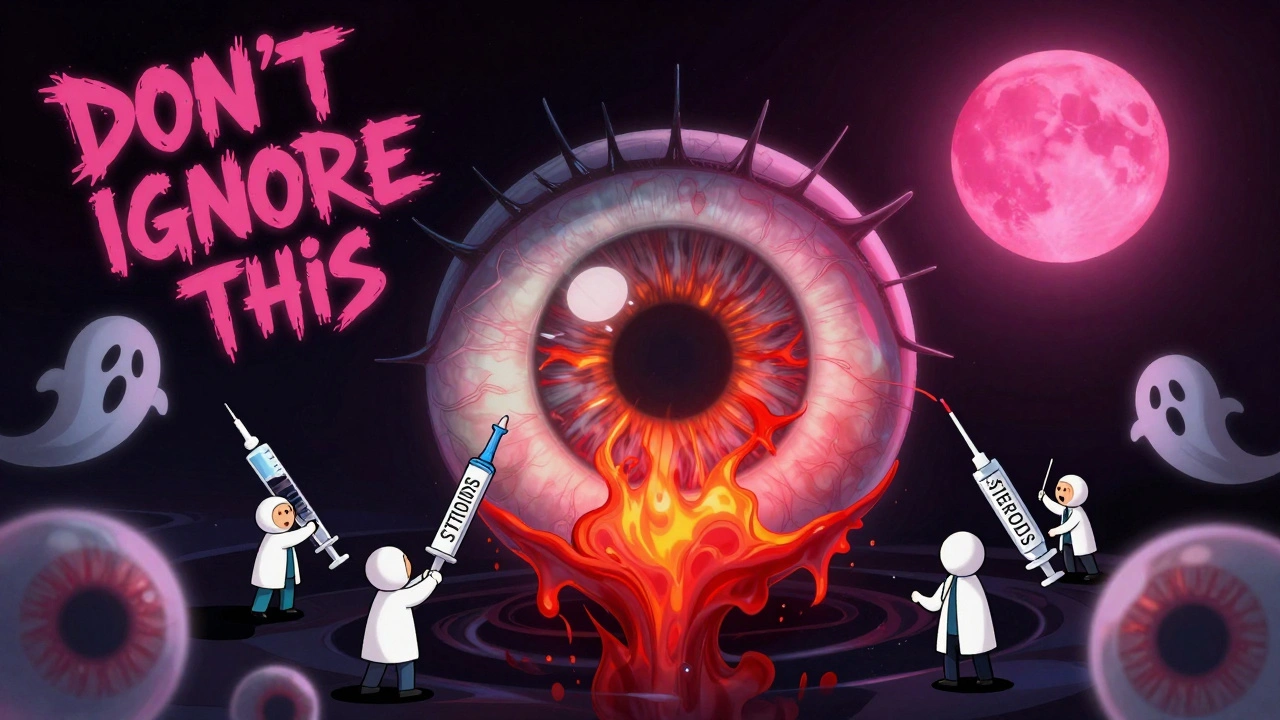
Uveitis: Understanding Eye Inflammation, Causes, and Steroid Treatment
Uveitis is a serious eye inflammation that can lead to vision loss if untreated. Learn the signs, causes, and how steroid therapy works to protect your sight.