
Uveitis: Causes, Treatments, and What You Need to Know
When your eye becomes inflamed deep inside, it’s often uveitis, an inflammation of the uvea—the middle layer of the eye that includes the iris, ciliary body, and choroid. Also known as intermediate or posterior uveitis, depending on where the swelling happens, this condition doesn’t always cause pain at first—but it can quietly damage your vision if ignored. Uveitis isn’t one single disease. It’s a symptom, often linked to autoimmune diseases, conditions where your immune system mistakenly attacks healthy tissue, like rheumatoid arthritis or lupus, or triggered by infections such as herpes, toxoplasmosis, or even tuberculosis.
Some people develop uveitis after an eye injury or surgery, while others have no clear cause at all. What’s common across cases is the need for fast, targeted treatment. Left untreated, uveitis can lead to glaucoma, cataracts, or retinal damage. The go-to treatment for most types is corticosteroids, powerful anti-inflammatory drugs that can be given as eye drops, pills, or injections directly into or around the eye. But steroids aren’t risk-free—long-term use can raise eye pressure or cause cataracts, which is why doctors often pair them with other medications like immunosuppressants or biologics for stubborn cases.
You might not realize how many of the medications listed in our collection connect to uveitis. From how uveitis affects people on long-term opioid therapy to how herbal supplements like Ginkgo Biloba can interfere with eye treatments, the links are deeper than you think. We’ve gathered real-world advice on managing inflammation safely, avoiding drug interactions, and spotting warning signs before vision loss happens. Whether you’re dealing with uveitis yourself, caring for someone who is, or just trying to understand how eye health ties into broader medication use, these posts give you the clear, no-fluff facts you need.
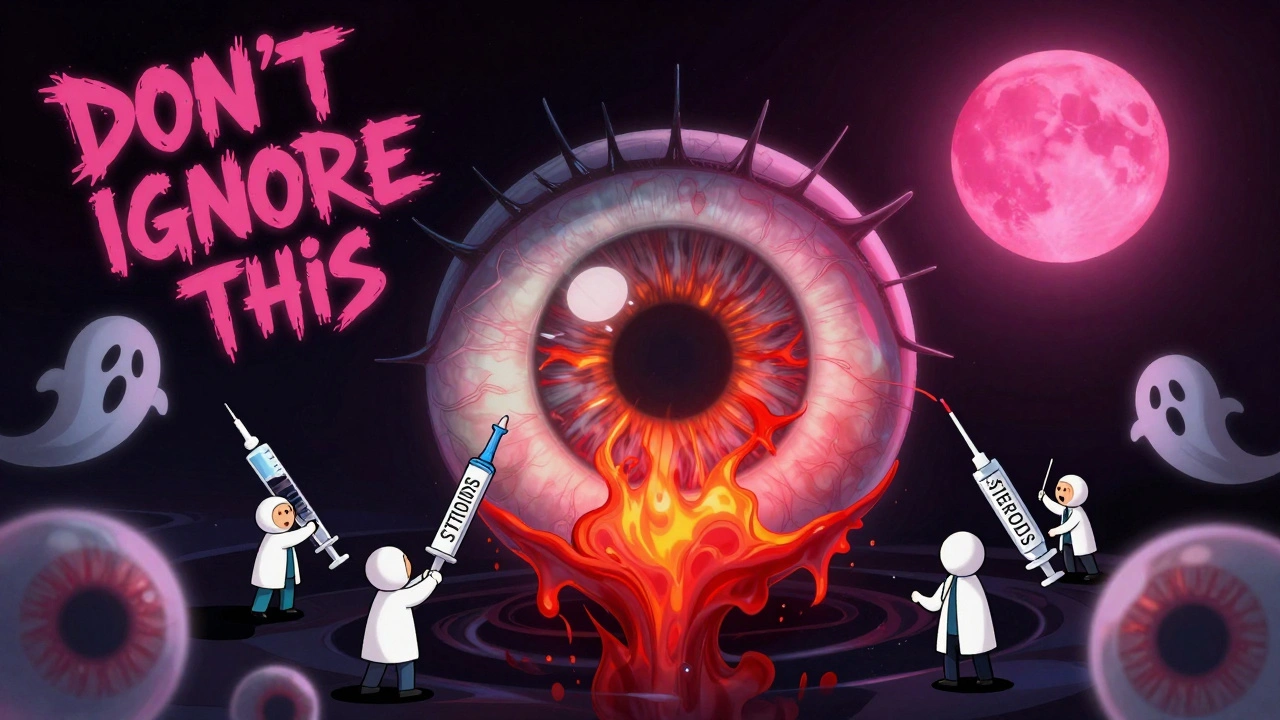
Uveitis: Understanding Eye Inflammation, Causes, and Steroid Treatment
Uveitis is a serious eye inflammation that can lead to vision loss if untreated. Learn the signs, causes, and how steroid therapy works to protect your sight.