
Statin Safety: What You Need to Know About Side Effects, Alternatives, and Managing Risk
When you take a statin, a class of cholesterol-lowering drugs used to reduce the risk of heart attack and stroke. Also known as HMG-CoA reductase inhibitors, they’re among the most prescribed medications in the world because they work—when they’re tolerated. But for many people, the promise of lower LDL comes with muscle pain, fatigue, or worse. That’s where statin safety, the balance between effective treatment and manageable side effects becomes critical. It’s not about avoiding statins entirely—it’s about knowing how to use them right.
Statin side effects aren’t rare. Up to 1 in 10 people report muscle discomfort, and for some, it’s bad enough to stop the drug. But here’s the catch: many of those symptoms aren’t caused by the statin at all. Studies show that in placebo-controlled trials, people who think they’re on a statin often report muscle pain—even when they’re not taking one. That’s why statin intolerance, a condition where side effects force patients to stop or reduce dosage needs careful evaluation. It’s not just about stopping the drug. It’s about testing, rechallenging, and trying different types. Some people tolerate rosuvastatin but not atorvastatin. Others do fine on a low dose every other day. That’s the kind of personalized approach statin rechallenge, a structured process of restarting a statin after a side effect is designed for.
And if statins just don’t work for you? You’re not out of options. There are non-statin drugs like ezetimibe, PCSK9 inhibitors, and bile acid binders that can help lower cholesterol without the muscle issues. But even then, you need to know how your body responds. Diet, exercise, and genetics all play a role. A lot of the posts here focus on real-world solutions: how clinics help people get back on track, what alternatives actually work, and how to spot the difference between normal discomfort and something serious.
Statin safety isn’t a one-size-fits-all rule. It’s a conversation—with your doctor, with your body, and with your own experience. The articles below cover everything from muscle pain myths to what happens when you stop cold turkey, how to tell if your fatigue is from the statin or something else, and why some people need to switch meds entirely. You’ll find practical advice from people who’ve been there, and science that cuts through the noise. No fluff. No hype. Just what you need to make a smart, safe choice about your heart health.
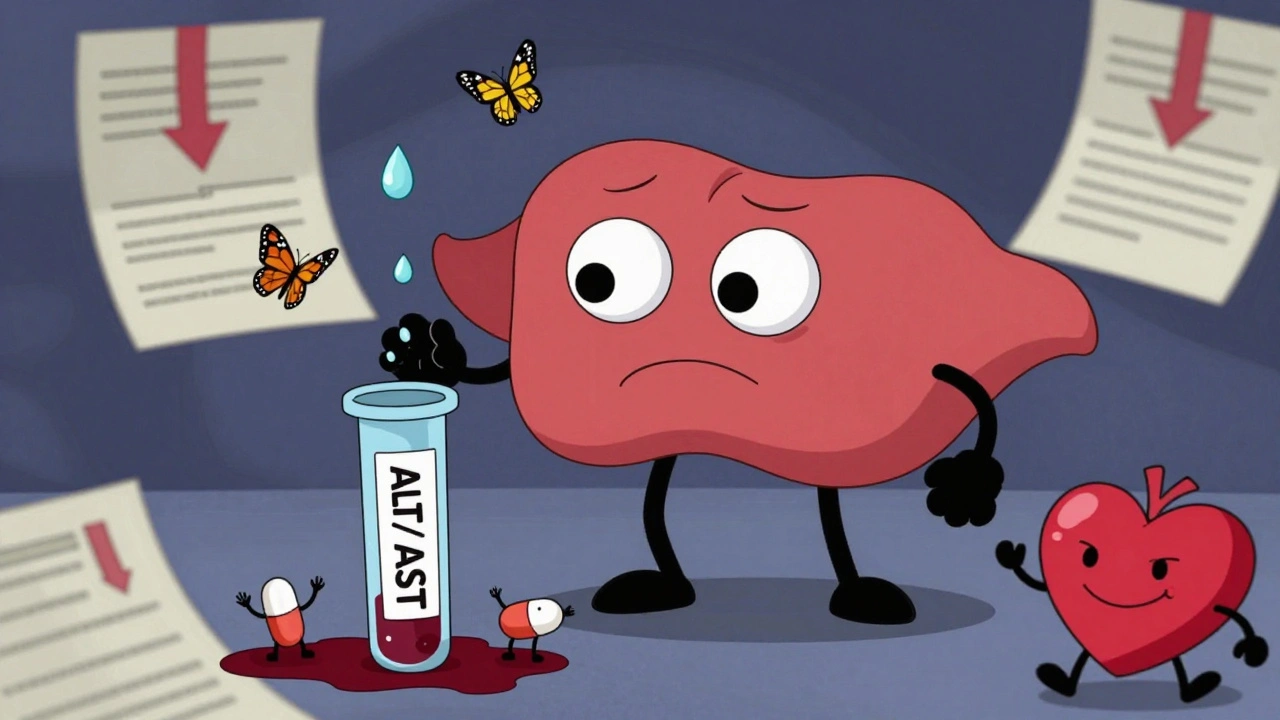
Statin-Related Liver Problems: What You Need to Know About Elevated Liver Enzymes
Statin-related liver enzyme elevations are common but rarely dangerous. Learn when to worry, which statins are safest, and why stopping your medication over mild enzyme spikes could put your heart at risk.