
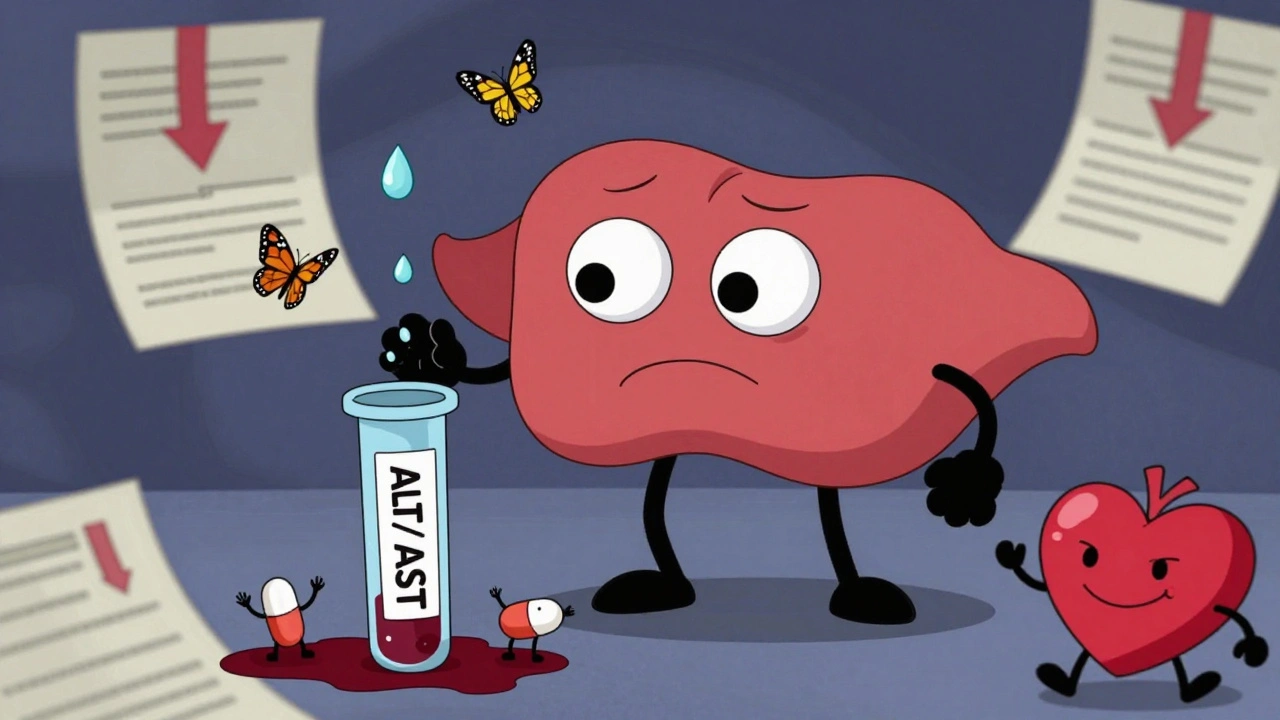
When you start taking a statin to lower your cholesterol, the last thing you want to hear is that your liver enzymes are elevated. It sounds scary - like your liver is failing. But here’s the truth: statin-related liver enzyme elevations are almost never dangerous. In fact, they’re usually harmless, temporary, and don’t mean you need to stop your medication.
What Does It Mean When Liver Enzymes Go Up?
Your liver makes enzymes like ALT (alanine aminotransferase) and AST (aspartate aminotransferase). These help with digestion and detox. When a blood test shows these levels are higher than normal, it doesn’t mean your liver is damaged. It just means the enzymes are leaking out of liver cells - which can happen for many reasons, including exercise, alcohol, fatty liver, or even a viral infection. With statins, this rise happens in about 0.5% to 2% of people. Most of the time, the increase is mild - less than three times the upper limit of normal. And in over 90% of cases, the numbers go back down on their own, even if you keep taking the statin.Why Do Statins Affect Liver Enzymes?
Statins work by blocking a key enzyme in your liver that makes cholesterol. But that same pathway is involved in making other important molecules, like coenzyme Q10 and certain proteins your liver needs to function properly. Some statins - especially the lipophilic ones like simvastatin and atorvastatin - can get into liver cells more easily and cause mild stress on mitochondria, the energy factories inside cells. This stress can lead to a small release of enzymes into the bloodstream. It’s not liver damage. It’s more like your liver cells are temporarily irritated, like a muscle after a tough workout. The body adjusts. Most people never even notice.Which Statins Are Safest for the Liver?
Not all statins are the same when it comes to liver enzymes. Pravastatin and rosuvastatin are hydrophilic - meaning they don’t enter liver cells as easily. Studies show they cause fewer enzyme spikes. In fact, pravastatin has the lowest rate of ALT elevation at just 0.3%, compared to 1.5% for simvastatin and 1.2% for atorvastatin. Cerivastatin used to be the worst offender - it was pulled off the market in 2001 because of muscle and liver risks. But it’s gone now. Today’s statins are much safer. If your enzymes rise after starting a statin, switching to pravastatin or rosuvastatin often brings them back to normal. One patient on Reddit saw his ALT jump from 28 to 142 after starting atorvastatin 40mg. After switching to pravastatin 40mg, his levels returned to 31 within six weeks - no symptoms, no harm done.Who’s at Higher Risk?
Some people are more likely to see enzyme changes:- People over 75
- Those with kidney problems (creatinine clearance under 30 mL/min)
- People taking other drugs that interact with statins - especially antibiotics like clarithromycin or antifungals like fluconazole
- Those with genetic variants in the SLCO1B1 gene - this affects how your liver absorbs statins
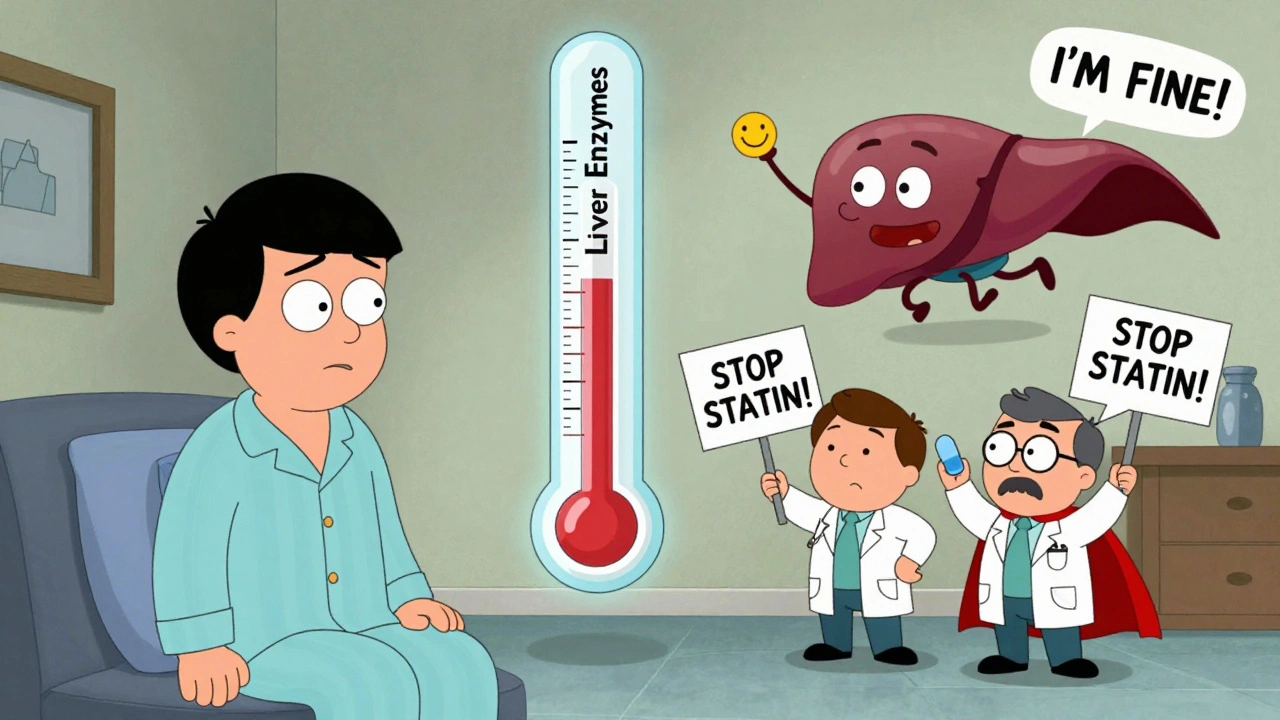
What Should You Do If Your Enzymes Are High?
The old rule - check liver enzymes every 6 months - is outdated. The FDA removed that requirement in 2012. Why? Because routine testing doesn’t catch serious liver injury. And it causes more harm than good. Here’s what you actually need to do:- Get a baseline liver test before starting a statin.
- If your enzymes are normal, don’t retest unless you feel unwell - fatigue, nausea, dark urine, yellow skin.
- If enzymes rise but stay under 3x the upper limit of normal, keep taking the statin. Retest in 4-6 weeks. In most cases, they’ll drop back down.
- If they go above 3x ULN, stop the statin for a few weeks, then retest. If they return to normal, your doctor may try a different statin at a lower dose.
What Else Could Be Causing High Enzymes?
Before blaming the statin, rule out other causes. In patients with elevated liver enzymes:- 45.3% have nonalcoholic fatty liver disease
- 18.7% have alcohol use
- 4.2% have viral hepatitis (B or C)
- 12% have thyroid problems or muscle injury
Why Do So Many People Stop Statins Over Liver Fears?
A 2021 survey found that 68% of patients were deeply worried about liver damage from statins. But only 1.2% ever had an enzyme level above 3x ULN. That’s a huge gap between fear and reality. Many doctors still order routine liver tests - even though the FDA, American College of Cardiology, and American Gastroenterological Association all say it’s unnecessary. In the U.S., this costs over $1.2 billion a year in wasted tests. And it’s not just money. It’s trust. When patients are told their liver enzymes are high, they often stop their statin - even if their doctor says it’s fine. A 2023 American Heart Association survey showed 22% of statin users had quit at least once because of liver concerns. But 64% restarted after talking to their doctor.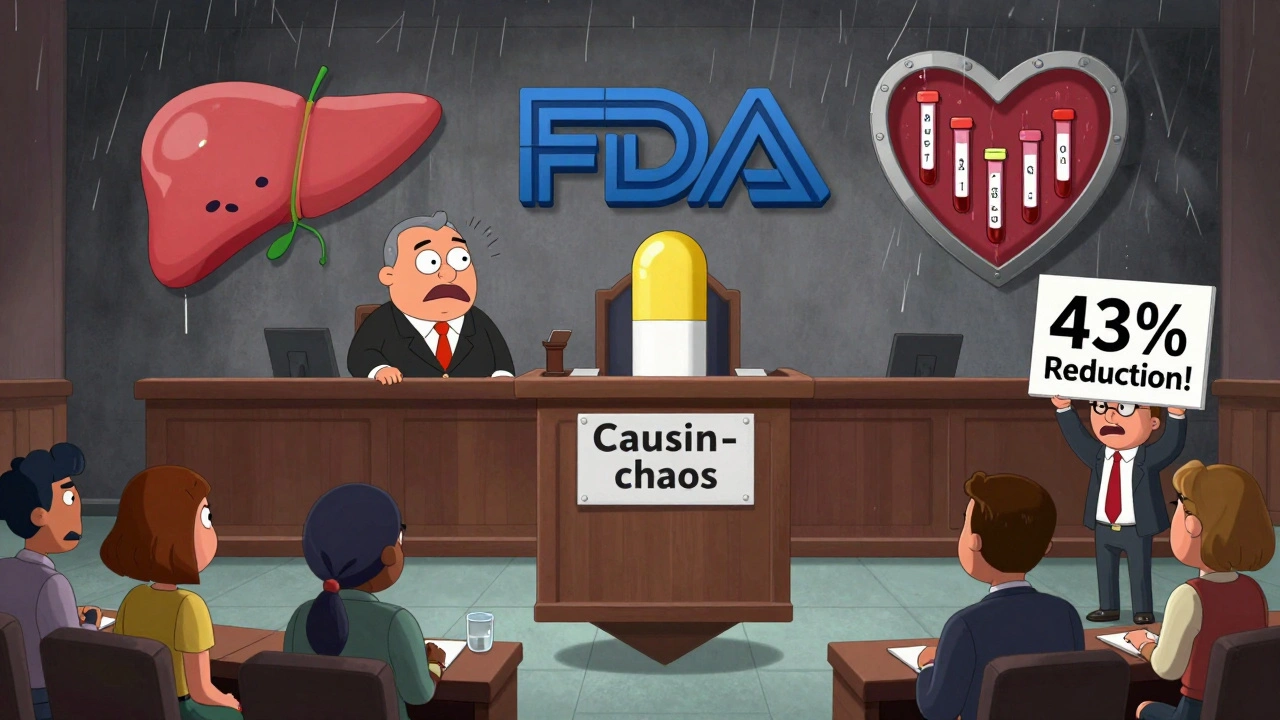
What’s New in 2025?
New tools are emerging to make statin use safer:- The FDA approved a genetic test in 2023 called StatinSafety Plus. It checks for the SLCO1B1 gene variant that increases risk. But it’s only recommended for high-dose statin users with existing liver issues - not for everyone.
- Research is testing coenzyme Q10 supplements to reduce enzyme spikes. Early trials show a 43% drop in ALT levels when taken with statins. But we don’t yet know if this improves heart outcomes.
- European guidelines now say statins are safe even in early-stage cirrhosis (Child-Pugh A). A 2024 study showed only 1.3% of these patients had enzyme levels above 3x ULN - similar to healthy people.
The Big Picture: Benefits vs. Risks
Let’s put this in perspective. For every 1,000 people taking a statin for 5 years:- 30-40 will avoid a heart attack or stroke
- 1-2 might have a mild, temporary enzyme rise
- Less than 1 in 10,000 will have serious liver injury
Final Takeaway
If your liver enzymes rise while on a statin:- Don’t stop the medication unless your doctor tells you to.
- Don’t panic. Most elevations are harmless and temporary.
- Don’t get routine liver tests - they’re not needed.
- Do talk to your doctor if you feel sick - fatigue, nausea, yellow eyes.
- Do consider switching to pravastatin or rosuvastatin if levels stay high.
Are elevated liver enzymes dangerous when taking statins?
No, elevated liver enzymes from statins are rarely dangerous. In over 90% of cases, the rise is mild (under 3x the upper limit of normal) and temporary. It doesn’t mean liver damage is occurring. Most people never have symptoms, and enzyme levels often return to normal even if they keep taking the statin.
Should I get my liver enzymes checked every 6 months on statins?
No. Routine liver enzyme testing every 6 months is no longer recommended by the FDA, American College of Cardiology, or American Gastroenterological Association. A baseline test before starting statins is enough. Only retest if you develop symptoms like fatigue, nausea, dark urine, or yellowing of the skin.
Which statin is least likely to raise liver enzymes?
Pravastatin and rosuvastatin are the safest for liver enzymes. Pravastatin has the lowest rate of elevation at just 0.3%, compared to 1.2-1.5% for simvastatin and atorvastatin. This is because they’re hydrophilic - they don’t enter liver cells as easily, reducing cellular stress.
Can I take statins if I have fatty liver disease?
Yes - and you should. People with nonalcoholic fatty liver disease (NAFLD) have a lower risk of statin-related enzyme elevations than those without it. Statins may even help reduce liver fat and inflammation. Stopping statins due to fatty liver is unnecessary and increases heart disease risk.
What should I do if my liver enzymes are more than 3 times the normal level?
If enzymes exceed 3x the upper limit of normal, your doctor may recommend stopping the statin temporarily and retesting in 4-6 weeks. If levels return to normal, you can usually restart the same statin or switch to a different one, like pravastatin. Never stop without medical advice - the risk of heart events from stopping statins is much higher.
Can genetic testing help predict statin liver side effects?
Yes. A genetic test called StatinSafety Plus checks for the SLCO1B1 gene variant, which increases the risk of enzyme elevation. It’s about 84% accurate at predicting who might have issues. But it’s only recommended for people on high-dose statins who already have liver conditions - not for routine use in everyone.
Do statins cause liver failure?
Extremely rarely. Between 1990 and 2020, there were only 32 confirmed cases of statin-induced acute liver failure in the U.S. out of 20 million patient-years of use. That’s 0.00016 cases per 1,000 patient-years. Statins are far more likely to save your life than harm your liver.
Will taking coenzyme Q10 prevent liver enzyme rises?
Some small studies show coenzyme Q10 supplements can reduce statin-related ALT elevations by about 43%. But this hasn’t been proven to improve long-term heart outcomes. It’s not a standard recommendation yet - but if you’re concerned and your doctor agrees, it’s generally safe to try.
Next Steps
If you’re on a statin and worried about your liver:- Don’t stop the medication on your own.
- Don’t request routine liver tests - they’re not helpful.
- Do ask your doctor: “Is my enzyme rise likely due to the statin, or could something else be causing it?”
- Do ask: “Would switching to pravastatin or rosuvastatin help?”
- Do remember: Your heart needs this drug more than your liver fears it.
Comments
Heidi Thomas
December 5, 2025 AT 22:45zac grant
December 7, 2025 AT 13:09michael booth
December 9, 2025 AT 00:26val kendra
December 9, 2025 AT 05:09Augusta Barlow
December 9, 2025 AT 09:04Joe Lam
December 10, 2025 AT 14:08Bill Wolfe
December 10, 2025 AT 20:05Ollie Newland
December 11, 2025 AT 00:11Rebecca Braatz
December 11, 2025 AT 22:56jagdish kumar
December 12, 2025 AT 04:22Benjamin Sedler
December 13, 2025 AT 07:35