
Senior Medication Errors: What You Need to Know to Stay Safe
When older adults take multiple medications, senior medication errors, mistakes in how drugs are prescribed, taken, or monitored in older adults. Also known as polypharmacy risks, these errors are one of the most common reasons seniors end up in the ER. It’s not about being careless—it’s about complexity. A 75-year-old might be on five, ten, or even fifteen different pills for heart disease, arthritis, diabetes, and sleep issues. Each one has rules: when to take it, what to avoid eating with it, how it interacts with the others. Mix in changing kidney function, memory lapses, or vision problems, and it’s no surprise things go wrong.
One big problem is polypharmacy, the use of multiple medications at once, especially when some may no longer be needed. Doctors often treat each condition separately without stepping back to see the whole picture. A blood pressure drug might make dizziness worse, which leads to a fall, which leads to a painkiller, which then messes with the stomach or kidneys. And then there’s drug interactions, when two or more medications react in harmful ways inside the body. Ginkgo biloba and blood thinners? That’s a documented combo that can cause bleeding. Acetaminophen in cold pills on top of your nightly painkiller? That’s how liver damage happens quietly. Even something as simple as a protein-rich meal can cut the absorption of levodopa by half—something many seniors don’t even know to ask about.
Then there’s medication adherence, how well a patient follows their prescribed regimen. Pills get mixed up. Labels fade. Pill organizers sit unused. Some seniors skip doses because they can’t afford them. Others take extra because they don’t feel better fast enough. Both are dangerous. And when family members try to help, they sometimes add their own suggestions—herbal supplements, over-the-counter sleep aids, leftover antibiotics from last year. None of that is harmless.
The good news? Most senior medication errors are preventable. It starts with asking the right questions: Why am I on this? Can any be stopped? What happens if I miss a dose? What should I avoid eating or taking with it? And who’s keeping track of all of this? A pharmacist review, a medication list you carry in your wallet, or even a simple photo of your pillbox on your phone can make a huge difference. You don’t need to be a medical expert—you just need to be informed.
Below, you’ll find real-world guides that break down exactly how these errors happen, what to watch for, and how to fix them before it’s too late. From how Medicaid policies affect what seniors can afford, to how common drugs like statins or opioids can have hidden side effects, these posts give you the tools to speak up, ask for help, and take control—not just of your pills, but of your health.
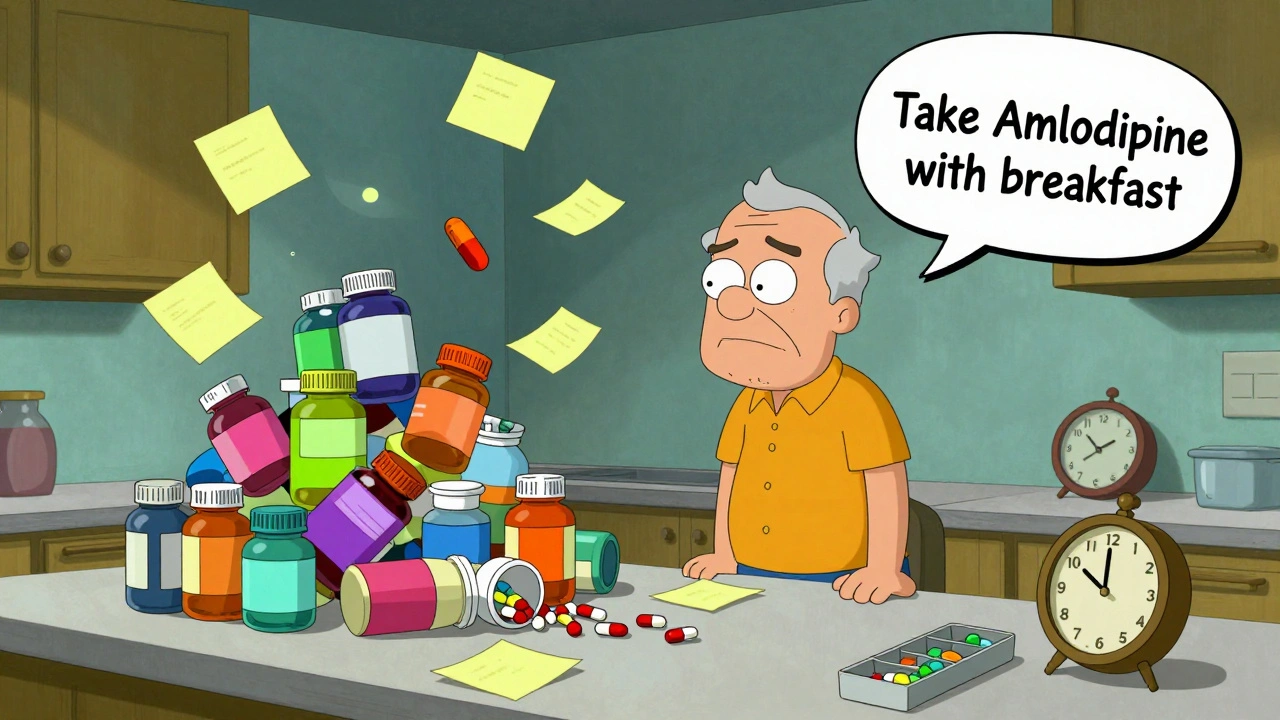
Medication Adherence Challenges for Older Adults: Simple Solutions That Work
Most older adults take multiple medications, but nearly half don't take them as prescribed. Learn the real reasons why - from cost and complexity to isolation - and discover simple, proven solutions that actually work.