
Medicaid Generic Drugs: What’s Covered, How They Save Money, and What You Need to Know
When you’re on Medicaid, a U.S. government health program that provides coverage for low-income individuals and families. Also known as state-funded health assistance, it helps millions afford the medicines they need every day. One of the biggest ways Medicaid keeps costs down is by prioritizing generic drugs, medications that contain the same active ingredients as brand-name drugs but cost far less. Also known as non-brand prescriptions, they’re not cheaper because they’re weaker—they’re cheaper because they don’t carry the marketing and patent costs of the original. The FDA requires them to work the same way, in the same amount, and with the same safety profile. That’s why over 90% of prescriptions filled in the U.S. are generics—and Medicaid pushes that number even higher.
Here’s the real win: when a second or third company starts making the same generic drug, prices drop fast. One study showed that after three generic makers enter the market, prices can fall to just 40% of the original brand cost. Medicaid leverages this competition to get the best deals possible, passing those savings directly to you. That means you might pay $0 or $1 for a 30-day supply of metformin, lisinopril, or atorvastatin—drugs that could cost $100+ without coverage. But not all generics are treated the same. Each state’s Medicaid program has its own formulary, a list of approved medications covered under the plan. Also known as preferred drug list, it determines which generics are covered and which require prior authorization or step therapy. Some states prioritize certain brands of generics based on cost or reliability, while others restrict coverage for drugs with known abuse potential or questionable effectiveness.
It’s not just about price. Medicaid also tracks how well patients stick to their meds. If you’re on multiple drugs for high blood pressure, diabetes, or depression, taking them as prescribed matters. That’s why many Medicaid programs offer free pill organizers, medication reviews, and even home delivery for chronic conditions. They know that if you can’t afford your pills, you won’t take them—and that leads to hospital visits, which cost way more than the drugs themselves. The goal isn’t just to give you cheap medicine. It’s to make sure you actually use it.
Some people worry that generic drugs don’t work as well. But that’s usually not chemistry—it’s psychology. Studies show people feel like brand-name drugs work better, even when they’re identical to the generic. Medicaid helps fight that myth by making generics easy to access and affordable. If your doctor prescribes a brand, Medicaid will often ask them to switch to the generic unless there’s a medical reason not to. And if you’re worried about side effects, changing from one generic to another isn’t the same as switching from brand to generic. The active ingredient stays the same. The fillers might change, and that’s usually harmless.
Below, you’ll find real stories and facts about how Medicaid generic drugs affect people’s lives—from seniors managing five prescriptions to parents juggling asthma inhalers and insulin. You’ll see how drug competition drives prices down, why some generics get excluded from coverage, and what to do if your medication suddenly becomes unavailable. These aren’t theory pieces. These are lessons from people who’ve been through it, and the data that backs them up. Whether you’re on Medicaid now, planning to apply, or helping someone who is, this collection gives you the practical truth about what’s covered, what’s not, and how to make sure you get what you need without overpaying.
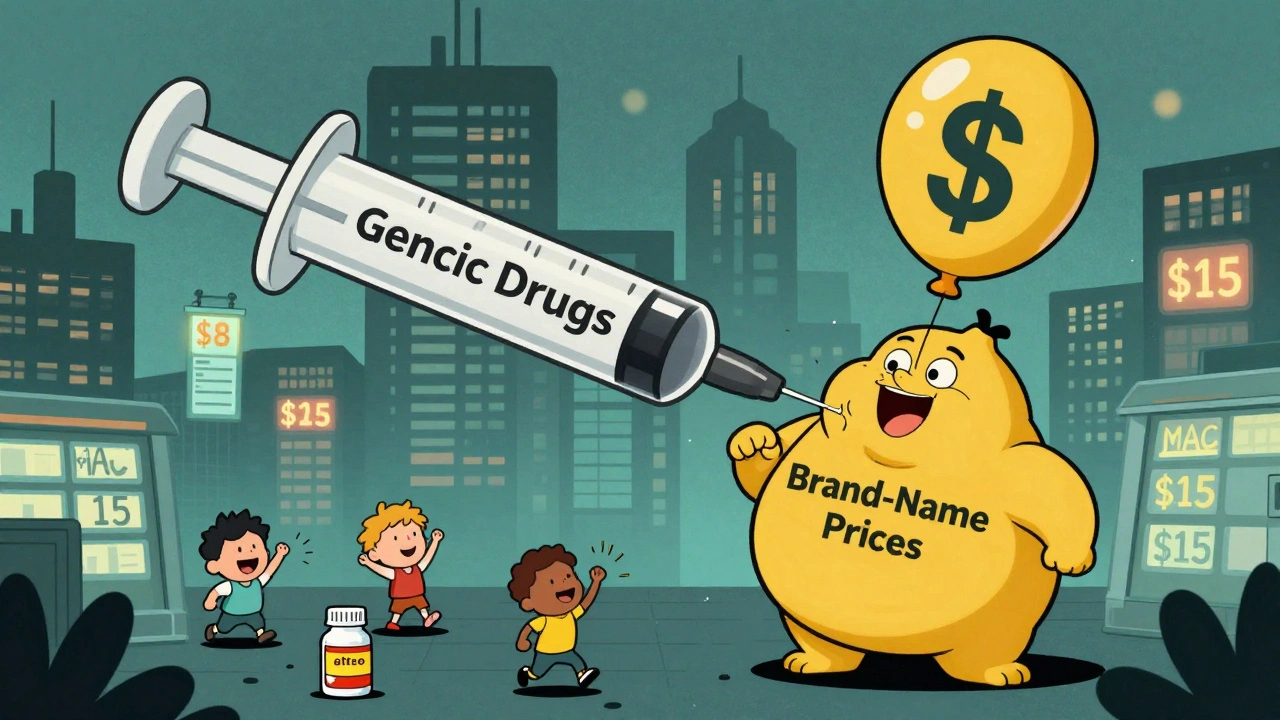
Medicaid Generic Drug Policies: How States Are Cutting Prescription Costs
States are using MAC lists, PBM transparency, and anti-price-gouging laws to control rising generic drug costs in Medicaid. With generics making up 85% of prescriptions, these strategies are critical to keeping the program sustainable.