
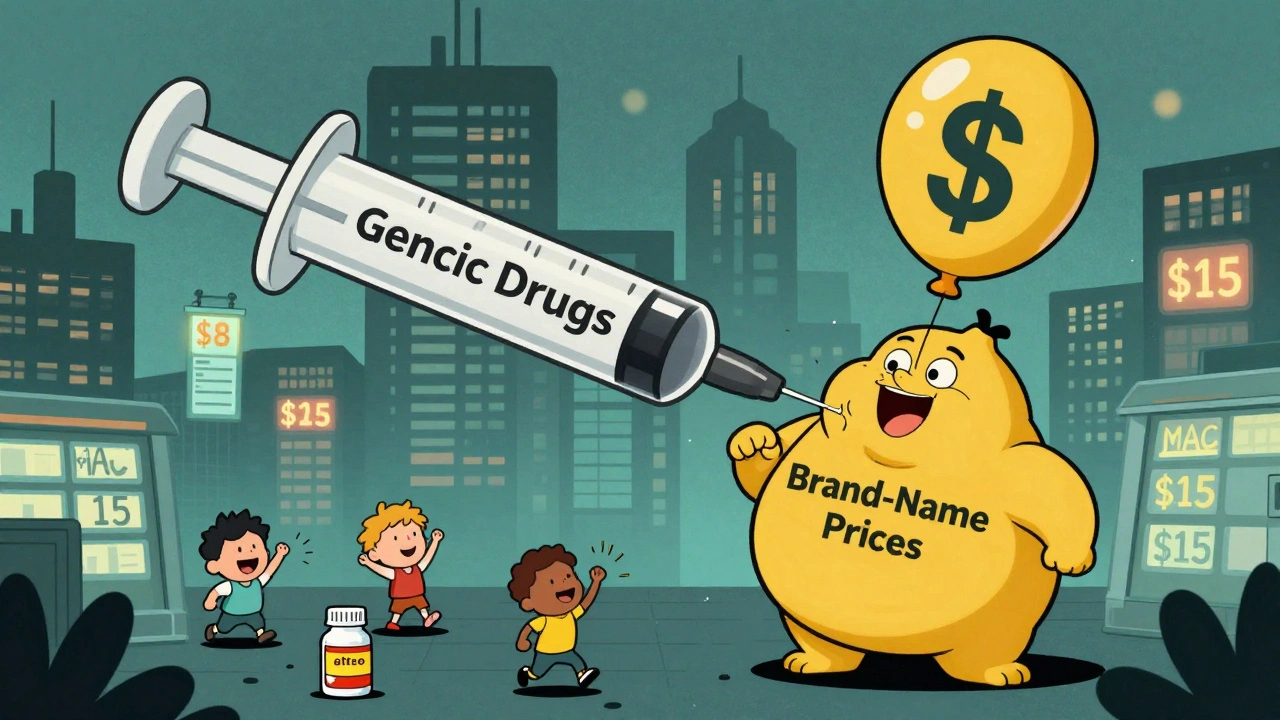
Generic drugs make up 84.7% of all Medicaid prescriptions, but they only account for 15.9% of total drug spending. That’s not a mistake. It’s the reason states are betting big on generics to keep Medicaid budgets from collapsing. While brand-name drugs grab headlines with their $10,000-a-year price tags, it’s the quiet, everyday generics-like metformin, lisinopril, or levothyroxine-that keep millions of low-income patients alive. And when those cheap drugs suddenly spike in price, states don’t wait. They act.
How Medicaid Gets Its Generic Drug Discounts
The federal Medicaid Drug Rebate Program (MDRP), created in 1990, is the backbone of how states pay less for generics. Manufacturers must give Medicaid a rebate for every pill sold. For generic drugs, that rebate is either 13% of the average manufacturer price-or the difference between that price and the best price they offer anyone else, whichever is higher. It sounds simple, but it’s not flexible. Unlike brand-name drugs, where states can negotiate extra rebates on top of the federal minimum, generics are locked into this formula. That means if a manufacturer hikes the price of a generic antibiotic, Medicaid’s rebate goes up too-but not enough to fully offset the cost.
That’s why 42 states now use something called a Maximum Allowable Cost (MAC) list. Think of it like a price ceiling. If a pharmacy tries to bill Medicaid for a generic drug at $15, but the state’s MAC list says the max they’ll pay is $8, the pharmacy gets $8. It’s not about what the drug costs the pharmacy-it’s about what the state says it’s worth. States update these lists monthly or quarterly, but delays are common. When prices drop faster than the list updates, patients can’t get the cheaper version. When prices spike, the MAC might still be too low, and pharmacies refuse to fill the prescription.
States Are Fighting Back Against Price Gouging
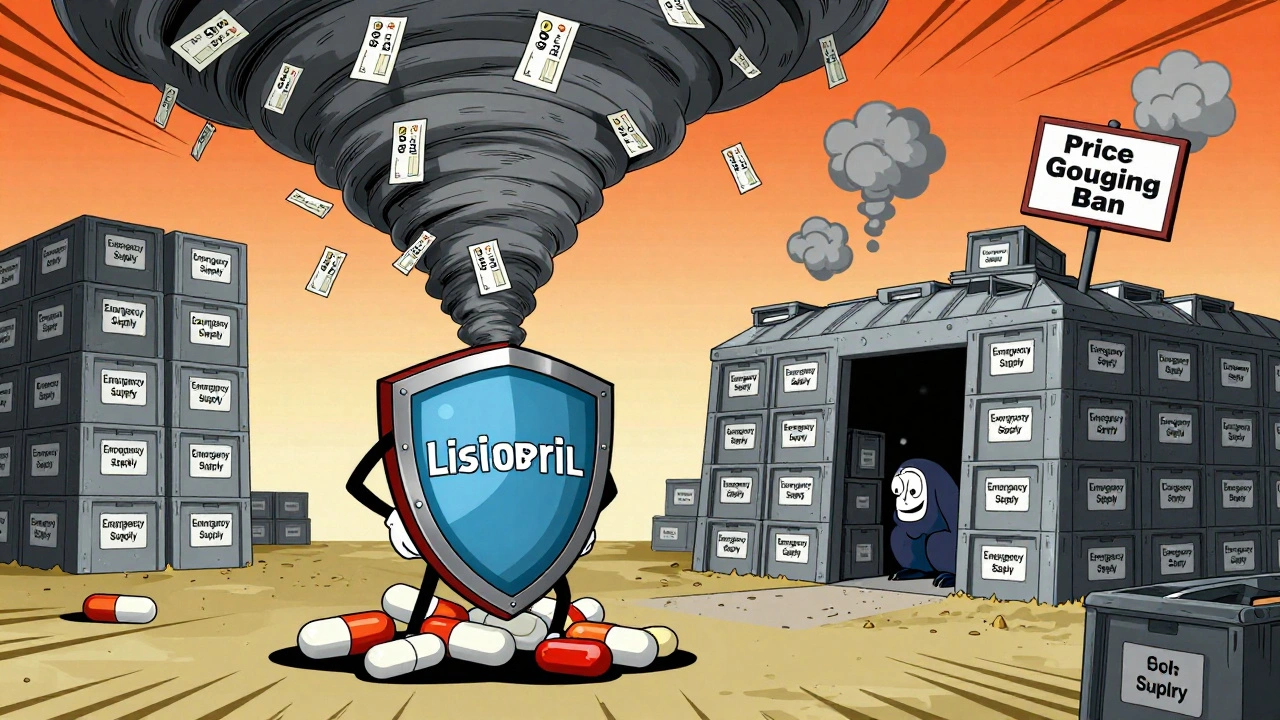
Some generic drug makers don’t just raise prices-they exploit shortages. In 2019, a single manufacturer raised the price of a life-saving generic seizure medication from $25 to $1,800 per bottle. That’s not market competition. That’s price gouging. Maryland was the first state to pass a law in 2020 that makes it illegal to jack up prices on off-patent drugs without a valid reason-like new clinical data or manufacturing costs. Since then, at least six other states have followed, including California and Colorado. These laws don’t ban price increases. They require manufacturers to prove the increase is fair. If they can’t, the state can force them to lower the price or face fines.
It’s not just about individual drugs. States are now looking at the whole supply chain. Three companies control 65% of the generic injectable market. That kind of consolidation means fewer competitors, less pressure to keep prices low, and more risk when one factory shuts down. In 2023, 23 states reported shortages of critical generic drugs-some lasting over 147 days. To fight this, 12 states passed laws in 2024 to build emergency stockpiles of essential generics. Oregon and Washington teamed up to create a multi-state buying pool, negotiating bulk discounts on 47 high-volume generics. That’s not just smart-it’s necessary.
Pharmacy Benefit Managers Are the Hidden Wild Card
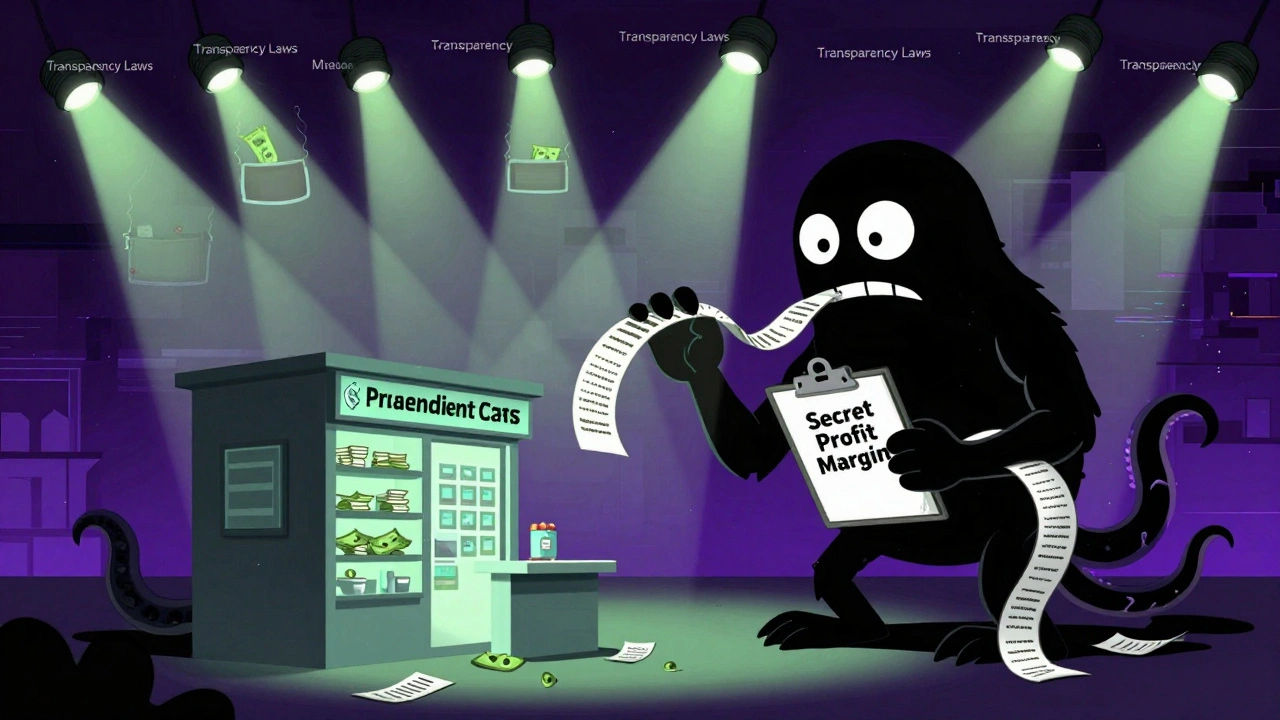
Most states don’t pay pharmacies directly. They hire Pharmacy Benefit Managers (PBMs)-companies like OptumRx or Magellan-to handle drug claims, negotiate prices, and manage formularies. The problem? PBMs keep their profit margins secret. They collect rebates from drug makers, charge pharmacies a fee, and pocket the difference. In some cases, a pharmacy pays $2 for a generic drug, the PBM bills Medicaid $10, and the PBM keeps $6 as profit. That’s why 27 states passed new PBM transparency rules in 2024. Nineteen of them now require PBMs to report what they actually paid for each generic drug. If a state finds out a PBM is overcharging, they can cut ties or demand refunds.
Independent pharmacies are feeling the squeeze. A 2024 survey of 1,200 small pharmacies found that 74% had claims denied or delayed because the state’s MAC list didn’t match what the PBM was charging. Some pharmacies had to pay out of pocket just to fill prescriptions. That’s not sustainable. States are starting to realize: if you want to control drug costs, you have to fix the middlemen too.
Therapeutic Interchange and Preferred Drug Lists
States aren’t just capping prices-they’re guiding doctors and patients toward cheaper, equally effective options. Nearly 30 states use Preferred Drug Lists (PDLs). These are lists of generics that Medicaid will cover without extra paperwork. If a doctor wants to prescribe a more expensive generic that’s not on the list, they have to submit a prior authorization form. It’s not a ban-it’s a nudge. For example, if two generics treat high blood pressure equally well, but one costs $3 and the other costs $12, Medicaid will cover the $3 version automatically. That’s therapeutic interchange in action.
Some states go further. In Texas and Oregon, they stopped restricting access to expensive hepatitis C drugs after prices dropped. Why? Because the generics became affordable. That’s the goal: make the cheap option the default, and the expensive one the exception.
The Pushback from Drug Makers
It’s no surprise that drug makers don’t love these moves. The Pharmaceutical Care Management Association (PCMA), which represents PBMs, argues that state price controls could reduce generic drug availability. They say if manufacturers can’t make a profit on a drug, they’ll stop making it. The Congressional Budget Office agrees-partly. Their 2024 report estimated that aggressive state policies could cut generic spending by 5-8% annually, but warned that if prices drop too low, manufacturers might exit the market. That could lead to shortages, forcing states to pay even more for alternatives.
Stanford’s Dr. Mark Duggan has a different take. He says the real risk isn’t lower prices-it’s outdated rules. He recommends expanding rebate requirements during drug shortages. Right now, when a generic runs out, manufacturers can raise prices without penalty. Duggan argues that if Medicaid tied rebates to supply stability, companies would have a financial reason to keep producing these drugs-even when profits are slim.
What’s Coming Next
In 2025, expect more states to target generics directly. Fifteen new states are expected to introduce legislation to cap prices or require transparency. The federal government is stepping back-CMS canceled its own drug pricing model in March 2025, putting the focus squarely on states. Meanwhile, the rising cost of GLP-1 drugs like Ozempic and Wegovy is putting pressure on Medicaid budgets. Thirteen states already cover these for obesity, but with prior authorization. If the federal government mandates coverage, Medicaid could face an extra $1.2 billion in annual costs.
By 2026, 22 states plan to have strategic stockpiles of critical generics. That’s a long-term fix for shortages. States are also experimenting with value-based purchasing-paying more for generics that lead to fewer hospital visits or better outcomes. It’s a shift from paying per pill to paying for results.
Medicaid’s future doesn’t depend on finding new miracle drugs. It depends on keeping the old ones affordable. The tools are there: MAC lists, rebate reforms, PBM transparency, stockpiles, and therapeutic interchange. The challenge? Doing it fast enough to keep up with price spikes, without triggering shortages. States aren’t just trying to save money. They’re trying to save lives-by making sure the cheapest drugs are always in stock.
Why do generic drugs cost so much if they’re not brand-name?
Generic drugs are cheaper to make because they don’t require new clinical trials. But when manufacturing is concentrated in just a few companies, or when supply chains break down, prices can spike. Some manufacturers exploit shortages to raise prices dramatically-sometimes by thousands of percent. States are now passing laws to stop this kind of price gouging.
What is a Maximum Allowable Cost (MAC) list?
A MAC list is a state-mandated price cap for generic drugs. If a pharmacy tries to bill Medicaid more than the MAC amount, Medicaid only pays the capped price. It helps control costs but can cause problems if the list isn’t updated quickly when drug prices drop or rise.
Do all states use MAC lists?
No, but 42 out of 50 states use them. The rest rely on other methods like preferred drug lists or direct rebate negotiations. States that use MAC lists update them anywhere from monthly to annually, with most doing it quarterly.
How do Pharmacy Benefit Managers (PBMs) affect generic drug prices?
PBMs act as middlemen between states and pharmacies. They collect rebates from drug makers and charge pharmacies fees, often keeping the difference as profit. Many PBMs don’t disclose what they actually pay for generics, leading to overcharges. In response, 19 states now require PBMs to report their true acquisition costs.
Can state policies cause generic drug shortages?
Yes, if prices are set too low, manufacturers may stop producing a drug because it’s not profitable. The Congressional Budget Office warns that overly aggressive price controls could reduce availability. But the bigger threat right now is market consolidation-not price caps. Three companies control most of the generic injectable market, making shortages more likely.
Are state efforts to control generic drug prices working?
Yes, but not perfectly. States have reduced spending by slowing price hikes and forcing transparency. The Congressional Budget Office estimates state policies could save $3.8 billion annually by 2027. The real success is in preventing wild price spikes. The challenge now is balancing affordability with supply stability.
Comments
Ali Bradshaw
December 6, 2025 AT 01:18Love how states are finally taking charge instead of waiting for federal hand-holding. MAC lists aren't perfect, but they're keeping people alive. My grandma's on lisinopril-without these caps, she'd be choosing between meds and groceries. Simple math, really.
Lynette Myles
December 7, 2025 AT 01:52This is all a psyop. The FDA, PBMs, and Big Pharma are in bed together. That ‘rebate system’? A front. They want you dependent. Watch what happens when they cut off generics next month.
Annie Grajewski
December 7, 2025 AT 15:35so like… the real villain is the guy who invented the word ‘pharmacy benefit manager’? like… why does that job even exist? someone just made a title for ‘middleman who takes 60% and calls it profit’.
luke newton
December 7, 2025 AT 18:25People like you think cheap drugs are a right. They’re not. If you can’t afford your meds, maybe you shouldn’t have had kids. Or moved to a state that doesn’t tax the rich. This isn’t a charity program-it’s a fiscal trap.
an mo
December 8, 2025 AT 04:28Let’s be clear: 65% market concentration in injectables isn’t market failure-it’s strategic oligopoly. The DOJ should’ve broken these firms up in 2015. Instead, we got MAC lists and feel-good op-eds. Pathetic.
And don’t get me started on the CBO’s ‘risk of shortages’ narrative. That’s industry PR dressed as analysis. Shortages are manufactured to justify price hikes.
Jennifer Patrician
December 8, 2025 AT 15:43They’re lying about the stockpiles. The real plan is to ration meds by zip code. You think Oregon’s buying for ‘multi-state pools’? Nah. They’re hoarding for their own citizens while rural counties get nothing. It’s systemic neglect with a fancy spreadsheet.
Carole Nkosi
December 10, 2025 AT 07:59Medicaid is a colonial relic. You think these states care about poor people? They care about budgets. The real solution is universal healthcare-not tweaking price caps on pills made in China by corporations that pay $2/hour.
Jimmy Jude
December 12, 2025 AT 02:25Somebody call the media. The quiet revolution is happening in state legislatures. Not with protests, not with hashtags-but with MAC lists and PBM audits. This is the real anti-establishment movement. And it’s boring as hell.
Meanwhile, I’m still waiting for someone to explain why a $0.10 pill costs $8 to dispense. That’s not capitalism. That’s magic.
Mellissa Landrum
December 12, 2025 AT 10:06you know who’s behind this? the illuminati. they control the generic drug factories in india and china. they raise prices to make you dependent on big pharma’s $10k drugs. then they sell you the ‘solution’-a new drug that costs more. it’s all connected.
sean whitfield
December 14, 2025 AT 07:28Why do we even call them ‘generics’? They’re not generic. They’re the same damn pills. Just without the logo. Why pay $10 for a pill with a brand name if it’s chemically identical to the $3 one? This isn’t capitalism. It’s theater.
Mark Curry
December 16, 2025 AT 03:12Thanks for laying this out. I’ve seen pharmacists cry because they can’t fill prescriptions due to MAC delays. It’s not politics-it’s people. Maybe we stop calling it ‘cost control’ and start calling it ‘life preservation’.
Also, if you’re mad about PBMs, you should be mad that your state hasn’t passed transparency laws yet. That’s the real fix.
aditya dixit
December 16, 2025 AT 22:54The fundamental issue is not pricing-it’s incentive alignment. When manufacturers profit from scarcity, scarcity will be encouraged. We need a system where profit is tied to availability, not price spikes. That’s not regulation-it’s basic economics.
Dr. Duggan is right. Tie rebates to supply stability. Reward consistent production. Punish hoarding. The market can work-but only if the rules are designed for human survival, not quarterly earnings.
Manish Shankar
December 18, 2025 AT 20:18While the structural reforms are commendable, one must not overlook the logistical challenges in rural and underserved areas. The implementation of MAC lists and PBM transparency mandates often lacks adequate infrastructure support, resulting in delayed reimbursements and pharmacy closures. A holistic approach must include digital integration and workforce training to ensure equitable access.
William Chin
December 20, 2025 AT 15:19As a policy analyst with 18 years in state Medicaid administration, I can confirm: MAC lists are the most effective tool we have. But they require real-time price feeds, not quarterly updates. We’ve piloted automated API integrations with pharmacy networks in three states. Prices update within 4 hours. Shortages dropped 41%. This isn’t theory-it’s operational reality. The federal government should mandate this nationwide.