
ALT Elevation: What It Means, Why It Matters, and What You Need to Know
When your blood test shows ALT elevation, Alanine Aminotransferase is a liver enzyme that leaks into the bloodstream when liver cells are damaged or stressed. Also known as SGPT, it's one of the most common markers doctors check to see if your liver is under pressure. It’s not a disease itself — it’s a signal. Think of it like a car’s check engine light. The light doesn’t tell you what’s broken, but it tells you something’s wrong and needs looking at.
Liver injury, damage to liver cells from toxins, medications, or disease is the most frequent cause of high ALT. Many everyday drugs — from common painkillers like acetaminophen to statins and even some herbal supplements like Ginkgo Biloba — can trigger this. In fact, nearly half of all drug-related liver issues show up first as elevated ALT. It’s not just about alcohol. Even a single extra pill, or mixing meds without knowing, can push your levels up. Your liver doesn’t scream — it just sends a quiet signal through your bloodwork.
Liver enzymes, including ALT and AST, are proteins that help the liver do its job — breaking down toxins, processing nutrients, and making proteins your body needs. When these enzymes rise, it’s not always serious, but it’s never harmless. A mild bump might mean a recent illness or a new medication. A big jump? That’s your body waving a red flag. What you eat matters too. High-protein meals can affect how your body absorbs certain drugs, and that can indirectly stress your liver. And if you’re on multiple meds — especially as an older adult — the risk of hidden interactions goes up fast.
What you’ll find below isn’t just a list of articles. It’s a practical guide to understanding what’s really behind your ALT numbers. You’ll see how common medications like acetaminophen and NSAIDs can quietly damage your liver. You’ll learn how to spot early signs of trouble before it becomes a crisis. You’ll find out why some people tolerate statins just fine while others see their ALT climb. And you’ll discover simple steps — like checking your pill labels, timing your meals, or knowing when to ask for a liver test — that can keep your liver healthy without drastic changes.
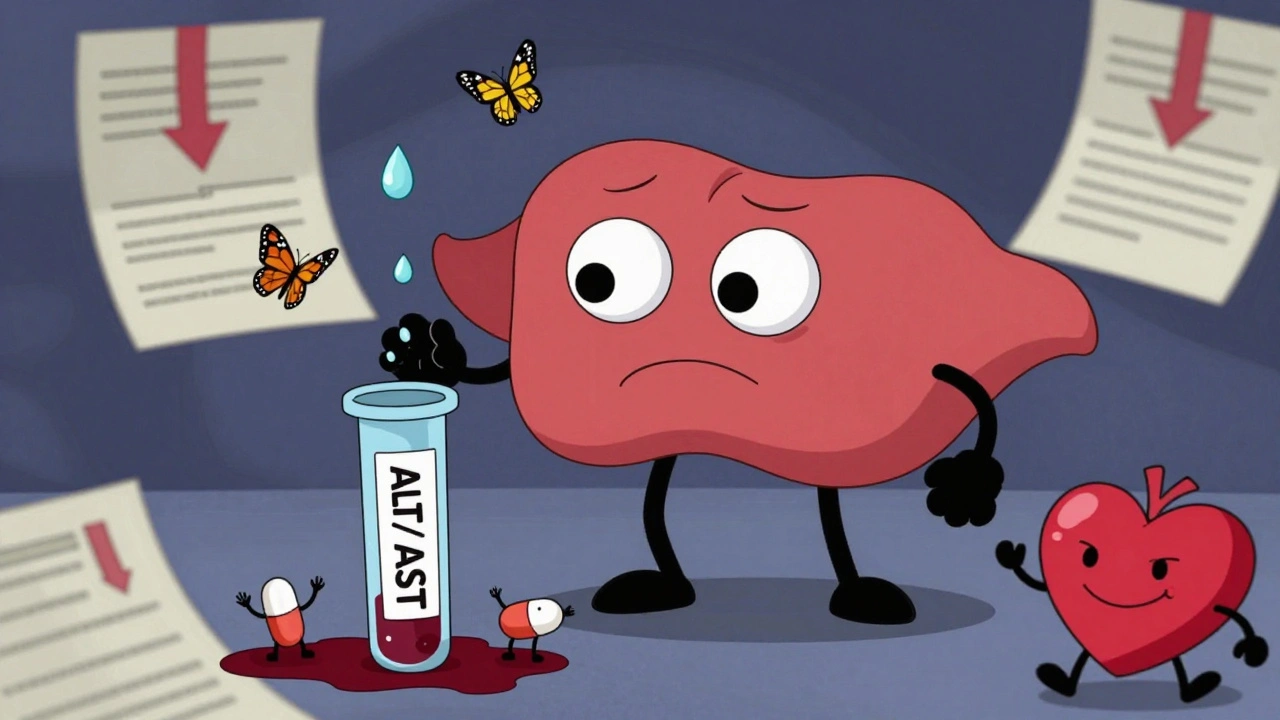
Statin-Related Liver Problems: What You Need to Know About Elevated Liver Enzymes
Statin-related liver enzyme elevations are common but rarely dangerous. Learn when to worry, which statins are safest, and why stopping your medication over mild enzyme spikes could put your heart at risk.