

Every year, over 300 million people worldwide live with asthma and 251 million with COPD. Managing these conditions often involves two types of medications: bronchodilators and corticosteroids. While they work together to improve breathing, many people don't understand how they differ or when to use each one. Knowing the basics can make a big difference in controlling symptoms and preventing emergencies.
How Bronchodilators Work
Bronchodilators are medications that relax the smooth muscles around your airways. This relaxation opens up the passages, making it easier to breathe. There are two main types: beta-2 agonists and anticholinergics.
Short-acting beta-agonists (SABAs) like Albuterol work within 15-20 minutes and last 4-6 hours. They're used for quick relief during asthma attacks. Long-acting beta-agonists (LABAs) such as Salmeterol take about 30 minutes to start working but provide relief for 12 hours or more. These are for daily maintenance, not emergencies.
Anticholinergic bronchodilators like Ipratropium block acetylcholine receptors, which stops the muscles from tightening. They take 15 minutes to work and last 4-6 hours. Newer long-acting anticholinergics like Tiotropium offer 24-hour coverage, making them ideal for COPD management.
How Corticosteroids Work
Corticosteroids are anti-inflammatory drugs that target the root cause of breathing problems. Unlike bronchodilators, they don't provide immediate relief but work over time to reduce swelling and mucus in the airways.
Inhaled corticosteroids like Fluticasone, Budesonide, and Mometasone bind to glucocorticoid receptors in lung cells. This process suppresses over 100 inflammatory genes while activating anti-inflammatory ones. They reduce airway sensitivity and prevent flare-ups when used consistently.
It takes weeks of regular use for corticosteroids to show full effects. Studies show they lower asthma exacerbations by 30-50% and reduce the need for emergency care. However, they have no immediate bronchodilating effect, which is why they're always paired with bronchodilators for acute symptoms.

Why Use Them Together
Bronchodilators and corticosteroids work best when used together because they address different aspects of respiratory disease. Bronchodilators open the airways quickly, allowing corticosteroids to penetrate deeper and reduce inflammation more effectively. The American Thoracic Society recommends this sequence: use a bronchodilator first, wait 5 minutes, then apply corticosteroids.
| Feature | Bronchodilators | Corticosteroids |
|---|---|---|
| Primary Function | Relax airway muscles | Reduce inflammation |
| Onset of Action | 15-20 minutes (SABAs) | Weeks to months |
| Duration | 4-6 hours (SABAs), 12+ hours (LABAs) | Continuous with daily use |
| Common Examples | Albuterol, Salmeterol | Fluticasone, Budesonide |
| Best For | Immediate symptom relief | Long-term control |
For example, Symbicort combines budesonide (a corticosteroid) and formoterol (a LABA) in one inhaler. Clinical trials show it reduces exacerbations by 29% compared to using corticosteroids alone. Similarly, Advair pairs fluticasone with salmeterol for long-term control.
Combination inhalers now make up 68% of all asthma prescriptions in the U.S., according to IMS Health 2022 data. This reflects their proven effectiveness in managing persistent symptoms.
Common Mistakes and Side Effects
Many people misuse these medications, leading to poor symptom control. One major error is using rescue inhalers too frequently. The Asthma and Allergy Foundation of America reports that 44% of asthma patients can't correctly identify which inhaler is for daily use versus emergencies.
Oral thrush affects 5-10% of corticosteroid users, especially if they don't rinse their mouth after use. This yeast infection causes white patches in the mouth and throat. Rinsing with water after each dose reduces this risk significantly.
Overusing bronchodilators like albuterol can cause tremors, increased heart rate, or even reduce the drug's effectiveness over time. The SMART trial showed a 3.5-fold increased risk of asthma-related death when LABAs were used without corticosteroids.
Current Guidelines and Trends
The Global Initiative for Asthma (GINA) 2023 guidelines now recommend as-needed low-dose budesonide-formoterol (Symbicort) as the preferred initial treatment for mild asthma, replacing older practices of using SABAs alone. This approach reduces severe exacerbations by 64%.
In 2023, the FDA approved Airsupra, the first as-needed combination inhaler that provides both immediate bronchodilation and anti-inflammatory effects. This innovation shows how respiratory treatment is evolving toward more integrated solutions.
Future trends include triple-therapy inhalers combining LABA, LAMA, and corticosteroids. Trelegy Ellipta, for example, has shown 25% fewer exacerbations than dual-therapy in recent trials. These developments aim to simplify treatment regimens while improving outcomes.
Practical Tips for Proper Use
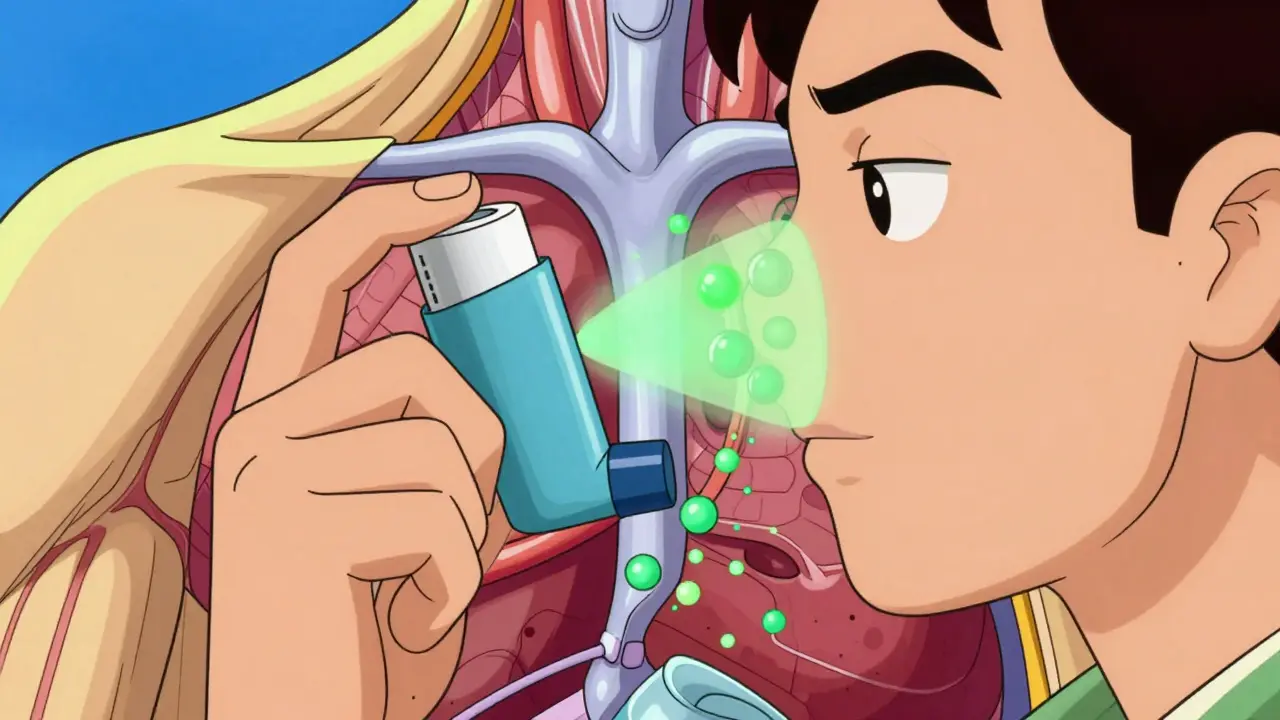
Using inhalers correctly is critical. Studies show only 31% of patients use them properly without training. Here's how to get it right:
- Always use bronchodilators before corticosteroids, waiting 5 minutes between doses.
- Rinse your mouth with water after using corticosteroid inhalers to prevent oral thrush.
- Use a spacer device with metered-dose inhalers to improve drug delivery by 70%.
- Ask your pharmacist for a demonstration if you're unsure about your technique.
- Keep track of how often you use rescue inhalers-more than 2-3 times a week may mean your treatment needs adjustment.
Proper technique can make the difference between managing symptoms effectively and experiencing frequent flare-ups. The American Lung Association's Lung HelpLine (1-800-LUNGUSA) offers free guidance for patients struggling with inhaler use.
What's the main difference between bronchodilators and corticosteroids?
Bronchodilators relax the muscles around the airways for immediate relief, while corticosteroids reduce inflammation over time for long-term control. Bronchodilators work within minutes but don't address the underlying inflammation; corticosteroids take weeks to show effects but prevent flare-ups by targeting the root cause.
How long does it take for corticosteroids to work?
Corticosteroids take weeks of consistent use to show full effects. They reduce inflammation gradually, which is why they're not used for sudden attacks. For example, fluticasone may take 2-4 weeks to lower airway sensitivity significantly.
Why do you need to rinse your mouth after using a corticosteroid inhaler?
Rinsing prevents oral thrush, a fungal infection caused by corticosteroid residue in the mouth. Studies show 5-10% of users develop thrush without rinsing, but this drops to under 2% with proper technique. Simply swish water after each dose and spit it out.
Can you use bronchodilators alone for asthma?
Using bronchodilators alone for persistent asthma is unsafe. The SMART trial found a 3.5-fold increased risk of asthma-related death when LABAs were used without corticosteroids. GINA 2023 guidelines now require corticosteroids for all but the mildest asthma cases.
How often should you use a rescue inhaler?
Rescue inhalers like albuterol should be used no more than 2-3 times weekly. Using them more frequently suggests poor asthma control. If you need them daily, talk to your doctor about adjusting your maintenance therapy. Overuse can also reduce the drug's effectiveness over time.
Comments
Diana Phe
February 5, 2026 AT 14:43Big Pharma is pushing these drugs because they want you to keep buying them. They don't care about your health! It's all a scheme to keep people dependent on their products. The government is in on it too. They don't want you to know the real truth. I've read about how they manipulate clinical trials. They pay off doctors to prescribe these medications. It's a conspiracy that's been going on for decades. You think these drugs are safe? Think again. They have side effects that are worse than the disease. The FDA is just a puppet. They approve anything as long as the money is flowing. People need to wake up. This is why we can't have real healthcare. It's all about profit. They don't care about you. You're just a dollar sign to them. We need to boycott these companies. Stop using their products. Demand real solutions. The truth is out there, you just have to look.
Andre Shaw
February 6, 2026 AT 20:20Actually, studies show the opposite. Big Pharma is being held accountable by the FDA. This article is spot-on. You guys are all conspiracy theorists. The real problem is people not following the guidelines. It's not the drugs, it's the users. I've seen patients who don't rinse after steroids end up with oral thrush. It's basic hygiene. Also, using a spacer improves delivery by 70%. The American Lung Association recommends it. People need to educate themselves. The FDA has strict regulations. Clinical trials are rigorous. The drugs work when used properly. If you're having issues, talk to your doctor. Don't blame the medication. The real issue is misinformation. Look at the data. Asthma mortality has decreased with these treatments. It's not perfect, but it's better than nothing. Stop spreading fear. We need facts, not fearmongering.
Dr. Sara Harowitz
February 8, 2026 AT 08:25Diana, you're a conspiracy theorist! The FDA regulates these drugs thoroughly. Without them, people would die. You're spreading dangerous misinformation! This is why Americans are so ignorant. We need better education on this. The FDA's approval process is rigorous. They require multiple clinical trials. These medications save lives every day. Corticosteroids reduce inflammation. Bronchodilators open airways. They work together. The article explains it perfectly. You're just paranoid. Big Pharma isn't the villain. The real villains are people like you spreading fear. It's dangerous. People need to trust science. The data is clear. These drugs are safe when used properly. You're endangering others by promoting nonsense. Wake up! This is why we can't have good healthcare. It's all because of people like you.
Brendan Ferguson
February 9, 2026 AT 13:15I've worked with patients for years. Proper inhaler technique is crucial. Using a spacer can improve drug delivery by up to 70%. Always rinse after corticosteroids to prevent oral thrush. Simple steps make a huge difference. The American Lung Association has great resources. If you're unsure, ask your pharmacist. Many people don't use inhalers correctly, leading to poor symptom control. Training is key. I've seen patients improve drastically with proper technique. It's not rocket science, but it's often overlooked. Trust me, it's worth the effort.
jan civil
February 11, 2026 AT 11:33Proper technique is key. Spacers help 70% delivery. Always rinse mouth after steroids.
Jennifer Aronson
February 11, 2026 AT 13:29As a nurse, I've taught patients to use spacers. It's a game-changer for asthma management. Rinsing after corticosteroids prevents oral thrush. Simple habit, huge benefit. Many patients don't know this. Education is critical. The American Lung Association's resources are invaluable. Always follow the instructions. Your health depends on it.
Gregory Rodriguez
February 12, 2026 AT 07:56Wow, finally some real info! Unlike those shady drug ads. But seriously, using inhalers right is a game-changer. Love the tips! (But yeah, Big Pharma's still shady, but this stuff works.)
Johanna Pan
February 13, 2026 AT 06:09I've seen how proper use helps in my community. Always remember to rins after corticosteroids to avoid thrush. It's a small step with big results! :)
lance black
February 14, 2026 AT 22:55Use your inhalers right! Rinsing after steroids saves you from thrush. Simple but life-changing tip!
Pamela Power
February 16, 2026 AT 07:01This article is so basic. Real experts know that the real issue is the overprescription of these drugs. Big Pharma is killing us all. They should be banned. People need to stop being sheep. The FDA is corrupt. They approve unsafe medications. Look at the side effects. Oral thrush, heart issues, you name it. These drugs are dangerous. We need natural alternatives. Big Pharma's greed is destroying lives. Wake up, people!
Sam Salameh
February 16, 2026 AT 21:45Pamela, as a proud American, I've seen how these meds help. But we need to focus on domestic production to avoid foreign drug shortages. Always check the source of your meds. Supporting American-made drugs ensures quality and safety. Let's keep healthcare in our hands. No more foreign dependence. It's time to stand up for ourselves.