
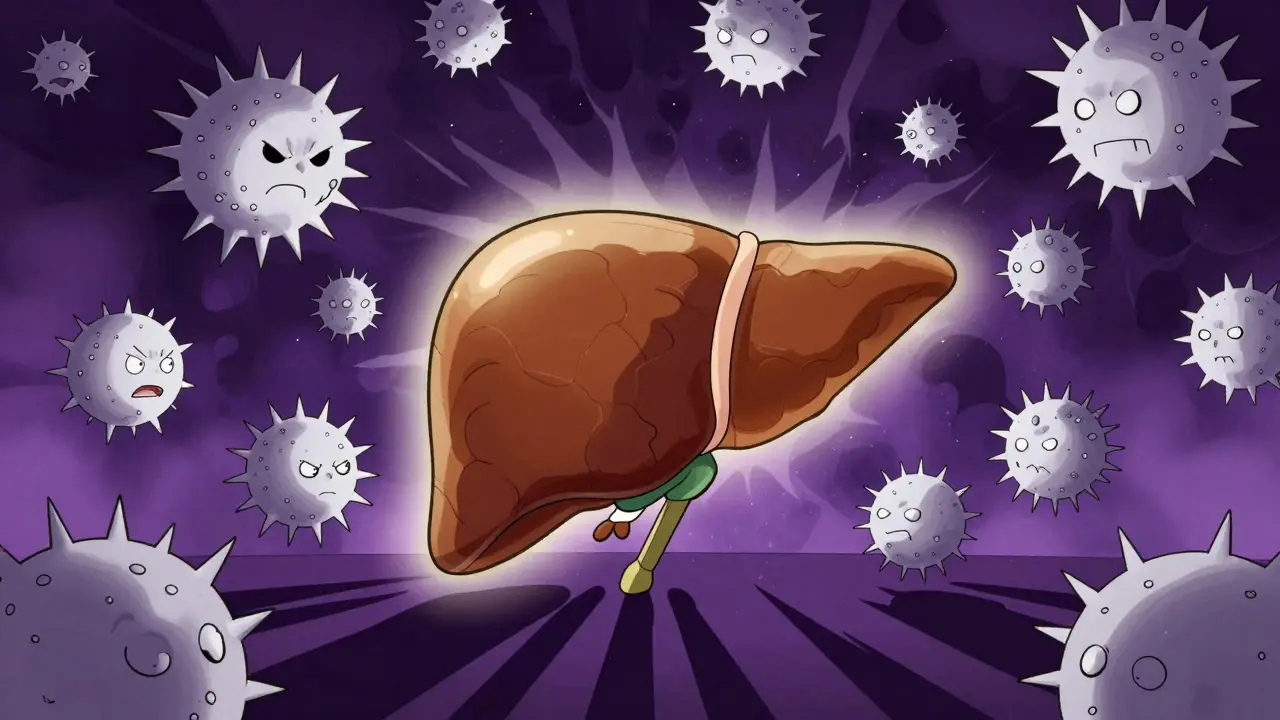
Your Body's Defense System Turned Against Your Liver
Imagine your immune system - that protective army guarding your body - suddenly deciding your liver cells are enemies. That's exactly what happens in autoimmune hepatitis. This condition tricks your immune defenses into attacking healthy liver tissue, causing persistent inflammation that can silently scar your organ over years. According to recent research from the American Association for the Study of Liver Diseases, women face a significantly higher risk, with type 1 cases appearing three times more often in females than males.
Two Distinct Types with Different Patterns
There are two primary forms of this liver condition, each with unique characteristics. Type 1 autoimmune hepatitisaffects adolescents and adultsliver appears across all age groups but most commonly emerges during teenage years or middle age. It typically shows up with subtle symptoms like fatigue and joint pain before progressing. Type 2 autoimmune hepatitisprimarily affects children aged 2-14liver runs a different course - usually striking younger kids with sudden, severe symptoms that mimic viral hepatitis outbreaks.
| Feature | Type 1 | Type 2 |
|---|---|---|
| Affected Age | Adolescents and adults | Children 2-14 years |
| Antibody Markers | ANA and ASMA | LKM-1 and LC-1 |
| Ratio Female:Male | 3.6:1 | 8:1 |
| Symptom Onset | Often gradual | Frequently acute |
| Precise Proportion | 80-90% of cases | 10-20% of cases |
Recognizing the Warning Signals
About half of patients notice symptoms slowly creeping in over months. You might mistake early signs for everyday issues - constant tiredness that rest doesn't fix, mild jaundice making whites of eyes yellow, or unexplained itching. Blood tests reveal the hidden battle raging inside. Liver enzymes ALT/AST shoot to 5-10 times normal levels, while IgG globulin proteins climb well above standard ranges. Dr. Schiano from Mount Sinai Hospital explains untreated cases carry devastating consequences: "Without intervention, over 90% face liver failure within a decade. With treatment, most live normal lifespans."

The Diagnostic Journey
Confirming autoimmune hepatitis requires careful detective work. Doctors first rule out viral hepatitis through specialized blood panels - this isn't about viruses but rogue immune activity. A liver biopsy becomes crucial when blood markers hint at trouble. Pathologists look for distinctive patterns: lymphocytes attacking portal tracts, damaged hepatocyte clusters forming rosettes, and fibrosis stages graded from zero (healthy) to four (cirrhosis). Recent scoring systems updated by the European Association for the Study of the Liver achieve 97% accuracy when experienced specialists apply them.
Modern Treatment Approaches
Today's protocol typically starts with prednisone (0.5-1mg/kg daily) combined with azathioprine 50mg/day. Most patients see liver enzymes normalize within three months. Newer strategies show promise for those who struggle with steroid side effects - mycophenolate mofetil works for 75% of azathioprine-intolerant individuals. Remember though, stopping medication abruptly risks dangerous flare-ups. The International Autoimmune Hepatitis Group found that tapering doses too quickly causes relapse in 40% of cases.
| Outcome | Treated Patients | Untreated Patients |
|---|---|---|
| 10-Year Survival Rate | 94% | 10% |
| Remission Achievement | 65-80% | N/A |
| Long-Term Maintenance Needed | 25% | N/A |
| Transplant Requirement | 5-10% | Over 90% |
| Response Time | 3-6 months | N/A |

Daily Life Management Strategies
Living with autoimmune hepatitis means balancing effective treatment with quality-of-life considerations. Many report weight gain from corticosteroids - one patient shared on Reddit gaining 20 pounds within six months of starting prednisone. Countermeasures matter: take azathioprine at consistent times daily, monitor bone density every year, supplement calcium/vitamin D, and watch for infection signs like fevers above 100°F. The American Liver Foundation notes nearly 60% experience employment difficulties due to symptom burden, so workplace accommodations become important.
Beyond Standard Therapies
Clinical trials are exploring next-generation options. Rituximab shows potential in difficult cases, targeting B-cells driving liver inflammation. Obeticholic acid recently gained orphan drug status with 45% remission rates in phase 2 trials. Genetic profiling may soon personalize treatment - researchers identify HLA alleles predicting response to specific medications. Dr. Czaja predicts these advances could boost remission rates to 90% within five years while minimizing side effects through precision dosing.
Frequently Asked Questions
Can autoimmune hepatitis be cured?
While there's no complete cure, about 65-80% achieve long-term remission with proper treatment. Continuous medication management keeps liver inflammation controlled and prevents progression to cirrhosis.
Is autoimmune hepatitis contagious?
No. Unlike viral hepatitis types B/C, this condition arises from internal immune dysfunction and cannot spread between people through any contact.
What foods should be avoided?
Limit alcohol completely as it accelerates liver damage. High-sodium foods worsen fluid retention, while very high-protein diets may stress compromised livers. Individual restrictions depend on current liver function stage.
How often do you need monitoring?
During active treatment, blood tests occur monthly for enzyme/IgG tracking. Once stable, checks shift to every 3-6 months. Annual abdominal ultrasounds screen for developing complications like nodules or vascular issues.
Does stress trigger flares?
Significant emotional stress can reactivate dormant inflammation in 20-30% of cases. Stress management techniques including meditation and counseling complement medical treatment effectively.
Comments
Victor Ortiz
March 31, 2026 AT 18:26The survival rates look optimistic but ignore the quality of life degradation during steroid therapy which is often overlooked in these summaries.
Amber Armstrong
April 2, 2026 AT 03:39I truly feel for anyone dealing with this invisible battle against their own body. It seems so cruel that our defense system turns into the enemy right when we need protection most. My cousin struggled with similar autoimmune issues back in high school years ago. She had to take shots daily just to keep her liver numbers stable enough to function. The weight gain from prednisone was probably the hardest part for her mentally. You do not want to lose your bone density while trying to fix your internal organs either. It takes such immense courage to stay compliant with medication schedules that change everything. Doctors often forget that patients are people who still have jobs and families waiting at home. Reading about the biopsy process makes me shudder because it sounds incredibly invasive. Lymphocytes attacking portal tracts is scary terminology to hear during a diagnosis session. We need more support groups for young kids who might get Type 2 versions of this disease. Parents carry so much guilt wondering if genetics passed something harmful down to their children. Treatment protocols work well but the side effects demand serious attention from specialists too. Nobody signs up for this kind of medical journey where the path feels endless sometimes. Hope remains a vital tool though especially when statistics show better outcomes now than before. Sending good vibes to everyone currently navigating the difficult waters of chronic inflammation management.
Jonathan Sanders
April 2, 2026 AT 14:43Nothing screams healthy liver quite like taking immunosuppressants until your immune system decides to nap permanently.
Rick Jackson
April 2, 2026 AT 16:15Balance between suppression and function is the ultimate human dilemma presented here.
Beccy Smart
April 3, 2026 AT 11:15People eat so much processed food and wonder why their immune system goes hayday! 🍔🚫🍕 Avoid toxins and listen to your body always! 🌱💪✨
sanatan kaushik
April 4, 2026 AT 19:31Stop drinking alcohol completely before you rot your insides further than the disease already did.
Adryan Brown
April 5, 2026 AT 12:08We should really focus on how stress management helps alongside the medication rather than fighting doctors on dosage changes. Many patients find peace in meditation which actually lowers cortisol levels significantly. The goal is stability so life does not feel like a constant emergency room visit.
Debbie Fradin
April 7, 2026 AT 04:41At least the alternative is becoming a statistic on the table without a transplant option available.
Christopher Curcio
April 8, 2026 AT 17:53Enzyme elevation patterns indicate active hepatocellular necrosis which necessitates immediate pharmacological intervention regardless of dietary habits alone.
Angel Ahumada
April 10, 2026 AT 16:27only the sophisticated mind understands the nuance of HLA allele prediction yet laymen read this as mere medical advice without context
Dan Stoof
April 10, 2026 AT 19:05That is SO brave of you to share!!! Your experience could SAVE someone else reading this thread today!!!
Jonathan Alexander
April 12, 2026 AT 09:22The silence of progression before cirrhosis sets in is what haunts me the most about this condition.
Rick Jackson
April 12, 2026 AT 16:03Sophistication matters less when the organ failure occurs rapidly regardless of intellectual understanding.