
TCA Side Effect Risk Assessment
How this tool works
This assessment tool helps you understand potential side effects of tricyclic antidepressants based on your individual medical conditions and age. It calculates a risk score and provides personalized management advice.
Patient Information
Results
Common Side Effects
Dry mouth, constipation, blurred vision, urinary retention
Important Risks
Heart problems, overdose risk, cognitive decline
Recommendations
Start low, take at night, monitor heart, manage side effects
What Are Tricyclic Antidepressants?
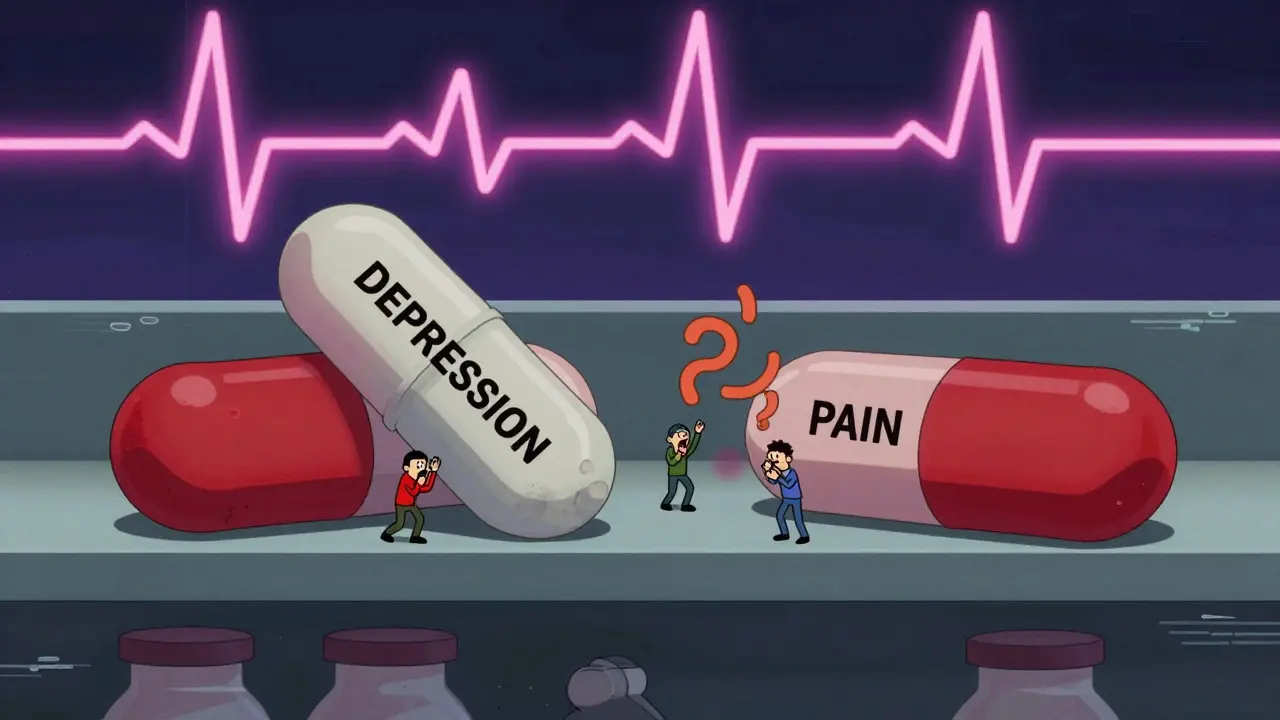
Tricyclic antidepressants, or TCAs, are some of the oldest antidepressant medications still in use today. They were first developed in the 1950s, with imipramine hitting the market in 1958 as a replacement for electroconvulsive therapy. These drugs work by blocking the reabsorption of serotonin and norepinephrine in the brain, which helps improve mood. But unlike newer antidepressants, TCAs don’t just target one system-they affect multiple receptors at once. That’s why they work well for some people, but also why they come with so many side effects.
The most common TCAs include amitriptyline, nortriptyline, imipramine, desipramine, and doxepin. Among these, amitriptyline is the most widely prescribed, not just for depression, but for nerve pain, migraines, and even insomnia. Nortriptyline, a metabolite of amitriptyline, is often chosen when the side effects of amitriptyline are too strong. Both are still used today, but mostly after other treatments have failed.
Why Are TCAs Still Used Today?
If SSRIs and SNRIs are safer and easier to tolerate, why do doctors still prescribe TCAs? The answer lies in effectiveness for specific cases. For people with treatment-resistant depression-those who haven’t responded to at least two other antidepressants-TCAs can be more effective. One major study found that 65-70% of these patients responded to TCAs, compared to just 50-55% with SSRIs.
But their real strength is in pain management. Amitriptyline is considered the gold standard for treating neuropathic pain, like diabetic nerve pain or post-shingles pain. A 2020 Cochrane Review showed that about 35-40% of patients using amitriptyline experienced at least a 50% reduction in pain. That’s significantly better than many newer drugs. It’s also used off-label for chronic migraines, helping reduce frequency by up to 80% in some cases.
Despite their power, TCAs are no longer first-line options. The American Psychiatric Association recommends them only after two failed trials with newer antidepressants. That’s because the side effects can be tough to live with-and sometimes dangerous.
Common Side Effects: Dry Mouth, Constipation, and More
The biggest reason TCAs are avoided is their wide range of side effects, mostly caused by their impact on cholinergic, histamine, and adrenergic receptors. These aren’t minor inconveniences-they can seriously affect daily life.
- Dry mouth (xerostomia): Affects up to 30% of people taking amitriptyline. It’s so common that many patients go through multiple bottles of saliva substitutes like Biotene. Left untreated, it leads to tooth decay, gum disease, and frequent oral infections.
- Constipation: Happens in 20-25% of users. Slowed digestion isn’t just uncomfortable-it can become life-threatening if bowel movements stop completely.
- Blurred vision: Reported in 15-20% of patients. It usually clears up after a few weeks, but some people report ongoing trouble reading or driving.
- Urinary retention: Especially risky for men with enlarged prostates. About 10-15% struggle to fully empty their bladder, sometimes needing catheterization.
- Sedation: Amitriptyline is notorious for this. Up to 40% of users feel drowsy during the day. Nortriptyline is milder, affecting about 25%. That’s why doctors often prescribe these at bedtime.
These side effects aren’t rare guesses-they’re well-documented in clinical studies and patient reports. On Drugs.com, amitriptyline has a 6.2/10 rating based on over 1,800 reviews. The most common complaints? "Cotton mouth," "blurred vision that made driving dangerous," and "can’t pee without help."
Serious Risks: Heart Problems, Overdose, and Cognitive Decline
Beyond the annoying side effects, TCAs carry real, life-threatening risks. These aren’t just theoretical-they’ve been proven in large studies and real-world data.
One of the biggest concerns is heart health. TCAs can lengthen the QTc interval on an ECG-by 20-40 milliseconds with amitriptyline. That increases the risk of dangerous heart rhythms, including ventricular fibrillation. A 2019 Lancet study found TCAs raise the risk of cardiovascular events by 35% compared to SSRIs. For people with existing heart disease, this makes TCAs a bad choice.
Overdose is another major danger. TCAs have a narrow therapeutic window-meaning the difference between a helpful dose and a deadly one is small. In overdose, symptoms include widened QRS complex on ECG, dangerously low blood pressure, seizures, and respiratory failure. Death usually comes from heart rhythm problems or collapse. TCAs cause more deaths per prescription than any other antidepressant.
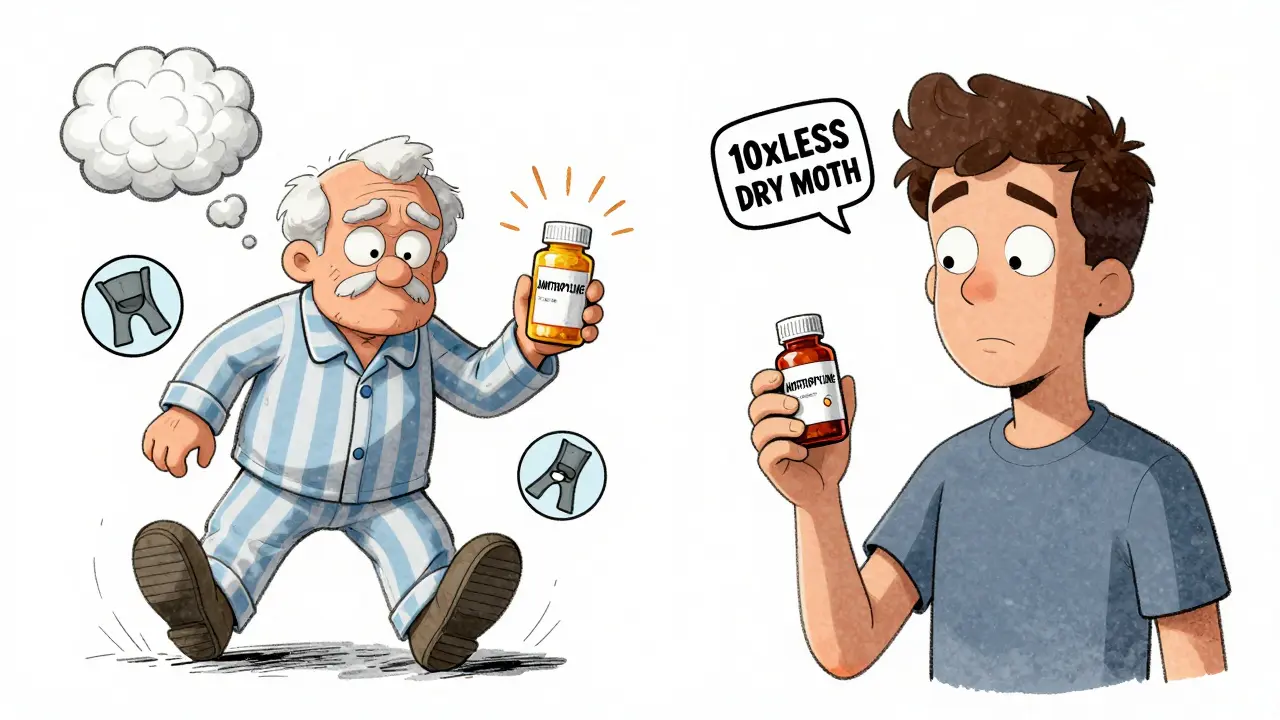
In older adults, the risks multiply. Confusion and disorientation occur in 15-25% of seniors taking standard doses. The Beers Criteria, a trusted guide for prescribing in older adults, specifically warns against amitriptyline and other high-anticholinergic TCAs. Why? Because they increase the risk of falls by 70% and cognitive decline by 50%. A 2022 FDA alert noted a 2.3-fold higher risk of hip fractures in elderly users.
Amitriptyline vs. Nortriptyline: Which Has Fewer Side Effects?
Not all TCAs are the same. The difference between amitriptyline and nortriptyline comes down to chemistry. Amitriptyline is a tertiary amine TCA, meaning it binds strongly to muscarinic, histamine, and alpha-1 receptors. That’s why it causes so much dry mouth, drowsiness, and dizziness.
Nortriptyline, a secondary amine, has much lower affinity for those receptors. Its muscarinic binding is over 10 times weaker than amitriptyline’s. That translates to fewer anticholinergic side effects. In studies, nortriptyline causes less sedation, less dry mouth, and less constipation. It’s also less likely to cause orthostatic hypotension.
For that reason, many doctors switch patients from amitriptyline to nortriptyline when side effects become unmanageable. One Reddit user, "ChronicPainWarrior," shared: "Amitriptyline helped my nerve pain, but the dry mouth was so bad I went through three bottles of Biotene daily. Switched to nortriptyline-better, but still tired all the time."
That’s the trade-off: nortriptyline is generally safer, especially for older adults or those with heart issues. But it’s not side-effect-free. It still causes drowsiness, weight gain, and sexual dysfunction. Still, for many, it’s the best version of a tough class of drugs.
Who Should Avoid TCAs?
TCAs aren’t for everyone. There are clear red flags that make them unsafe:
- People with heart conditions-especially those with arrhythmias, heart failure, or recent heart attack
- Older adults over 65, due to high risk of falls, confusion, and cognitive decline
- Those with glaucoma (TCAs can increase eye pressure)
- Patients with urinary retention or enlarged prostate
- People taking other drugs that prolong QT interval or cause sedation
- Anyone with a history of suicide attempts (TCAs are dangerous in overdose)
Even if none of these apply, TCAs should only be used after other options fail. The American Psychiatric Association and Mayo Clinic both agree: start with SSRIs, SNRIs, or other newer drugs. Only turn to TCAs if those don’t work.
How to Use TCAs Safely
If your doctor recommends a TCA, there are ways to reduce risks:
- Start low, go slow: Begin with 10-25 mg at bedtime. Increase slowly over 4-6 weeks. This helps your body adjust and reduces side effects.
- Take it at night: Most sedation happens in the first few weeks. Taking it before bed helps you sleep through it.
- Stand up slowly: To prevent dizziness from low blood pressure, rise from sitting or lying down gradually.
- Brush and floss daily: Dry mouth is inevitable. Use fluoride toothpaste, sugar-free gum, and visit your dentist every 6 months.
- Get an ECG before starting: Especially if you’re over 50 or have any heart history. Monitor for QT prolongation.
- Never stop suddenly: Withdrawal can cause "electric shock" sensations, nausea, and anxiety. Taper over 4-6 weeks under medical supervision.
Some patients benefit from combination therapy. A 2023 study found that low-dose amitriptyline (10-25 mg) with an SSRI can improve depression without worsening side effects. It’s a smart way to get the benefits of both classes.
Real Patient Experiences
People’s stories tell the full picture. On Healthgrades, "MigraineSurvivor" wrote: "After 10 years of 15 migraines a month, amitriptyline cut them to 3. But I gained 12 pounds and feel foggy all day." On Reddit, another user said: "I took nortriptyline for depression. It helped my mood, but I couldn’t focus at work. I quit after 3 months."
Positive experiences often come from people with chronic pain. "I had fibromyalgia for 15 years. Nothing worked until amitriptyline. The dry mouth is a pain, but I’d rather have that than constant pain," said one user on WebMD.
But the negatives are loud too. Weight gain is common-10-15 pounds in the first six months. Sexual dysfunction affects 35-40% of men. "Brain fog" is mentioned in nearly 30% of negative reviews. These aren’t side effects you can ignore. They impact relationships, jobs, and self-esteem.
The Future of TCAs
TCAs are fading from mainstream use. In 2022, they made up only 5-7% of all antidepressant prescriptions in the U.S., down from 30% in the 1990s. But they’re not disappearing. Amitriptyline alone is still one of the top 12 most prescribed generics in the country, mostly for pain.
Research is now focused on making TCAs safer. Genetic testing for CYP2D6 metabolism can identify people who process amitriptyline slowly-those at higher risk of side effects. Newer studies are testing ultra-low doses (10-25 mg) for pain, reducing systemic exposure.
Still, the future belongs to newer treatments. Ketamine, esketamine, and psychedelic-assisted therapies are showing promise for treatment-resistant depression. But for now, TCAs remain a vital tool-when used carefully, in the right people, and with full awareness of the risks.
As Dr. Charles Nemeroff, editor of The American Journal of Psychiatry, said in 2023: "When used judiciously in appropriately selected patients with careful monitoring, TCAs can provide life-changing benefits that newer medications cannot match for certain individuals."
Are tricyclic antidepressants still prescribed today?
Yes, but rarely as a first choice. TCAs like amitriptyline and nortriptyline are still used today, mainly for treatment-resistant depression and chronic nerve pain. They’re typically prescribed only after two or more newer antidepressants, like SSRIs or SNRIs, have failed. Their use has dropped from 30% of prescriptions in the 1990s to just 5-7% today.
Which TCA has the fewest side effects?
Nortriptyline generally has fewer side effects than amitriptyline. It’s a secondary amine TCA with lower affinity for muscarinic and histamine receptors, meaning less dry mouth, drowsiness, and constipation. It’s often chosen for older adults or people who can’t tolerate amitriptyline. Desipramine is another option with a milder profile, but it’s less commonly used.
Can tricyclic antidepressants cause weight gain?
Yes, weight gain is common with TCAs. Most patients gain 10-15 pounds in the first 6 months. Amitriptyline is especially linked to this effect due to its strong antihistamine action, which increases appetite. Nortriptyline causes less weight gain, but it’s still possible. Monitoring diet and activity levels is important if you’re on these medications.
Do tricyclic antidepressants affect memory?
Yes, especially in older adults. TCAs have strong anticholinergic effects that can cause confusion, memory problems, and brain fog. Studies show 25% of seniors on standard doses experience confusion, and long-term use is linked to a 50% higher risk of cognitive decline. The Beers Criteria recommends avoiding TCAs in patients over 65 for this reason.
Is it safe to take amitriptyline with alcohol?
No. Mixing amitriptyline with alcohol can dangerously increase sedation, dizziness, and risk of falls. It also raises the chance of low blood pressure and impaired judgment. Alcohol can worsen depression symptoms too. Most doctors strongly advise avoiding alcohol entirely while taking TCAs.
How long does it take for TCAs to start working?
It usually takes 2-4 weeks to feel the full effect of TCAs for depression or pain. Some people notice small improvements in sleep or energy after the first week, but full benefits take time. Many patients stop too early because they don’t feel better right away. It’s important to stick with the medication as directed and give it time.
Can you overdose on tricyclic antidepressants?
Yes, and it’s extremely dangerous. TCAs have a narrow safety margin-meaning even a slightly higher dose can be fatal. Overdose symptoms include seizures, irregular heartbeat, very low blood pressure, confusion, and coma. The risk of death is higher with TCAs than with any other antidepressant. Never take more than prescribed, and keep the medication out of reach of others.
What should I do if I want to stop taking a TCA?
Never stop suddenly. Abruptly discontinuing TCAs can cause withdrawal symptoms like "electric shock" sensations, nausea, insomnia, anxiety, and worsening depression. Work with your doctor to create a tapering plan-usually over 4-6 weeks. Slowly reducing the dose helps your body adjust and lowers the risk of rebound symptoms.
Comments
Solomon Ahonsi
February 1, 2026 AT 18:49George Firican
February 2, 2026 AT 10:14Matt W
February 3, 2026 AT 14:56Anthony Massirman
February 3, 2026 AT 18:11Becky M.
February 5, 2026 AT 03:29jay patel
February 5, 2026 AT 08:50phara don
February 6, 2026 AT 00:55Dan Pearson
February 6, 2026 AT 08:33Bob Hynes
February 6, 2026 AT 12:29Ellie Norris
February 8, 2026 AT 01:22Marc Durocher
February 9, 2026 AT 13:29