

What if taking your pill at 8 a.m. instead of 8 p.m. could double your risk of side effects-or make your medicine work better? It’s not magic. It’s biology. Your body follows a 24-hour clock, and so do your drugs. When you take a medication isn’t just a convenience-it can change how well it works, how bad the side effects feel, and even whether it saves your life.
Why Timing Matters More Than You Think
Most people think of medication as a simple equation: take the pill, get better. But the truth is messier. Your liver doesn’t process drugs the same way at 3 a.m. as it does at 3 p.m. Your blood pressure rises naturally in the morning. Your stomach acid peaks around noon. Your immune system slows down at night. These aren’t minor fluctuations-they’re powerful drivers of how your body handles medicine. Take statins, for example. These cholesterol-lowering drugs work best when taken at night. Why? Because your liver makes most of its cholesterol while you sleep. Taking the pill in the evening lines up the drug’s peak activity with your body’s natural production cycle. Studies show this timing boosts LDL reduction by 15-20% compared to morning doses. That’s not a small difference-it’s the difference between staying healthy and needing a stent. The same logic applies to blood pressure meds. ACE inhibitors like lisinopril, when taken at bedtime, reduce nighttime blood pressure more effectively. In the MAPEC study, patients who took their pills at night saw a 29% drop in heart attacks and strokes compared to those who took them in the morning. That’s not just a trend. It’s a life-saving shift.High-Risk Medicines That Can’t Wait
Not all drugs are created equal when it comes to timing. Some have narrow windows where even a 15-minute delay can cause trouble. Insulin is one. If you inject rapid-acting insulin 30 minutes after eating instead of before, your blood sugar can spike-and then crash. Mistimed insulin causes hypoglycemia in 22% of cases, according to diabetes studies. That means dizziness, confusion, seizures, or worse. For people with type 1 diabetes, this isn’t a theoretical risk-it’s a daily reality. Anticoagulants like warfarin are another. Timing errors here can increase bleeding risk by up to 37%. Why? Because your body breaks down these drugs at different speeds depending on the time of day. Take warfarin in the morning? Your INR levels might swing unpredictably. Take it at night? You get steadier control. That’s why most cardiologists now recommend evening dosing. Chemotherapy is even more precise. Many cancer drugs lose 15-20% of their effectiveness if given more than 30 minutes off schedule. Why? Because tumor cells divide at certain times, and chemo works best when it hits them at their most vulnerable. Oncology teams now use timed infusions and strict protocols to match drug delivery with cell cycle phases.The Hidden Cost of Poor Timing
Timing errors aren’t just dangerous-they’re common. A study in the Journal of the American Medical Informatics Association found that 43% of medication orders had timing discrepancies. In hospitals, IV meds had error rates between 48% and 53%. Oral meds weren’t much better-8% to 25% of doses were given at the wrong time. Why? Interruptions. Nurses report that every time someone asks a question, a call comes in, or a monitor beeps during a med pass, the risk of error climbs. One JAMA Internal Medicine study showed that with five interruptions, error rates jumped from 39% to 61%. That’s not a glitch-it’s a system failure. Outside hospitals, it’s worse. A survey of 1,200 patients found that 68% of those on chronotherapy medications (like evening statins or bedtime blood pressure pills) didn’t take them at the right time. Why? Work schedules, forgetfulness, low health literacy. One patient said, “I work nights. My doctor told me to take it at 8 p.m., but I’m asleep by then.”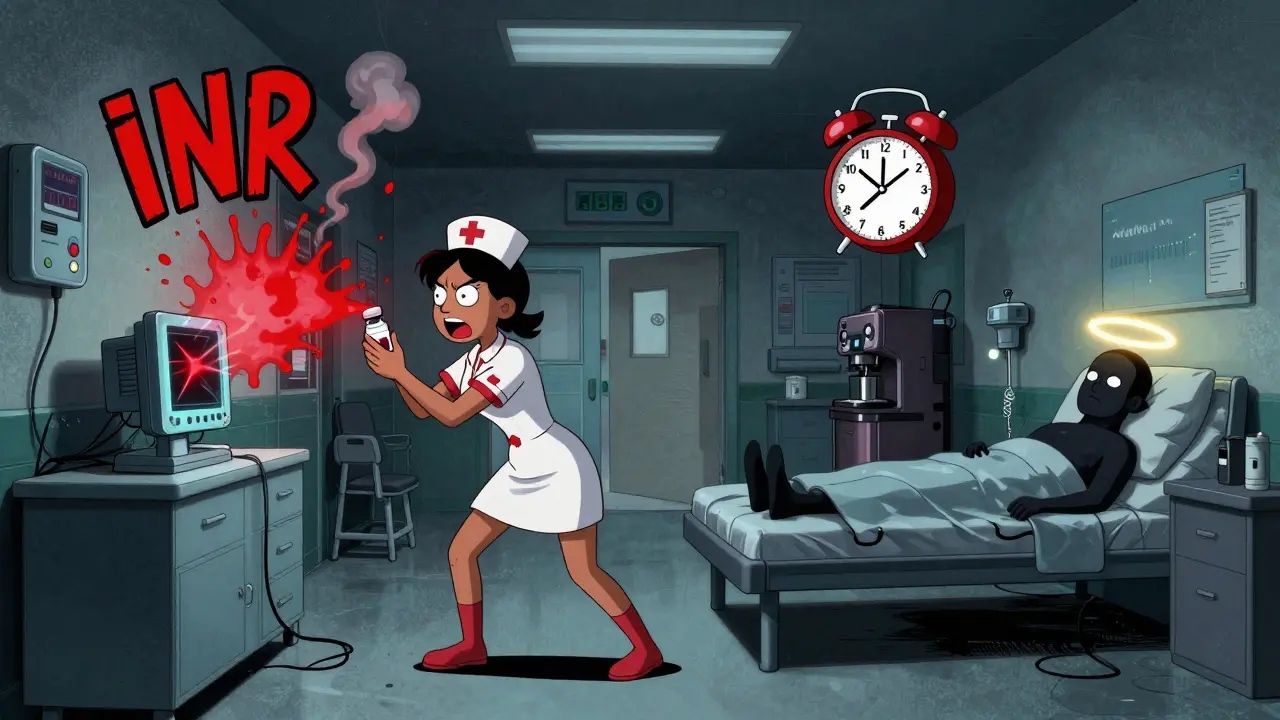
What’s the Solution?
The fix isn’t about remembering more-it’s about designing smarter systems. First, medication timing needs to be personalized. Not every drug needs to be taken at 7 a.m. Some should be at night. Others at meals. Your doctor should ask: “When do you usually sleep? When do you eat? What’s your routine?” Second, technology can help. Barcode medication administration (BCMA) systems reduce timing errors by 28%. New EHR modules like Epic’s ChronoCare (released in 2023) now flag high-risk timing windows. If you’re on warfarin, the system might alert the nurse: “This dose should be given between 6 p.m. and 8 p.m. to avoid INR spikes.” Third, patients need simple tools. A pillbox with labeled time slots. A phone reminder that says “Take your blood pressure pill now-it’s 9 p.m.” No jargon. No confusion. Just clear, timed prompts.What Medicines Should You Time Carefully?
Here’s what works best-and what doesn’t-when you time it right:- Take at night: Statins (atorvastatin, simvastatin), ACE inhibitors (lisinopril, enalapril), calcium channel blockers (amlodipine), corticosteroids (for autoimmune conditions), and proton pump inhibitors (for nighttime acid reflux).
- Take in the morning: Diuretics (hydrochlorothiazide-so you don’t wake up peeing), thyroid meds (levothyroxine-on empty stomach), and ADHD stimulants (adderall, vyvanse).
- Take with meals: Metformin (to reduce stomach upset), iron supplements (with vitamin C for absorption), and some antibiotics (like amoxicillin).
- Take at exact times: Insulin, anticoagulants (warfarin, rivaroxaban), chemotherapy, and seizure meds (phenytoin, valproate).

What You Can Do Today
You don’t need a hospital to get this right. Start with three steps:- Check your meds. Look at the label. Does it say “take at bedtime” or “take on an empty stomach”? If not, ask your pharmacist.
- Track your routine. Write down when you actually take your pills for a week. Compare it to the instructions. Are you off by an hour? Two? That matters.
- Set a reminder. Use your phone. Put sticky notes on your mirror. Link your pill to a daily habit-like brushing your teeth or making coffee.
The Bigger Picture
Chronotherapy isn’t a fringe idea anymore. The FDA now asks drug companies to include circadian data in new drug applications-up from just 3 in 2018 to 17 in 2022. The World Health Organization calls timing errors a major contributor to global adverse drug events. The American College of Clinical Pharmacy officially endorsed chronotherapy in 2022. This isn’t about being perfect. It’s about being intentional. A 15-minute shift in timing can mean fewer side effects, better control, and less risk. It’s one of the simplest, cheapest, and most powerful ways to improve your health-without changing your dose or your drug.Does the time I take my medication really affect side effects?
Yes. Your body’s internal clock affects how drugs are absorbed, metabolized, and cleared. Taking a statin at night can lower LDL cholesterol 15-20% more than taking it in the morning. Taking blood pressure pills at bedtime reduces heart attack risk by nearly 30%. For insulin or anticoagulants, timing errors can trigger dangerous side effects like low blood sugar or bleeding.
What if I forget to take my pill at the right time?
For most routine meds like statins or blood pressure pills, taking it within a 1-2 hour window is usually fine. But for insulin, warfarin, or chemo, even a 30-minute delay can reduce effectiveness or increase risk. If you miss a dose, don’t double up. Call your pharmacist or doctor for specific advice based on your medication.
Can I switch my medication time to fit my schedule?
For some meds, yes. Diuretics, for example, are often taken in the morning to avoid nighttime bathroom trips. But for others-like statins or ACE inhibitors-changing the time can reduce effectiveness. Always ask your doctor before switching. Don’t assume it’s safe just because the label doesn’t specify a time.
Why do some pills say “take on an empty stomach”?
Food can interfere with absorption. Levothyroxine (thyroid hormone) is poorly absorbed if taken with coffee, calcium, or iron. Taking it first thing in the morning, 30-60 minutes before eating, ensures maximum effectiveness. The same goes for certain antibiotics and seizure meds.
Are there tools to help me take my meds on time?
Yes. Pill organizers with time slots, smartphone alarms, and apps like Medisafe or MyTherapy can send reminders. Hospitals use barcode scanning systems that cut timing errors by 28%. Even a simple sticky note on your bathroom mirror can help if you link taking your pill to brushing your teeth.
Comments
Sandeep Jain
December 26, 2025 AT 08:18man i never thought about when i take my statins but now i’m second guessing everything. i’ve been taking mine with breakfast since forever. guess i’m switching to bedtime. my liver probably hates me.
roger dalomba
December 27, 2025 AT 05:16Wow. A whole article about taking pills at the right time. Groundbreaking. Next you’ll tell us water is wet.
Brittany Fuhs
December 27, 2025 AT 07:24This is why America’s healthcare is failing. We let people make decisions based on ‘feelings’ instead of strict protocols. In Germany, timing is dictated by algorithm. No exceptions. No excuses.
Sophia Daniels
December 28, 2025 AT 03:13OMG. I just realized I’ve been taking my warfarin at 4 p.m. like a caveman. 🤯 My INR has been doing the cha-cha for months. My cardiologist is gonna have a heart attack. Or maybe I will. Either way, I’m getting a pill organizer with little alarm bells. And maybe a tiny flag. 🚩
Fabio Raphael
December 28, 2025 AT 15:32This is actually one of the most important things I’ve read all year. I’ve got a cousin on chemo and she swears her side effects got worse after they changed her infusion time. Never connected it to circadian rhythm until now. Thanks for laying this out so clearly.
Amy Lesleighter (Wales)
December 29, 2025 AT 15:28take your meds when your body is ready not when the clock says. your rhythm matters more than the time on your phone. simple. no apps needed. just listen.
Rajni Jain
December 30, 2025 AT 17:57my mom takes her blood pressure pill at 8pm but she’s always asleep by 7:30. she just wakes up and takes it. no big deal right? i think it’s fine. she’s been stable for years. maybe the doctors are overthinking it?
Steven Destiny
December 31, 2025 AT 14:18STOP WASTING TIME. If you’re on insulin or warfarin and you’re not timing it perfectly, you’re playing Russian roulette with your life. No excuses. Get a reminder. Buy a pill box. Set 3 alarms. This isn’t optional. Your life depends on it.
Becky Baker
January 1, 2026 AT 12:56Why is this even a thing? In America we have the best doctors and the best science. If timing mattered so much, wouldn’t they just fix the drugs? Why make us remember more stuff?
Natasha Sandra
January 2, 2026 AT 07:25just set a reminder with a cute emoji 🌙💊 and boom. you’re a chronotherapy pro. i do it for my statins and my mood is better. also my cat stares at me like i’m a genius. 🐱✨
Erwin Asilom
January 2, 2026 AT 09:49For patients on anticoagulants, consistency in timing is more critical than the absolute hour. A 12-hour window is clinically acceptable if daily. The real issue is variability, not deviation. This article conflates precision with rigidity. A nuanced approach is needed.