
Warfarin and Ginkgo: Risks, Interactions, and What You Need to Know
When you're taking warfarin, a blood thinner used to prevent dangerous clots in people with atrial fibrillation, artificial heart valves, or a history of stroke. Also known as Coumadin, it works by slowing down your body’s ability to form clots—keeping you safe but also making you vulnerable to bleeding if something else interferes. Many people don’t realize that natural supplements like ginkgo biloba, a popular herbal remedy used for memory and circulation can quietly turn up the risk. Ginkgo doesn’t just add to the effect—it can double it. That’s not a small detail. It’s a medical red flag.
Warfarin’s job is to keep your blood from clotting too easily, but it’s a tightrope walk. Too little, and you risk a stroke. Too much, and you could bleed internally without warning. Ginkgo biloba contains compounds that interfere with platelet function and may also affect how your liver processes warfarin. The result? Your INR (that number your doctor checks every few weeks) can spike unexpectedly. One study in the Annals of Internal Medicine tracked patients who took ginkgo with warfarin and found nearly 40% had dangerous spikes in bleeding time. That’s not a coincidence. It’s a pattern. And it’s not just ginkgo. Other herbs like garlic, ginger, and green tea can do the same thing. But ginkgo is one of the most common culprits because people assume "natural" means "safe." It doesn’t.
What does this look like in real life? A 68-year-old man takes warfarin for atrial fibrillation. He starts taking ginkgo for memory, thinking it’s harmless. Two weeks later, he brushes his teeth and notices his gums are bleeding more than usual. A few days after that, he wakes up with a purple bruise on his thigh he doesn’t remember getting. He goes to the ER. His INR is 8.5—more than double the safe range. He spends three days in the hospital. This isn’t rare. It happens often enough that doctors now ask every patient on warfarin: "Are you taking any herbs or supplements?" If you say no, you’re lying. Most people don’t even think of ginkgo as a drug.
There’s no such thing as a "safe" amount of ginkgo if you’re on warfarin. No magic dose that won’t interfere. Even small amounts—like one capsule a day—can tip the balance. And if you stop ginkgo cold turkey after taking it for months, your INR might drop too low, putting you at risk for clots. It’s not a simple on-off switch. It’s a slow dance that needs monitoring. That’s why your doctor needs to know everything you’re taking, even if it’s from the health food store. If you’re on warfarin, ginkgo should be off the table. Period.
But you’re not alone. Many people rely on herbal supplements because they distrust pharmaceuticals, or they’ve heard "it’s natural, so it’s better." But nature doesn’t care about your INR. It doesn’t know you’re on a blood thinner. It just reacts. And sometimes, that reaction can be deadly. The good news? You don’t have to give up on brain health or circulation. There are safer ways to support both—exercise, managing blood pressure, eating omega-3s from fish, and talking to your doctor about alternatives that won’t mess with your medication.
Below, you’ll find real patient stories, clinical insights, and practical advice on how to navigate herbal supplements while staying safe on blood thinners. No fluff. No guesses. Just what works—and what could kill you.
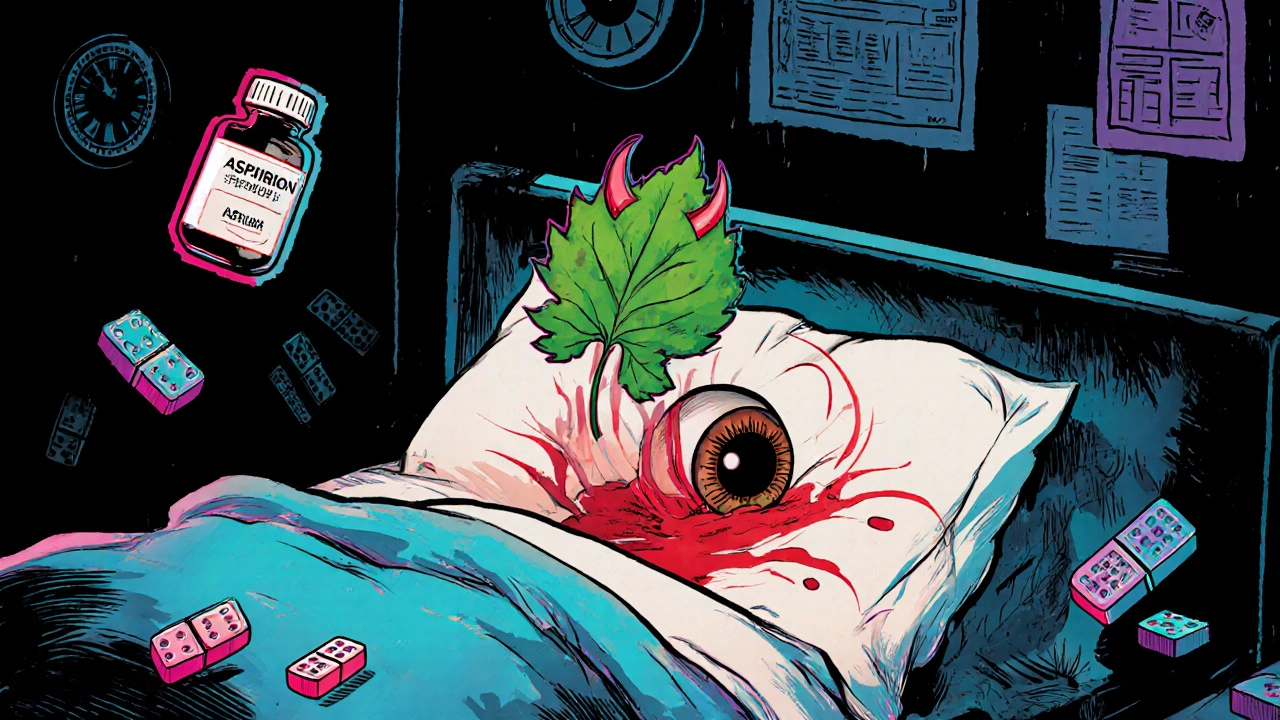
Ginkgo Biloba and Blood Thinners: What You Need to Know About Bleeding Risk
Ginkgo Biloba may seem harmless, but it can dangerously increase bleeding risk when taken with blood thinners like warfarin, aspirin, or Plavix. Real cases of eye and brain bleeds have been documented. Learn who should avoid it and what to do instead.