
Unused Meds Disposal: Safe Ways to Get Rid of Expired or Extra Medicines
When you have leftover pills, liquids, or patches you no longer need, unused meds disposal, the process of safely getting rid of unwanted pharmaceuticals to prevent harm. Also known as medication disposal, it’s not just about cleaning out your medicine cabinet—it’s about keeping your kids, pets, and water supply safe. Flushing pills down the toilet or tossing them in the trash might seem easy, but those methods leak drugs into the environment and can end up in the hands of someone who shouldn’t have them.
Think about this: a single bottle of painkillers left on a bathroom counter can be the start of an addiction. Or worse, a child finds them. Or a pet gets into the trash and gets sick. That’s why drug disposal, the proper handling and destruction of pharmaceuticals to prevent misuse and environmental contamination matters. It’s not just a suggestion—it’s a public health rule. The same goes for pharmaceutical waste, unused or expired medicines that become hazardous if not managed correctly. These aren’t just old bottles; they’re potential toxins that can poison water systems, harm wildlife, and fuel the opioid crisis.
You don’t need a special license or a trip to the hospital to dispose of meds safely. Most pharmacies offer drop-off bins. Some towns run annual take-back events. Even the DEA runs National Prescription Drug Take Back Days. If none of those are nearby, the FDA says you can mix pills with dirt, coffee grounds, or cat litter, seal them in a container, and throw them in the trash. But never crush pills unless the label says it’s okay. And never, ever flush them unless the package says to—most don’t.
What about patches? Those sticky ones for pain or nicotine? Fold them in half with the sticky sides together, then throw them in the trash. Liquids? Keep them in the original bottle, add water to dilute, and seal it tight before tossing. And if you’re unsure? Call your pharmacist. They’ve seen it all and will tell you exactly what to do.
This isn’t just about your medicine cabinet. It’s about what happens after you’re done. The posts below cover real cases where improper disposal led to harm—like a child overdosing on leftover opioids, or a river testing positive for antidepressants. They also show you how to handle leftover antibiotics, blood pressure meds, and even herbal supplements like Ginkgo Biloba that can interact dangerously if found by the wrong person. You’ll find guides on storage too, because keeping meds safe before disposal matters just as much. Whether you’re cleaning out a relative’s medicine shelf, dealing with expired prescriptions, or just tired of clutter, this collection gives you the exact steps to take—no guesswork, no fluff, just what works.
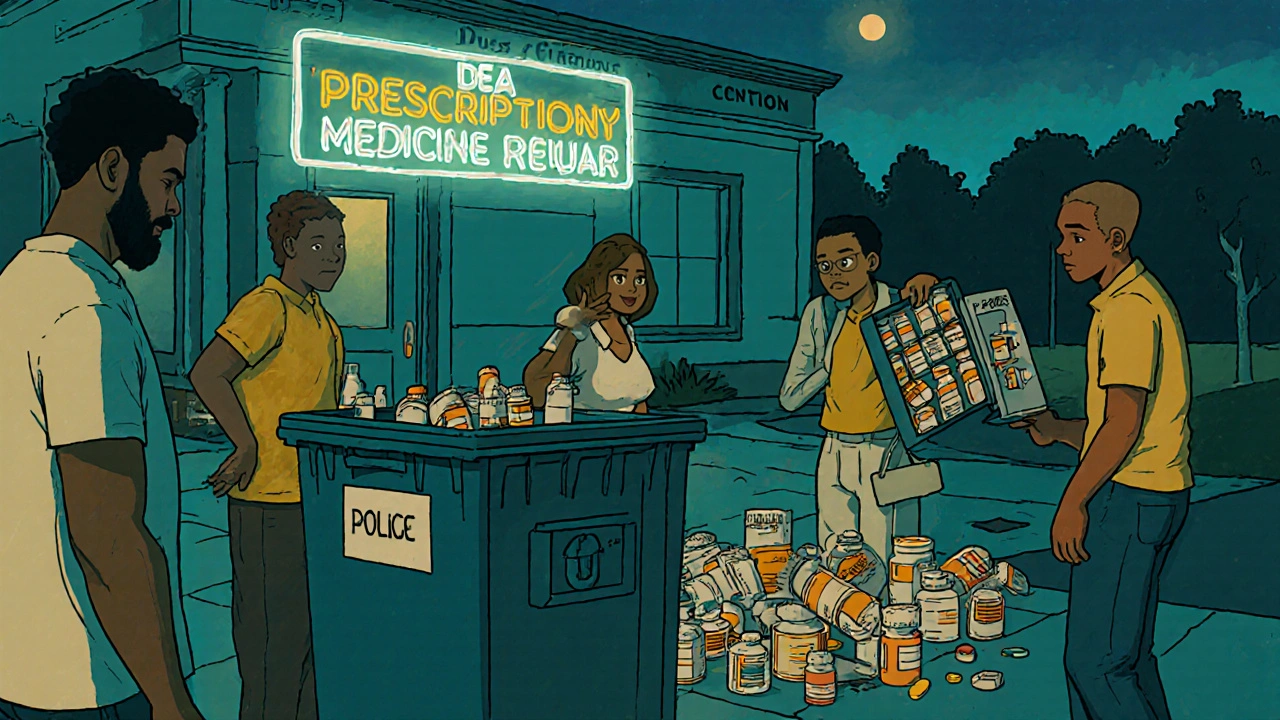
National Prescription Drug Take-Back Days: What to Expect
Learn what to expect at National Prescription Drug Take-Back Days, including what meds are accepted, where to go, how the process works, and why it matters for safety and public health.