
Levodopa Absorption: How Your Body Takes In Parkinson's Medication
When you take levodopa, a medication that converts into dopamine in the brain to help manage Parkinson’s symptoms. Also known as L-DOPA, it’s the most effective drug for controlling movement problems like tremors and stiffness. But its success doesn’t just depend on the pill you swallow—it depends on how well your body absorbs it. Many people don’t realize that levodopa absorption is a delicate process, easily disrupted by what you eat, when you eat it, and even the health of your gut.
Levodopa competes with amino acids from protein for transport across the intestinal wall and into the bloodstream. That’s why taking it on an empty stomach—30 to 60 minutes before meals—often makes a big difference. If you eat a high-protein meal right before or after your dose, your body might not absorb enough of the drug to work properly. This isn’t just theory; real patients report sudden loss of symptom control after switching to a high-protein diet or eating a large meal with their pill. Your gut doesn’t just digest food—it decides how much medicine gets through.
There’s more to it than protein. Gut health plays a huge role. Conditions like irritable bowel syndrome, a disorder causing chronic digestive discomfort that can slow or alter how drugs move through the intestines, or even long-term use of acid-reducing drugs like omeprazole, a proton pump inhibitor that lowers stomach acid and may interfere with levodopa’s breakdown and uptake, can reduce absorption. If you’ve noticed your Parkinson’s symptoms getting harder to control over time—even with the same dose—it might not be your disease worsening. It could be your body’s ability to take in the medicine changing.
Some people find relief by switching to a low-protein diet during the day and saving most protein for the evening. Others benefit from taking levodopa with a small carbohydrate snack if stomach upset occurs. There’s no one-size-fits-all fix, but tracking what you eat and when you take your pills can reveal patterns most doctors never ask about. You’re not imagining the fluctuations—you’re seeing the real impact of absorption.
What you’ll find in the posts below are real stories and science-backed tips from people who’ve navigated these challenges. You’ll learn how food timing affects levodopa, why gut problems can sabotage your treatment, and what alternatives exist when absorption becomes unreliable. This isn’t just about taking a pill. It’s about making sure that pill actually works.
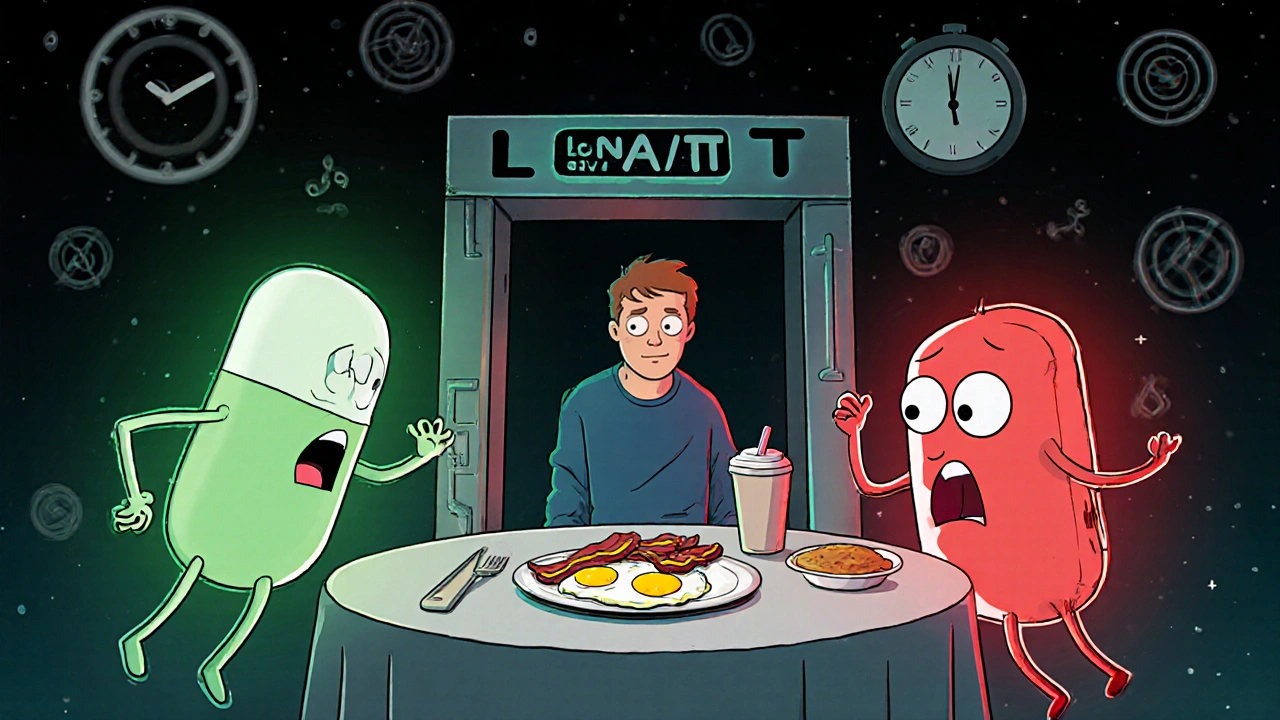
Protein-Rich Foods and Medications: How Diet Affects Absorption and Effectiveness
Protein-rich meals can reduce medication absorption by up to 50%, especially for drugs like levodopa. Learn how timing and protein redistribution improve effectiveness without cutting protein from your diet.