
Drug Disposal: Safe Ways to Get Rid of Unused Medications
When you have old pills sitting in your medicine cabinet, you’re not just holding onto extra medicine—you’re holding a potential risk. Drug disposal, the proper way to get rid of expired, unused, or unwanted medications. Also known as medication disposal, it’s not just about cleaning out a drawer—it’s about stopping poison from reaching kids, pets, and waterways. Every year, millions of unused pills end up flushed, tossed in the trash, or left where anyone can find them. That’s why knowing how to dispose of them right matters more than you think.
It’s not just about pharmaceutical waste, the leftover drugs that enter the environment. It’s about medication safety, how keeping or tossing drugs the wrong way can lead to accidents, overdoses, or long-term pollution. The FDA and CDC agree: flushing most pills is outdated and dangerous. Pouring them down the sink doesn’t make them disappear—it just moves them into rivers and lakes. Even landfills aren’t safe if drugs are tossed loose in the trash. Kids and pets have died from grabbing a pill they thought was candy. Teens have abused leftover painkillers from their parents’ cabinets. And studies show traces of antidepressants, antibiotics, and blood pressure meds in drinking water supplies across the country.
The fix? It’s simpler than you think. First, check if your pharmacy or local police station runs a drug take-back program, a free, secure collection event or drop box for unused medications. These are the gold standard. If none are nearby, mix pills with coffee grounds or cat litter in a sealed container before tossing them in the trash. Never crush or flush unless the label says to—only a few opioids like fentanyl patches need that special step. Remove labels to protect your privacy. And always keep meds locked up until you’re ready to dispose of them. These steps aren’t just smart—they’re life-saving.
You’ll find real stories below about how people handled leftover antibiotics after a surgery, what to do with old pain meds after a hip replacement, and why tossing a bottle of sleeping pills in the trash without mixing it with something gross is a bad idea. We’ve got guides on what to do with controlled substances, how to handle expired insulin, and why some drugs need extra care. Whether you’re cleaning out a grandparent’s cabinet or just got a new prescription and realized you don’t need the old one anymore, this collection gives you clear, no-fluff steps to do it right.
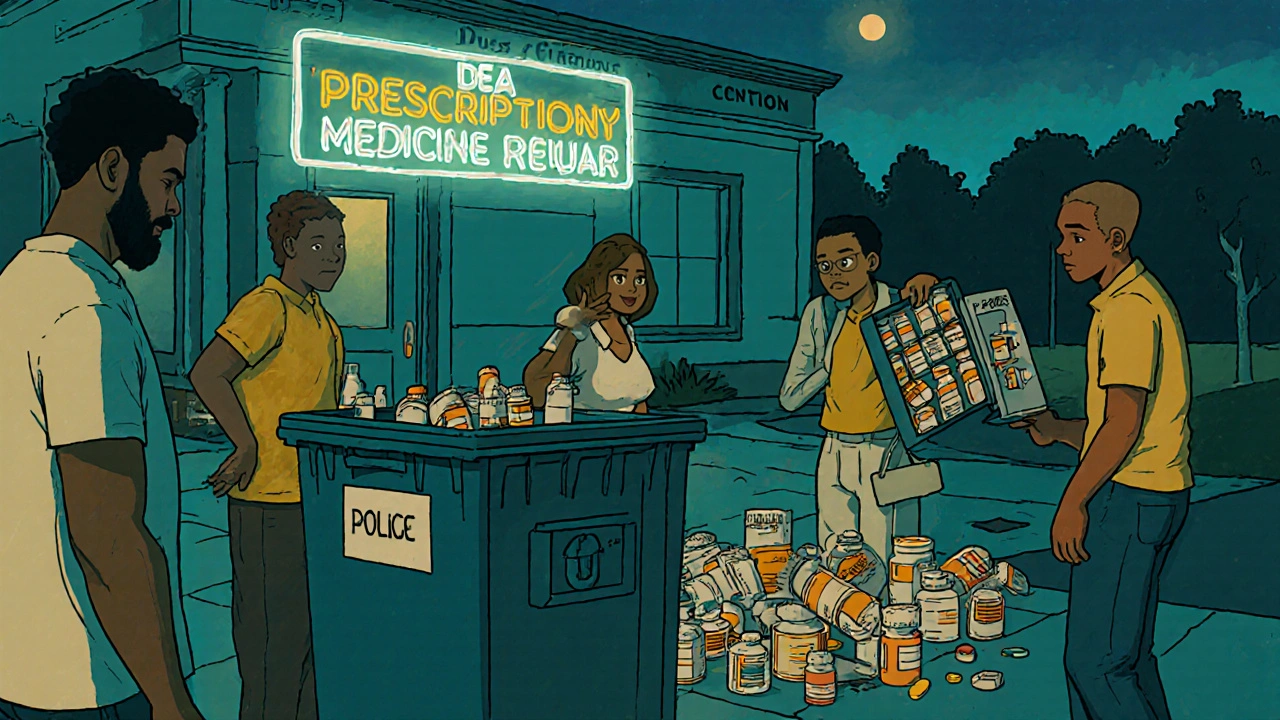
National Prescription Drug Take-Back Days: What to Expect
Learn what to expect at National Prescription Drug Take-Back Days, including what meds are accepted, where to go, how the process works, and why it matters for safety and public health.