
Copay Explained: What It Is, How It Works, and How to Manage It
When you pick up your prescription, you pay a portion upfront—that’s your copay, a fixed amount you pay for covered healthcare services, like medications, before your insurance covers the rest. Also known as co-payment, it’s one of the most common ways health plans shift part of the cost to you. It’s not a percentage—it’s a flat fee. Maybe $10 for generics, $40 for brand names. Sounds simple, but over time, those small payments add up, especially if you’re on multiple meds.
Why do insurers use copays at all? They’re not just about making you pay more. They’re designed to discourage unnecessary use. If a drug costs $500 but your copay is $10, you might think, "Why not try it?" But if the copay were $200, you’d pause. That’s the idea. But for people with chronic conditions—like diabetes, high blood pressure, or asthma—those $10 or $30 copays every month can become a real burden. Some folks skip doses. Others delay refills. That’s not smart. It leads to worse health, and in the long run, costlier care.
Here’s what you can do: First, check if your plan has a tiered formulary, a list of covered drugs sorted by cost, with lower copays for cheaper, equally effective generics. Many plans put generics in Tier 1—your lowest copay. If your drug is in Tier 3 or 4, ask your doctor if a generic alternative works. Second, look into patient assistance programs, offered by drug makers to help people with low income pay for meds. Some offer free or deeply discounted drugs if you qualify. Third, compare prices. A drug might cost $15 at one pharmacy and $45 at another, even with the same copay. Use free tools like GoodRx to find the lowest cash price—it might beat your copay.
Don’t assume your copay is set in stone. Insurance plans change every year. Your meds might get moved to a higher tier. Your deductible might reset. Stay alert. Call your insurer once a year and ask: "Which of my meds are on the lowest copay tier?" And if you’re struggling, talk to your pharmacist. They often know about coupons, discounts, or even manufacturer programs you didn’t know existed.
The system isn’t perfect. But understanding how copays work gives you power. You’re not just a patient—you’re a consumer. And like any consumer, you deserve to know what you’re paying for, why, and how to pay less without risking your health.
Below, you’ll find real-world guides on how to handle medication costs, avoid dangerous interactions, and make sense of your insurance rules—all written to help you take control, one prescription at a time.
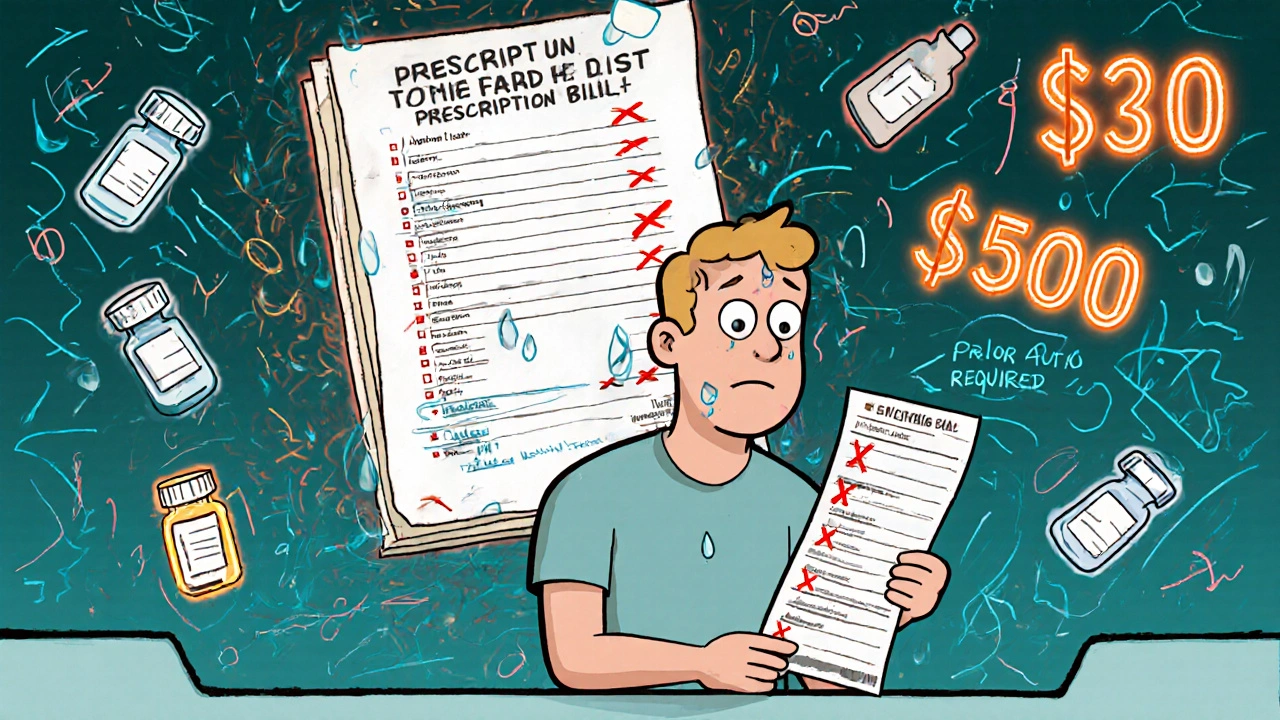
Prescription Insurance Coverage: 10 Essential Questions to Ask Your Plan
Learn the 10 critical questions to ask about prescription drug coverage before enrolling in a health plan. Avoid surprise bills and ensure your medications are covered at an affordable cost.