
Anaphylaxis: Causes, Signs, and What to Do in an Emergency
When your body overreacts to something harmless—like peanuts, bee stings, or certain medicines—it can trigger a full-body crisis called anaphylaxis, a severe, life-threatening allergic reaction that affects multiple organ systems. Also known as allergic shock, it doesn’t wait for permission—it hits fast, and without quick action, it can be fatal. This isn’t just a bad rash or a stuffy nose. Anaphylaxis shuts down breathing, drops blood pressure, and can stop your heart. It’s not rare. Every year, thousands end up in emergency rooms because they didn’t recognize the signs early enough.
What causes it? The most common triggers are food allergies, especially to peanuts, tree nuts, shellfish, milk, and eggs, followed by insect stings, like from bees or wasps, and medications, including antibiotics like penicillin and NSAIDs like ibuprofen. Even latex and exercise in rare cases can set it off. The reaction happens because your immune system mistakes a harmless substance for an invader and releases a flood of chemicals—mainly histamine—that make your airways swell, your blood vessels leak, and your organs struggle to function.
The symptoms come on fast—often within minutes. You might feel your throat tightening, your tongue swelling, or your skin breaking out in hives. Your voice could go hoarse. You might feel dizzy, nauseous, or like you’re going to pass out. Some people report a strange metallic taste or a feeling of impending doom. These aren’t just bad symptoms—they’re red flags. If you or someone else has two or more of these signs after exposure to a known trigger, treat it like a heart attack: act now.
The only treatment that works fast enough is epinephrine, a life-saving injection that reverses swelling, opens airways, and raises blood pressure. It’s not optional. Antihistamines like Benadryl won’t cut it—they’re too slow and don’t stop the crash. If you have a history of severe allergies, you need an epinephrine auto-injector (like EpiPen) and you need to carry it everywhere. Know how to use it. Teach your family. Keep it at room temperature. Check the expiration date. And never, ever wait to use it if symptoms are coming on.
After using epinephrine, you still need to go to the ER. The reaction can come back—sometimes hours later. That’s called biphasic anaphylaxis. Doctors will monitor you, give more meds if needed, and help you figure out what caused it. Allergy testing can help identify triggers so you can avoid them next time. But the real power is in preparation: know your triggers, carry your injector, and never ignore the warning signs.
Below, you’ll find real-world stories and practical guides from people who’ve faced anaphylaxis—what worked, what didn’t, and how they learned to live safely with it. These aren’t just articles. They’re survival tools.

Severe Adverse Drug Reactions: When to Seek Emergency Help
Severe adverse drug reactions can be deadly. Learn the critical signs of anaphylaxis, skin reactions like SJS/TEN, and when to call 911. Know what to do - and what not to do - in a drug emergency.
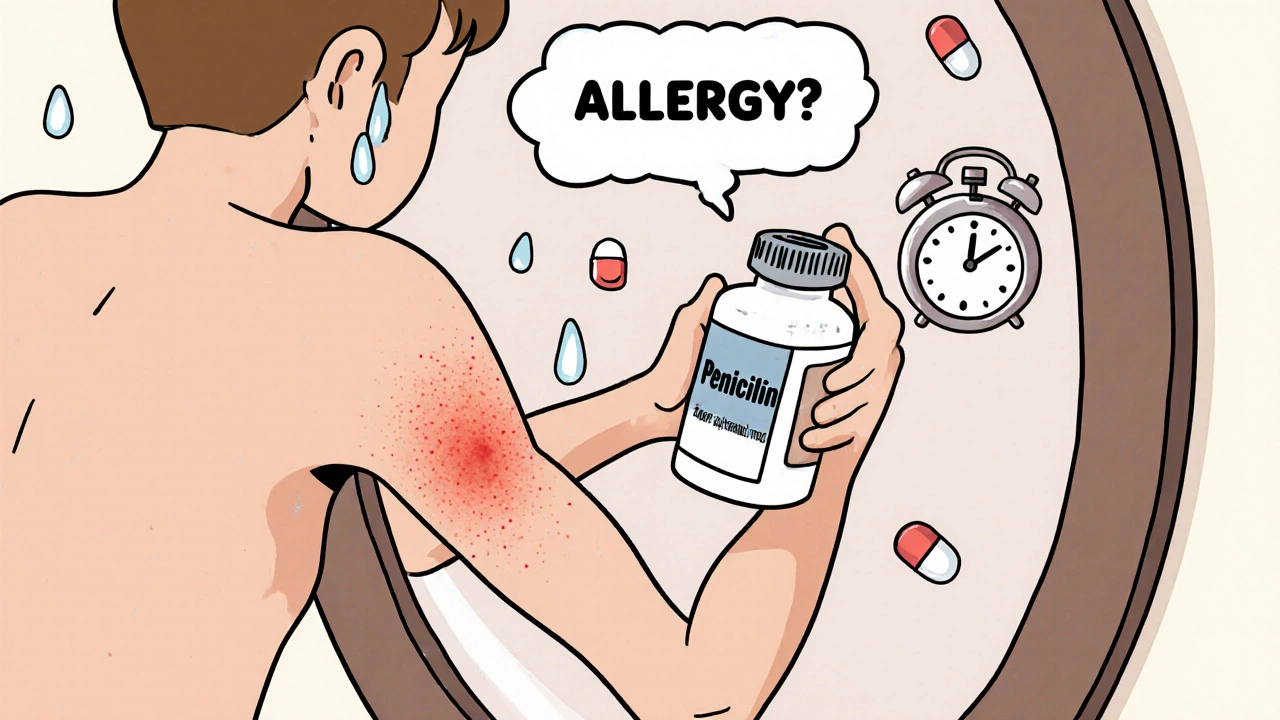
Allergic Reactions to Medications: How to Tell Mild, Moderate, and Severe Apart
Learn how to tell the difference between mild, moderate, and severe allergic reactions to medications - and what to do in each case to stay safe. From rashes to anaphylaxis, know the signs and act fast.