
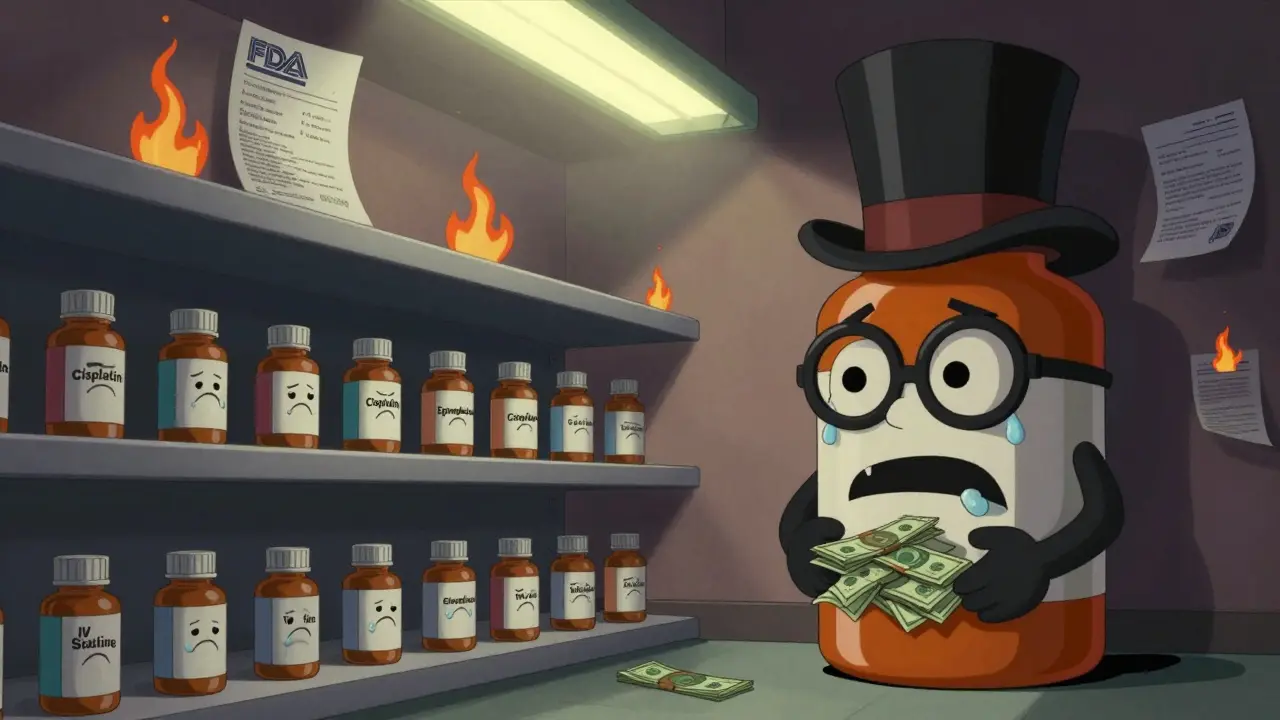
When you’re prescribed a generic drug, you expect it to be there when you walk into the pharmacy. But for millions of Americans, that’s no longer a guarantee. As of April 2025, there were 270 active drug shortages in the U.S., and nearly all of them were generic medications. These aren’t luxury pills or niche treatments - they’re the antibiotics, IV fluids, chemotherapy drugs, and heart medications that keep people alive. And the reason they’re disappearing isn’t because of bad luck. It’s because the system is broken.
Why Generic Drugs Are Falling Through the Cracks
Generic drugs make up 90% of all prescriptions filled in the U.S., but they account for just 13.1% of total drug spending. That’s the core problem. These drugs are cheap - sometimes less than $5 per dose - and manufacturers are forced to compete on price, not quality or reliability. When profit margins are razor-thin, companies don’t invest in backup equipment, extra inventory, or multiple suppliers. They run one line, in one factory, with one source for the active ingredient. If that line breaks, the drug vanishes.Take sterile injectables - things like IV saline, epinephrine, or chemotherapy drugs like cisplatin. These are the most vulnerable. Making them requires clean rooms, sterile environments, and specialized machinery that costs millions. One tornado in 2023 shut down a Pfizer plant and took out 15 different medications. A quality failure at a plant in India halted cisplatin production nationwide. These aren’t rare events. They’re predictable.
The Global Web That’s Too Thin to Hold
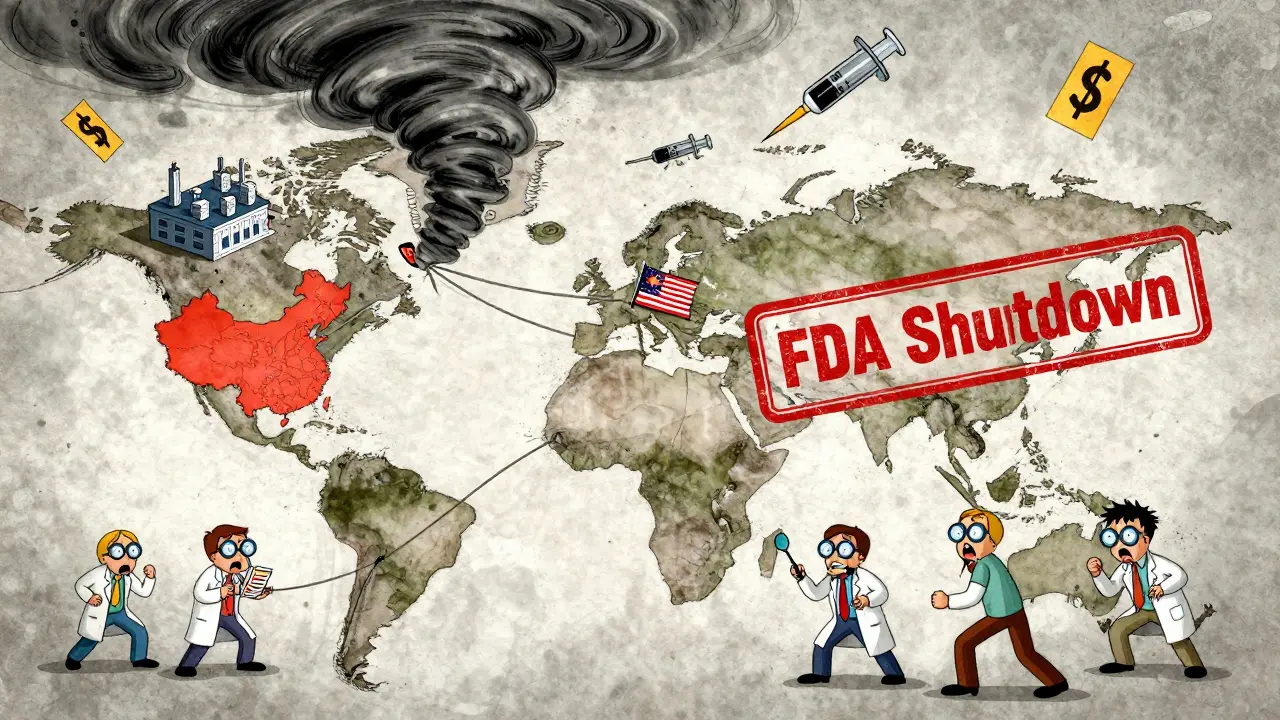
Less than 30% of the active pharmaceutical ingredients (APIs) used in U.S. drugs are made here. About 40% come from China. India supplies much of the finished product. These countries aren’t just convenient - they’re essential. But that also means the whole system depends on a few factories in a few regions. If there’s a flood, a political dispute, or an FDA inspection that shuts down a facility, the ripple effect hits hospitals and pharmacies within weeks.And here’s the twist: even though the U.S. FDA inspects foreign facilities, many Chinese manufacturers still hesitate to submit the required documentation. Why? A history of unreliable practices. The agency has flagged quality issues for years, but without enough inspectors on the ground - and with domestic inspection capacity shrinking - enforcement is inconsistent. Meanwhile, the number of manufacturers making a single generic drug has collapsed. For many older drugs, only one or two companies still produce them. One failure = nationwide shortage.
Brand Drugs vs. Generic Drugs: A Tale of Two Supply Chains
Brand-name drugmakers don’t face the same chaos. Why? They have money. Big profit margins let them keep extra inventory, diversify suppliers across continents, and build redundancy into their systems. If one factory goes down, they can shift production. They can afford to wait out a delay. Generic manufacturers can’t. They’re locked into contracts with hospitals and pharmacies that demand rock-bottom prices. If they raise costs even slightly, they lose the bid. So they cut corners - and that’s where the risk grows.For example, a brand-name cancer drug might cost $10,000 a dose. A generic version of the same drug? $50. The manufacturer of the generic has to make 200,000 doses just to cover the same cost as one dose of the brand. That’s not a business model - it’s a gamble. And when the gamble fails, patients pay the price.
Who’s Feeling the Pain?
It’s not just hospitals. It’s patients. People with cancer are getting delayed treatments because cisplatin isn’t available. Diabetics are rationing insulin because the cheaper generic vials are out of stock. Emergency rooms are turning away patients because they don’t have epinephrine for allergic reactions. Pharmacists spend 20 to 30% of their week just trying to find alternatives - calling other pharmacies, compounding drugs by hand, or scrambling to get something from a different supplier. One pharmacist told an anonymous survey: “I’ve had to tell a mother her child’s antibiotic isn’t in stock. That’s not part of my job description.”Doctors are forced to make dangerous substitutions. A patient on a stable generic blood pressure medication might be switched to a different one with unknown side effects. A cancer patient might get a less effective version because the preferred drug is gone. The American College of Physicians says shortages now affect every specialty - especially internal medicine, oncology, and pediatrics. This isn’t a glitch. It’s a systemic failure.
Why Tariffs Won’t Fix This
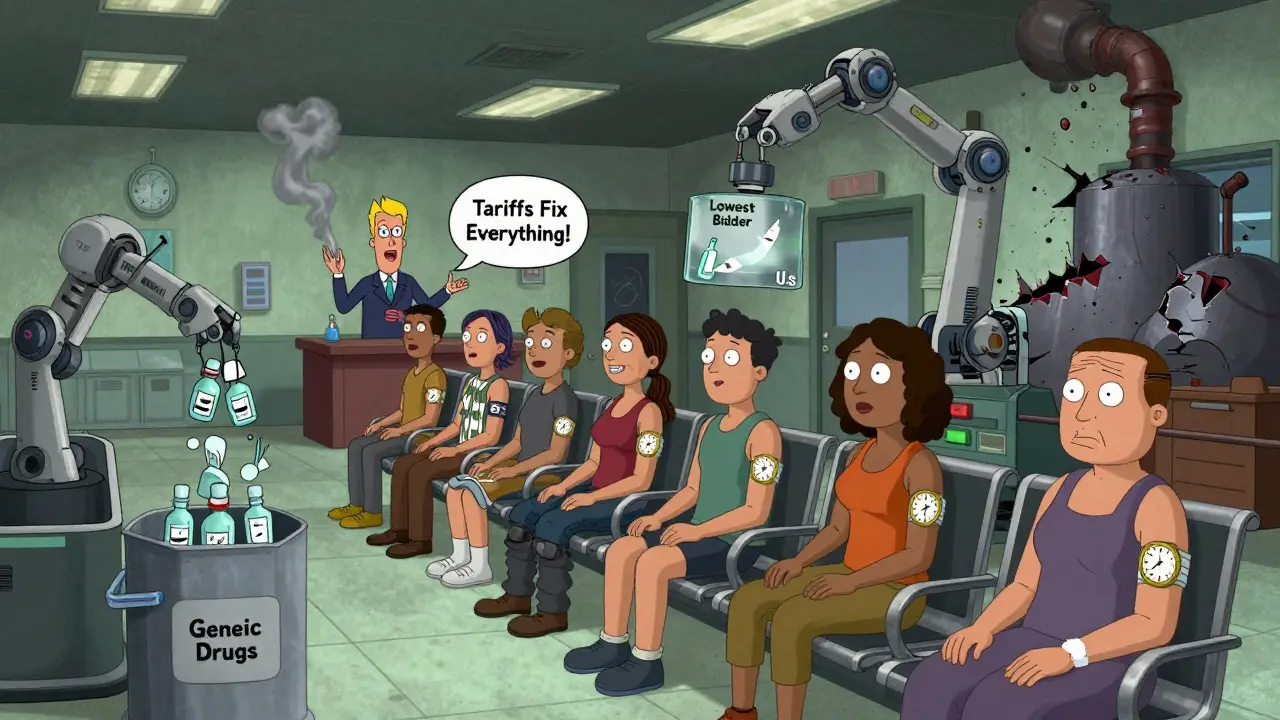
Some politicians say the answer is tariffs - taxing imports from China and India to force manufacturing back to the U.S. But experts warn that’s like pouring gasoline on a fire. Tariffs would raise the cost of APIs, which would force generic manufacturers to raise prices. But hospitals and insurers won’t pay more. So manufacturers drop the product. Shortages get worse. The CSIS analysis says tariffs could cause “delayed treatment availability and increased drug shortages” - exactly what we’re trying to avoid.Rebuilding domestic production sounds good, but it’s not simple. It would take 5 to 7 years and $20-30 billion to build the facilities, train the workers, and get regulatory approvals. And even then, you’d still need a market that pays enough to keep those factories running. Right now, the market rewards the cheapest bid - not the most reliable one.
What Could Actually Help?
There are real solutions - but they require cooperation, not politics.- Strategic reserves: The government could require manufacturers to keep six months’ worth of critical generics in a national stockpile - like we do with vaccines or emergency medical supplies. S.2062 proposed this in 2025, but it hasn’t passed.
- Price floors: Instead of letting bids hit rock bottom, set minimum prices for essential generics. This wouldn’t make drugs expensive - just enough to cover basic production and quality control.
- Transparency: Require labels that say where the API was made. Patients and providers deserve to know. It also pressures manufacturers to improve quality.
- Public-private partnerships: The government could co-invest in manufacturing facilities for high-risk drugs, sharing the cost and risk with private companies.
Right now, the system punishes reliability. It rewards the lowest bid, even if that bid comes from a factory with a history of violations. The fix isn’t about blaming China or India. It’s about changing the rules so that making a reliable, life-saving drug is profitable - not a gamble.
The Future Is Still Uncertain
The number of shortages hit a record 323 in early 2024. In 2025, it’s still over 270. The Brookings Institution warns that future disruptions may come not from quality issues - but from geopolitical conflict. A war, a trade embargo, or a pandemic could cut off entire regions overnight. We’ve been lucky so far. But the next shock might not be a tornado or a factory fire. It might be a border closing.Until we treat generic drugs like the lifelines they are - not just cheap commodities - shortages will keep happening. Patients shouldn’t have to wonder if their next dose will arrive. And pharmacists shouldn’t have to be detectives just to fill a prescription. The system can be fixed. But only if we stop pretending this is someone else’s problem.
Why are generic drug shortages so common?
Generic drug shortages are common because manufacturers operate on extremely thin profit margins. With prices often under $5 per dose, companies avoid investing in backup production, multiple suppliers, or quality upgrades. When one factory fails - due to natural disaster, quality issues, or regulatory shutdown - there’s no backup. Many generics are made by only one or two companies, creating single points of failure.
Are sterile injectables more likely to be in short supply?
Yes. Sterile injectables - like IV fluids, chemotherapy drugs, and epinephrine - are the most commonly affected. They require complex, expensive manufacturing with strict sterile conditions. A single contamination or equipment failure can shut down production for months. These drugs are also low-cost, so manufacturers have little incentive to build redundancy.
Does onshoring drug manufacturing solve the problem?
Not on its own. Building domestic production would take 5-7 years and $20-30 billion. Even then, without changing the pricing model, new U.S. factories would struggle to compete with low-cost overseas producers. The real issue isn’t location - it’s economics. If generics are priced too low, no one will make them, no matter where.
How do drug shortages affect patients?
Patients face delayed cancer treatments, canceled surgeries, rationed antibiotics, and unsafe drug substitutions. In some cases, people have had to wait weeks for a critical medication. Pharmacists and doctors report increased stress and compromised care. For vulnerable populations - like children, the elderly, or those with chronic illnesses - shortages can be life-threatening.
Can tariffs on Chinese or Indian drugs help reduce shortages?
No - they’re likely to make shortages worse. Tariffs would raise the cost of active ingredients, forcing manufacturers to raise prices. But hospitals and insurers won’t pay more for generics. So manufacturers drop the product entirely. The result? Fewer options and more shortages. Experts warn that tariffs could disrupt supply chains without fixing the root problem: low pricing.
What’s being done to fix this?
Some proposals include creating a strategic national stockpile of critical generics, setting minimum price floors for essential drugs, requiring transparency in API sourcing, and funding public-private partnerships to support manufacturing. But progress is slow. Federal agencies face budget cuts, and policy debates are stuck between political goals and practical realities.
Healthcare workers are doing everything they can to manage the crisis - but they’re not the ones who broke the system. Fixing it will take more than good intentions. It will take real policy changes that value patient safety over cheap prices.
Comments
Carolyn Rose Meszaros
January 20, 2026 AT 17:44Okay but can we just take a second to appreciate how wild it is that we’re risking people’s lives because someone didn’t want to pay $0.50 more for a vial of saline? 😭 I had to watch my grandma’s chemo get delayed last year-she cried because she thought they’d forgotten her. It’s not just a supply chain issue. It’s a moral failure.
Thomas Varner
January 21, 2026 AT 11:28Y’know… the real tragedy? Nobody’s surprised anymore. We just shrug and say, “Oh, another shortage.” Like it’s the weather. But it’s not natural-it’s manufactured. By policy. By greed. By indifference. And now we’re all just… waiting for the next one. 😐
Emily Leigh
January 21, 2026 AT 16:32So… let me get this straight. We outsource meds to China because it’s cheap… then get mad when China doesn’t play nice? Wow. Groundbreaking. Meanwhile, my cousin’s kid needed epinephrine and the pharmacy had to call three states. I’m not even mad. I’m just… bored. This is the same show, different season.
Greg Robertson
January 21, 2026 AT 21:15Carolyn, you’re not alone. My sister’s on a generic heart med that’s been out for 4 months now. They gave her a different one-she got dizzy and passed out at work. I just wish people would stop treating this like a budget spreadsheet and start treating it like a life-or-death thing. We’re not talking about iPhones here.
thomas wall
January 22, 2026 AT 19:23It is deeply lamentable that the United States has allowed its pharmaceutical infrastructure to become so perilously dependent upon foreign jurisdictions whose regulatory standards are, at best, inconsistent. This is not merely an economic failure-it is a national security vulnerability of the highest order. The time for platitudes has expired.
Shane McGriff
January 23, 2026 AT 04:26Thomas, you nailed it. We’ve normalized this. But here’s the thing-this isn’t just about money. It’s about dignity. Imagine being told your chemo’s on hold because a factory in India had a power outage. That’s not healthcare. That’s roulette. And we’re the ones spinning the wheel. We need price floors, stockpiles, and transparency-NOW. Not in 2030.
Jacob Cathro
January 24, 2026 AT 00:08bro. the whole system is a scam. 1 factory = 100% of the cisplatin? that’s not supply chain, that’s a single point of failure written by a cartoon villain. and the FDA? they’re out here checking 3 plants in china while 200 are running wild. also, why are we still using 1980s tech to make injectables? we got self-driving cars but can’t automate a sterile line? 🤡
Paul Barnes
January 25, 2026 AT 17:14Contrary to popular belief, the problem is not globalization-it is the absence of market-based incentives for reliability. When the marginal cost of production is less than the marginal cost of quality assurance, rational actors will choose the former. The solution is not protectionism, but price discovery mechanisms that internalize risk.
kumar kc
January 26, 2026 AT 20:41India makes 40% of the world’s generics. You want us to stop? Then pay more. Simple. Don’t blame us because you refuse to pay $1 more for a pill that saves your life.