

When you're pregnant or breastfeeding, managing a migraine isn't just about finding relief-it's about doing it safely. Migraines affect up to 20% of women during their childbearing years, and while many find relief during pregnancy due to rising estrogen levels, others see their symptoms worsen after delivery. The real danger isn't just the headache-it's what happens when you don't treat it. Untreated migraines raise the risk of preterm birth, preeclampsia, and low birth weight. The stress, sleep loss, and anxiety from constant pain can hurt both you and your baby more than properly chosen medications ever could.
First-Line Defense: Non-Pharmacological Options
Before reaching for any pill, try the safest tools available. Many women find significant relief just by adjusting daily habits. Aim for 7 to 9 hours of sleep every night-even if you have to schedule naps. Poor sleep is one of the biggest triggers for migraines, especially after childbirth. Stay hydrated: drink 2 to 3 liters of water daily. Dehydration can strike fast, especially if you're nursing. Eat small meals every few hours to keep blood sugar steady. Skipping meals is a classic migraine trigger.Exercise doesn’t mean running marathons. Thirty minutes of walking, swimming, or prenatal yoga five days a week can cut migraine frequency by nearly half. Studies show that regular movement improves circulation, reduces stress hormones, and helps regulate sleep-all of which calm the nervous system.
Acupuncture, when done by a practitioner trained in pregnancy care, works for about two out of three women. A 2021 trial with 120 pregnant women found that weekly sessions led to a 50% drop in migraine frequency for 68% of participants. Massage therapy twice a week during the second and third trimesters reduced attacks by 35%. Biofeedback, where you learn to control bodily responses like muscle tension and heart rate, has shown 40-60% effectiveness when practiced 3-5 times a week. These aren’t just "nice to have"-they’re clinically proven first-line treatments.
Acute Treatment: What Pills Are Safe During Pregnancy?
If non-drug methods aren’t enough, you need to know which medications are truly safe. The gold standard for acute migraine relief during pregnancy is acetaminophen. It’s been studied in over 1,200 pregnancies with no link to birth defects. The maximum safe dose is 3,000 mg per day-so stick to 650 mg every 6 hours as needed. Avoid combination products with caffeine or codeine unless approved by your provider.Sumatriptan is the most studied triptan in pregnancy. Three large studies and two systematic reviews confirm it doesn’t increase the risk of major birth defects beyond the normal 3% baseline. But here’s the catch: it’s linked to a slightly higher chance of excessive bleeding during labor and uterine atony (when the uterus doesn’t contract properly after delivery). That’s why it’s not first-line-it’s second-line, used only if acetaminophen fails. If you do use it, take the lowest effective dose and avoid it in the third trimester if possible.
Other medications are outright dangerous. Ergotamines (like Cafergot) can trigger dangerous uterine contractions and are linked to a 2.3-fold increase in miscarriage risk. Valproic acid, often used for epilepsy or bipolar disorder, carries an 11% risk of neural tube defects-over 100 times higher than normal. Feverfew, a common herbal remedy, increases miscarriage risk by 38%. Skip them entirely.
Preventing Migraines: What Can You Take Long-Term?
If you get migraines more than 4 days a month, prevention matters. But most preventive drugs aren’t safe in pregnancy. Propranolol, a beta-blocker, can reduce migraine frequency-but it’s tied to a 15% higher risk of slow fetal growth and small placenta. Use it only if the benefits clearly outweigh the risks, and only under close monitoring.A better option? Magnesium. A 2021 Cochrane Review of 8 trials with 550 pregnant women found that taking 400-600 mg of magnesium daily reduced migraine frequency by 35%. No side effects. No risks. Just solid science. Magnesium glycinate or citrate are best absorbed. Take it at bedtime-it also helps with sleep and leg cramps.
Other options with limited data include cyclobenzaprine (a muscle relaxant) and memantine (used for dementia). Both have been studied in fewer than 150 pregnancies with no major issues reported, but there’s not enough data to call them first-choice. Stick with magnesium unless your doctor recommends something else.
What’s Safe While Breastfeeding?
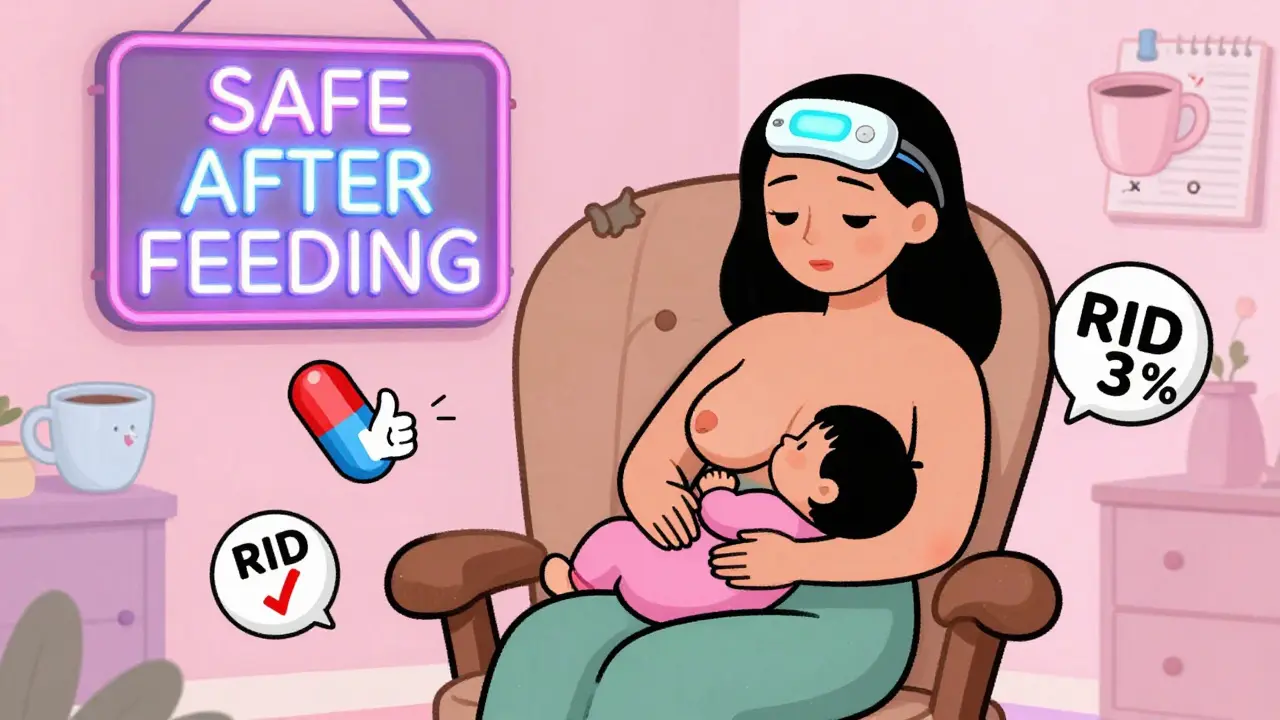
Breastfeeding opens up more options. The key is understanding Relative Infant Dose (RID)-how much of the drug ends up in breast milk. Anything under 10% RID is generally considered safe. Acetaminophen has an RID of 8.81%. Ibuprofen is even lower at 0.65%. Both are safe and can be taken as needed.Sumatriptan? RID is just 3.0%. The American Academy of Pediatrics classifies it as compatible with breastfeeding. Rizatriptan shows an even lower RID of 1.2%. You don’t need to pump and dump. Just time your dose: take it right after nursing, then wait 3-4 hours before the next feed. That gives your body time to clear most of the drug.
Other safe options include metoclopramide (RID 0.5%), ondansetron (RID 0.7%), and diphenhydramine (RID 3.5%). These help with nausea and pain and are commonly used in postpartum care. For prevention, verapamil (a calcium channel blocker) has an RID of 0.15-0.2%-one of the lowest among preventive meds. Propranolol is also safe with an RID of 0.3-0.5%, but watch your baby for unusual sleepiness or slow heart rate. Amitriptyline and sertraline are the safest antidepressants for prevention, with RIDs under 3%.
Over-the-counter options like riboflavin (vitamin B2) and magnesium sulfate are both classified as L1 (safest) by Hale’s Lactation Risk Criteria. Take 400 mg of riboflavin daily-it’s been shown to reduce migraine frequency by over 50% in some studies.
Newer Treatments: What’s on the Horizon?
In 2023, the FDA approved rimegepant (Nurtec ODT) for both acute and preventive use in adults. It’s classified as L2 for breastfeeding-meaning it’s likely safe. But pregnancy data is still limited. The same goes for other CGRP blockers like erenumab and fremanezumab. They’re great for chronic migraine, but we don’t yet have enough data on their effects during pregnancy.Neuromodulation devices are changing the game. The Cefaly device, worn on the forehead, uses electrical stimulation to block migraine signals. It’s classified as L2 for breastfeeding and has no known risks in pregnancy. A 2023 study found it reduced migraine frequency by 50% in 68% of users. GammaCore, which stimulates the vagus nerve, showed a 52% response rate in pregnant women in a 2021 trial. These devices don’t involve drugs at all-just electricity. Insurance coverage is still limited, but they’re becoming more accessible.

What Not to Do
Don’t assume natural means safe. Herbs like feverfew, butterbur, and willow bark carry real risks. Butterbur can damage the liver. Willow bark acts like aspirin and increases bleeding risk. Don’t rely on essential oils or chiropractic adjustments alone-they might help a little, but they’re not enough for moderate to severe migraines.Don’t delay treatment because you’re scared. The stress from uncontrolled migraines raises cortisol levels by 45-60% and cuts REM sleep by 30-40%. That affects your bonding with your baby, your mood, and even your ability to care for yourself. Properly managed migraine is far safer than untreated migraine.
Practical Tips for Daily Life
- Take your medication right after feeding, not before. Wait 3-4 hours before the next feed.- Keep a migraine diary: track triggers like food, sleep, weather, stress.
- Avoid strong smells (perfume, smoke, cleaning products).
- Use cold packs on your neck or forehead during an attack.
- Tell your OB/GYN and your neurologist you’re pregnant or breastfeeding-don’t assume they know.
- Ask for a referral to a certified lactation consultant (IBLCE). They can help you navigate meds and breastfeeding safely.
- If you’re on a preventive medication, don’t stop suddenly. Work with your doctor to taper off if needed.
Most women who follow these guidelines successfully manage migraines without stopping breastfeeding. A 2023 survey of 1,247 breastfeeding mothers found that 78% managed their migraines with acetaminophen and ibuprofen alone. Only 15% needed triptans-and 92% reported no side effects in their babies.
Is acetaminophen really safe for migraines during pregnancy?
Yes. Acetaminophen is the most studied and safest pain reliever for migraines during pregnancy. Over 1,200 pregnancies tracked in the Sumatriptan Pregnancy Registry showed no increased risk of birth defects. The maximum daily dose is 3,000 mg. Avoid combination products with caffeine, codeine, or aspirin unless approved by your doctor.
Can I take sumatriptan while breastfeeding?
Yes. Sumatriptan has a very low Relative Infant Dose (RID) of 3.0%, meaning very little passes into breast milk. It’s classified as L1 (safest) by Hale’s Lactation Risk Criteria. To minimize exposure, take it right after nursing and wait 3-4 hours before the next feed. Studies show no adverse effects in infants when used this way.
Are triptans dangerous during pregnancy?
They’re not linked to birth defects, but they may slightly increase the risk of excessive bleeding during labor and uterine atony. These risks are small but real-so triptans are not first-line in pregnancy. Use them only if acetaminophen doesn’t work, and avoid them in the third trimester if possible. Always discuss with your OB/GYN.
What about magnesium for migraine prevention during pregnancy?
Magnesium is one of the safest and most effective preventive options. A 2021 Cochrane Review of 550 pregnant women found that 400-600 mg daily reduced migraine frequency by 35%. No side effects on the baby. Take magnesium glycinate or citrate at night-it helps with sleep and leg cramps too.
Can I use Cefaly or other neuromodulation devices while pregnant?
Yes. Devices like Cefaly and gammaCore use electrical stimulation to block migraine signals. They have no drugs, no systemic absorption, and no known risks in pregnancy or breastfeeding. Cefaly is classified as L2 for lactation. In studies, 68% of users saw at least a 50% reduction in migraine frequency. Insurance coverage is limited, but they’re becoming more available.
Comments
Laura Gabel
March 18, 2026 AT 07:29jerome Reverdy
March 19, 2026 AT 21:33Prathamesh Ghodke
March 19, 2026 AT 22:15Jeremy Van Veelen
March 20, 2026 AT 02:47MALYN RICABLANCA
March 21, 2026 AT 01:24Srividhya Srinivasan
March 21, 2026 AT 17:07Andrew Mamone
March 21, 2026 AT 21:27Sanjana Rajan
March 22, 2026 AT 12:43lawanna major
March 24, 2026 AT 08:44Kendrick Heyward
March 25, 2026 AT 20:35Ryan Voeltner
March 27, 2026 AT 07:14jerome Reverdy
March 27, 2026 AT 17:42Kyle Young
March 29, 2026 AT 14:21Aileen Nasywa Shabira
March 31, 2026 AT 04:26