
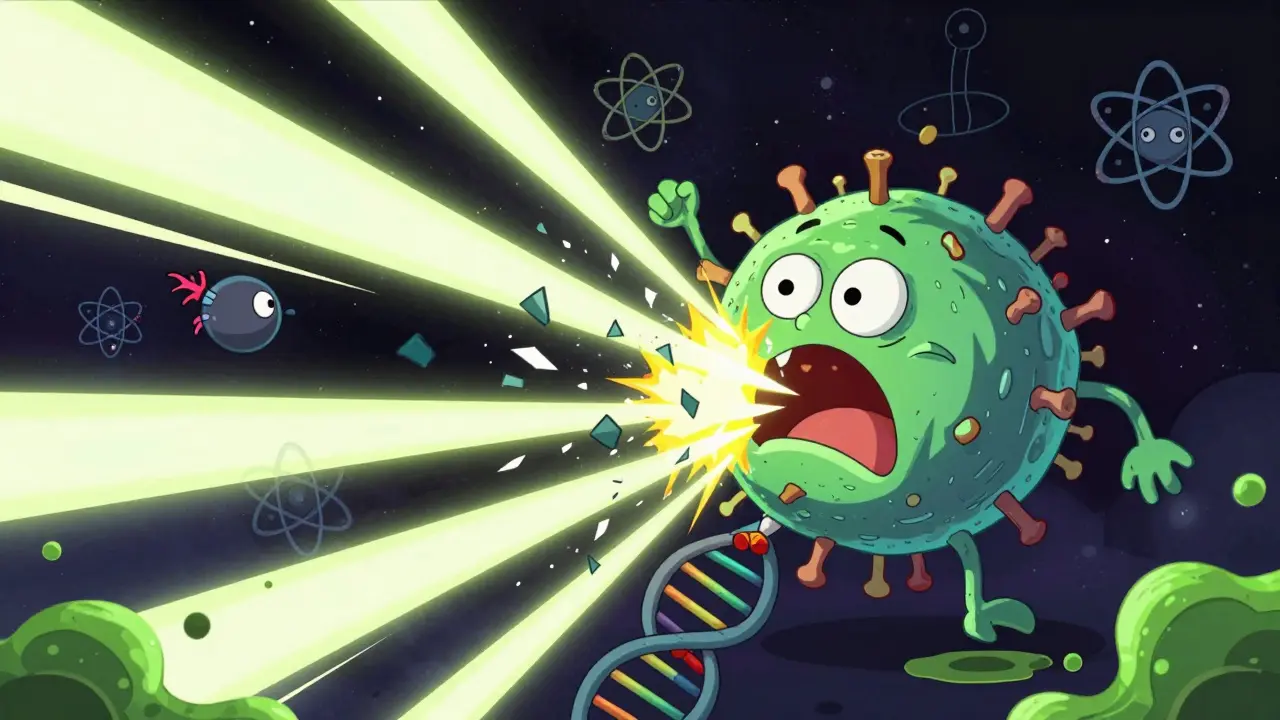
When you hear the word radiation, you might think of nuclear accidents or X-rays at the dentist. But for millions of people with cancer, radiation is a precise, life-saving tool. Radiation therapy doesn’t just zap tumors-it shreds the DNA inside cancer cells, stopping them from multiplying and forcing them to die. It’s not magic. It’s biology. And understanding how it works changes everything about how patients and doctors think about treatment.
How Radiation Breaks DNA
Radiation therapy uses high-energy particles or waves-usually X-rays or gamma rays-to hit cancer cells. These aren’t gentle waves. They’re ionizing radiation, meaning they have enough energy to knock electrons out of atoms. That creates charged particles called ions, which tear through the cell like a bullet.
The main target? DNA. Every cancer cell is built to divide endlessly. But DNA is its weakest link. When radiation hits, it doesn’t just nick the DNA-it shatters it. The most deadly kind of damage is a double-strand break: both sides of the DNA ladder snap at the same spot. A single cell can get dozens of these breaks after a single treatment.
It’s not just direct hits. Radiation also turns water molecules inside the cell into reactive oxygen species (ROS). These are like molecular grenades-they explode and oxidize proteins, lipids, and DNA. That’s why radiation kills even cells it doesn’t directly hit. The damage spreads.
What Happens After the DNA Breaks
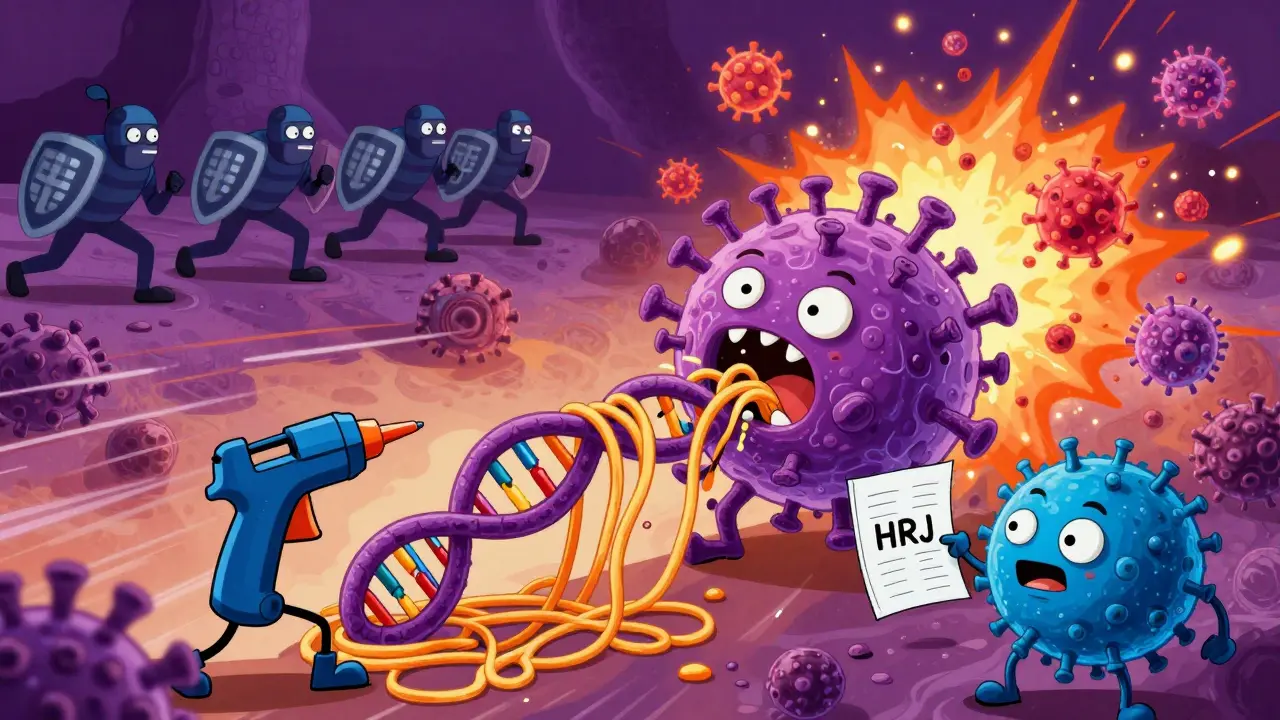
Cells aren’t helpless. They have repair crews. When DNA breaks, sensors like ATM and ATR proteins sound the alarm. The cell stops dividing immediately. It tries to fix the damage using two main repair systems: non-homologous end joining (NHEJ) and homologous recombination (HR).
NHEJ is fast but messy. It glues broken ends back together, even if it gets the sequence wrong. HR is precise-it uses a sister DNA strand as a template to rebuild the break perfectly. But here’s the twist: cancer cells that use HR often die quietly. They fix the damage, keep dividing, and vanish without a trace.
But cells that use NHEJ-or can’t repair at all-don’t just die. They scream.
The Immune System Gets Involved
A groundbreaking discovery in 2023 showed that how a cancer cell repairs its DNA determines whether the immune system notices it. Cells with broken BRCA2 genes (common in some breast and ovarian cancers) can’t use HR. So they try NHEJ, fail, and die in a messy way during cell division. When they die, they release molecules that look like viral invaders. The body’s immune system wakes up, recognizes the cancer as foreign, and starts attacking other cancer cells nearby.
This is a game-changer. For decades, doctors thought radiation only worked by killing cells directly. Now we know it can turn tumors into vaccine sites. That’s why combining radiation with immunotherapy-like pembrolizumab-is boosting response rates from 22% to 36% in lung cancer patients. Radiation doesn’t just kill. It alerts.
Why Some Tumors Resist Radiation
Not all cancers fall apart under radiation. About 30-40% develop resistance. Why? Because cancer cells adapt.
Some ramp up their DNA repair tools. Others slow down their cell cycle, giving them more time to fix damage. Hypoxia-low oxygen in tumors-is another big problem. Oxygen makes radiation damage 2.5 to 3 times more effective. A tumor with poor blood flow can be nearly immune to radiation.
Then there’s the tumor microenvironment. Cancer-associated fibroblasts and immune-suppressing cells surround tumors like bodyguards. They shield cancer cells and block immune signals. Even if radiation kills some cells, the survivors get protected.
One telling sign of resistance? High levels of 53BP1, a protein that helps repair DNA. A 2020 clinical study found head and neck cancer patients with low 53BP1 had a 78% complete response rate to radiation. Those with high levels? Only 45%. The body’s repair tools, when too good, become the enemy.
The Role of Ceramide and Blood Vessels
There’s another layer. Radiation doesn’t just kill cancer cells-it kills the blood vessels that feed them. At high doses, like those used in SBRT (stereotactic body radiation therapy), radiation triggers a surge in ceramide, a fatty molecule that signals cells to die. This happens especially in the lining of tumor blood vessels.
Within days, those vessels collapse. The tumor starves. Cancer cells that survived the initial radiation die later from lack of oxygen and nutrients. It’s a delayed strike-like cutting the power to a city after bombing its factories.
This is why ablative radiation (high doses in fewer sessions) can be more effective than traditional, low-dose treatments. It doesn’t just target cells. It targets the tumor’s lifeline.
How Modern Tech Makes Radiation Smarter
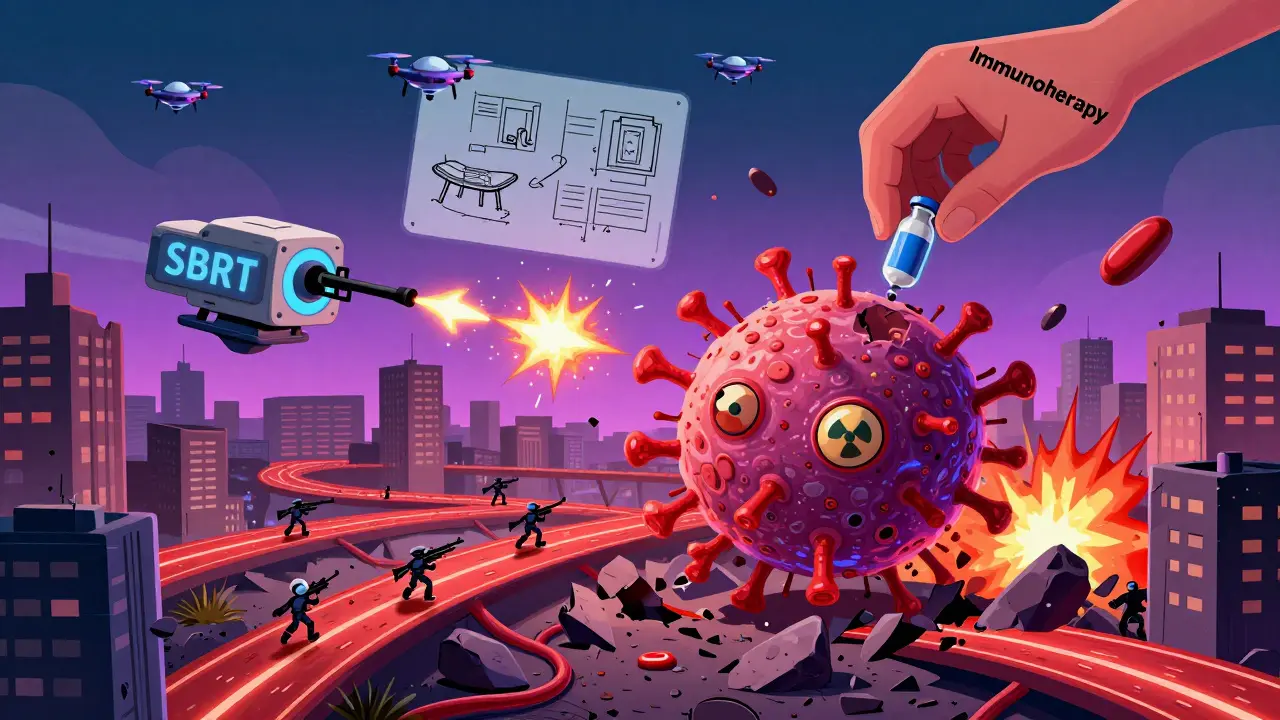
Old radiation therapy was like firing a shotgun at a target. Today, it’s a sniper rifle.
IMRT (intensity-modulated radiation therapy) shapes the beam to match the tumor’s 3D shape. SBRT delivers massive doses in 1-5 sessions with sub-millimeter accuracy. FLASH radiotherapy-still experimental-zaps tumors in less than a second, reducing damage to healthy tissue by up to 50% in animal studies.
AI now designs treatment plans in under 10 minutes. What used to take days is done before lunch. Real-time imaging tracks tumor movement during treatment, adjusting for breathing or digestion. Machines don’t just deliver radiation-they learn from it.
What’s Next: Combining Forces
The future of radiation therapy isn’t about stronger beams. It’s about smarter combinations.
PARP inhibitors like olaparib block a key repair pathway in BRCA-mutated cancers. Give them with radiation, and the cancer can’t fix its DNA. The result? More cell death, fewer recurrences.
Researchers are testing drugs that block hypoxia, making tumors more sensitive. Others are designing vaccines from radiation-killed cells to train the immune system. And in places like Perth, clinical trials are now testing whether giving radiation before immunotherapy improves survival in melanoma and pancreatic cancer.
One thing is clear: radiation therapy isn’t just a tool anymore. It’s a trigger. It sets off a chain reaction-DNA breaks, immune alerts, blood vessel collapse, and systemic cancer death. The goal isn’t just to kill cells. It’s to wake up the body’s own defenses and let them finish the job.
Why This Matters for Patients
If you’re facing radiation therapy, know this: it’s not just about the machine. It’s about your biology. Your tumor’s DNA repair skills. Its oxygen levels. Its immune environment. Your doctor isn’t just picking a dose-they’re choosing a strategy.
Some tumors respond better to fewer, stronger doses. Others need longer, gentler courses. Some need drugs added to make radiation work. The right plan isn’t one-size-fits-all. It’s built from the inside out.
And if your cancer has a BRCA mutation, or low oxygen, or high 53BP1-that’s not a dead end. It’s a clue. It tells your team how to adjust the treatment. Radiation isn’t passive. It’s a conversation. And science is finally learning how to listen.
Comments
Andrea Di Candia
December 22, 2025 AT 23:41It's wild how radiation turns cancer's own repair mechanisms against it. I used to think it was just brute force, but this? It's like tricking the enemy into blowing up their own base. The immune system waking up because of messy DNA repairs? That's the kind of elegant biology that gives me chills.
Science isn't just fixing problems anymore-it's teaching the body to fight smarter.
Dan Gaytan
December 23, 2025 AT 18:40OMG this is so cool 🤯 I had no idea radiation could make tumors into vaccine sites. My aunt just finished treatment and I finally get why they’re doing all this combo stuff now. So much more than just zapping stuff.
Also, FLASH radiotherapy sounds like sci-fi but it’s real?? YES PLEASE.
Raja P
December 23, 2025 AT 20:43Interesting read. In India, access to advanced radiotherapy like IMRT or SBRT is still limited to big cities. Most patients get older, less precise methods. But even then, the science behind it-how it breaks DNA, triggers immune response-is the same. Hope more places catch up.
Also, hypoxia being a problem? Totally makes sense. Tumors in our region often grow fast and poorly vascularized. No wonder some don’t respond.
Bret Freeman
December 24, 2025 AT 12:58Let me be clear-this is the most irresponsible medical propaganda I’ve ever seen. Radiation is not a magic wand. It’s a blunt instrument that burns healthy tissue, causes secondary cancers, and leaves people crippled for life. And now you’re telling me it’s some kind of immune system trigger? Please. The pharmaceutical industry loves this narrative because it sells more drugs.
They don’t want you to know that many cancers go into remission without radiation at all. This is fear-based medicine dressed up as science.
Lindsey Kidd
December 24, 2025 AT 13:26So many people are scared of radiation because they don’t understand it. This breakdown? Perfect. I’m sharing this with my book club next week. We’re all survivors or caregivers here-this gives us real language to talk about treatment instead of just panic.
Also, the part about ceramide and blood vessels collapsing? That’s the kind of detail that makes you feel like you’re not just a patient-you’re part of a biological revolution.
Austin LeBlanc
December 24, 2025 AT 14:31Wow. So you’re saying if your tumor has high 53BP1, you’re basically doomed? And if you have BRCA mutations, radiation turns into a vaccine? That’s not science-that’s genetic roulette. Why aren’t we testing everyone’s DNA before treatment instead of guessing? This whole system is a mess.
Doctors act like they have all the answers but they’re just winging it with expensive machines. I’ve seen too many people get burned by this.
niharika hardikar
December 25, 2025 AT 11:25It is imperative to underscore that the efficacy of radiation therapy is intrinsically contingent upon the molecular phenotype of the neoplasm. The differential utilization of non-homologous end joining versus homologous recombination pathways, particularly in BRCA-deficient contexts, engenders a phenomenon known as synthetic lethality, which synergizes with ionizing radiation-induced double-strand breaks. Furthermore, the hypoxic microenvironment modulates radiobiological response via the oxygen enhancement ratio, a well-documented phenomenon since the 1950s.
One must also acknowledge that the immunogenic cell death cascade, mediated by DAMPs and HMGB1 release, is not universally reproducible across histotypes. Clinical translation remains heterogeneous.
Bartholomew Henry Allen
December 26, 2025 AT 23:01America leads in this tech. No other country has the precision or funding. We don't need foreign opinions on how to treat cancer. Our science is superior. Radiation works. Period. The rest is noise.
Stop overcomplicating. Just fix the patient.
Abby Polhill
December 27, 2025 AT 20:49My cousin in Bangalore got treated with old-school radiation. No fancy imaging. Just a machine and hope. But she survived. I wonder if the biology is the same even when the tech isn’t. Like… does the DNA still shatter the same way? Or is it just luck?
Also, I love that they’re using AI now. My phone knows me better than my doctor used to.
Jillian Angus
December 29, 2025 AT 16:48That bit about ceramide and blood vessels collapsing? That’s the part that stuck with me.
It’s not just killing cells. It’s starving the whole thing. Quiet. Efficient. Brutal in the best way.