
Pediatric Medication Safety Calculator
Every year, 50,000 children under age 5 end up in emergency rooms because of medication poisoning. Many cases are preventable by using correct weight-based dosing. This calculator helps you determine the right medication amount for your child based on their weight in kilograms, which is critical for safety.
Correct dose: 0 mL
Equivalent to: 0 teaspoon(s)
*Note: Always use the dosing tool that comes with your medication. Never use kitchen spoons.
Every year, 50,000 children under age 5 end up in emergency rooms because they got into medicine they weren’t supposed to. Many of these cases aren’t accidents-they’re preventable mistakes. Kids don’t understand the difference between candy and medicine. And adults, even well-meaning ones, often don’t realize how tiny doses can be deadly for small bodies.
Medications that are safe for adults can kill a toddler in seconds. A single pill of an opioid, a few drops of a diabetes medicine, or even a prenatal vitamin can cause seizures, breathing failure, or death in a child under two. The problem isn’t just about access-it’s about how we think about medicine in homes and hospitals.
Why Kids Are So Vulnerable
Children aren’t just small adults. Their bodies process drugs differently. A baby’s liver and kidneys are still learning how to break down and flush out medications. That means even a slightly too-high dose can build up in their system and cause serious harm.
Weight matters more than age. A newborn might weigh 3 kilograms. A 10-year-old might weigh 30. That’s a tenfold difference. But many prescriptions are still calculated using pounds instead of kilograms. One wrong conversion-thinking 15 pounds is 15 kilograms-can lead to a fivefold overdose. Hospitals that still use pounds for dosing have seen a spike in preventable errors.
And then there’s communication. A 3-year-old can’t say, “My stomach hurts” or “I feel dizzy.” They cry, they vomit, they go quiet. By the time a parent notices something’s wrong, it might be too late. That’s why prevention has to start before the medicine even leaves the pharmacy.
Common Mistakes That Put Kids at Risk
Here’s what goes wrong-and how often it happens:
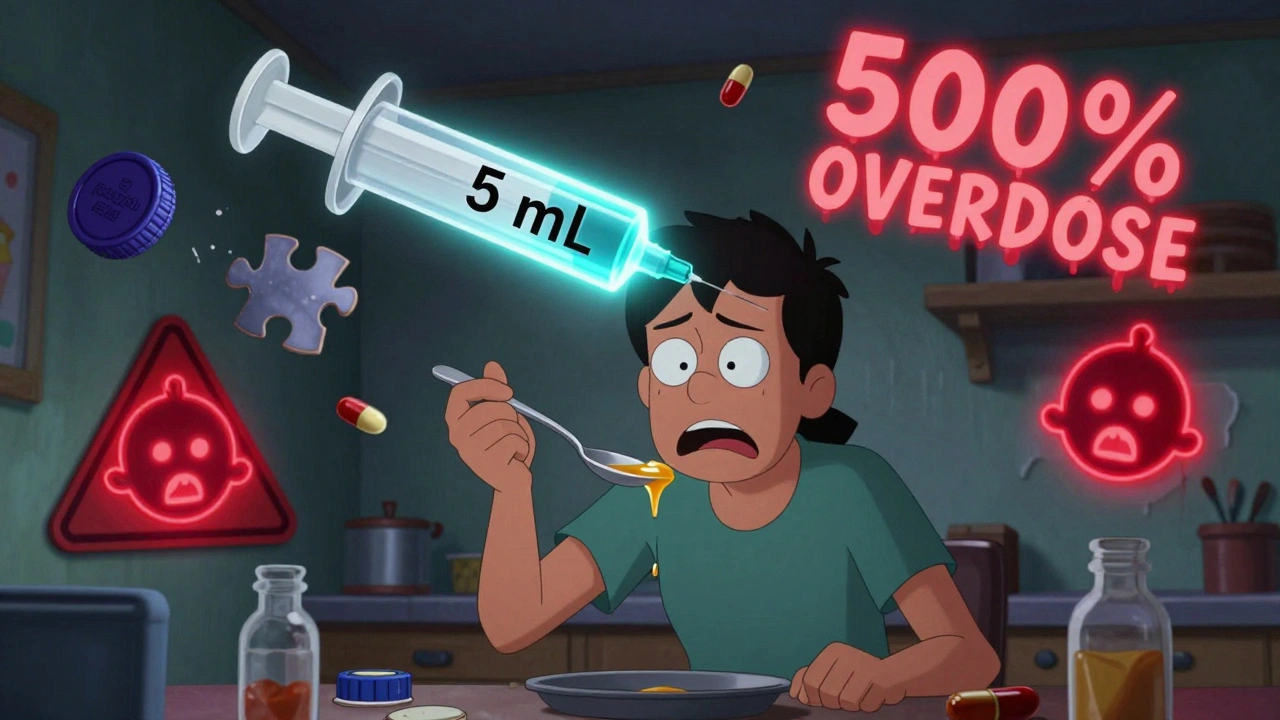
- Using teaspoons or tablespoons instead of milliliters. One teaspoon equals 5 milliliters. Giving a child 1 teaspoon of medicine when the label says 1 mL? That’s a 500% overdose.
- Leaving medicine on the nightstand, in a purse, or on the counter. Over 75% of poisonings happen because the medicine was stored where parents thought it was “safe”-but still within reach.
- Not closing child-resistant caps properly. A child can open a half-closed bottle in under 30 seconds. If the cap isn’t clicked shut, it’s not locked.
- Removing pills from original packaging. Nearly half of all pediatric pill ingestions happen because someone took the medicine out of its child-resistant container and left it loose in a drawer or on the counter.
- Telling kids medicine is candy. This is one of the most dangerous myths. Saying “this will taste sweet” or “it’s like candy” teaches kids to seek out pills. It’s linked to 15% of accidental ingestions.
Even “harmless” products like diaper rash cream, eye drops, or vitamins are dangerous if swallowed. They account for 1 in 5 poisonings reported to poison control centers.
What Hospitals Are Doing Right
In pediatric hospitals, safety isn’t optional-it’s built into every step.
They use weight-based dosing in kilograms only. No pounds. No guesses. Electronic systems block doses that exceed safe limits. High-risk medications like morphine or insulin are prepared in “distraction-free zones” where nurses aren’t interrupted. Two staff members double-check every dose.
Liquid medications are dispensed in milliliters only. No more teaspoons. No more cups. Each bottle comes with a syringe or dosing cup marked in mL. That’s because parents often use kitchen spoons-spoons vary in size by up to 50%.
And they use pictograms. Instead of just writing “give 5 mL twice daily,” they add a picture: a syringe, a clock, a child’s face. Studies show this improves correct dosing by nearly 50% in families with low health literacy.
What Parents and Caregivers Must Do at Home
You don’t need to be a doctor to keep your child safe. Just follow these rules:
- Store all medicine up and away. Not on the counter. Not in the bathroom cabinet. Not in your purse. Use a locked cabinet or high shelf-out of sight and reach. Even if you think your child can’t climb, they will.
- Always relock child-resistant caps. Click it until you hear it snap. If you’re unsure, test it yourself. If your child can open it, so can your grandchild, cousin, or neighbor’s kid.
- Use the dosing tool that comes with the medicine. Never use a kitchen spoon. Use the syringe, dropper, or cup that came with the bottle. Measure every time. Even if you’ve given it before.
- Never call medicine candy. Say: “This is medicine. It helps you feel better, but it’s not food.”
- Dispose of old or expired medicine safely. Don’t flush it. Don’t throw it in the trash where a child or pet might find it. Take it to a pharmacy drop-off or local disposal event.
- Keep a list of all medications your child takes. Include vitamins, supplements, and over-the-counter products. Bring it to every doctor visit.
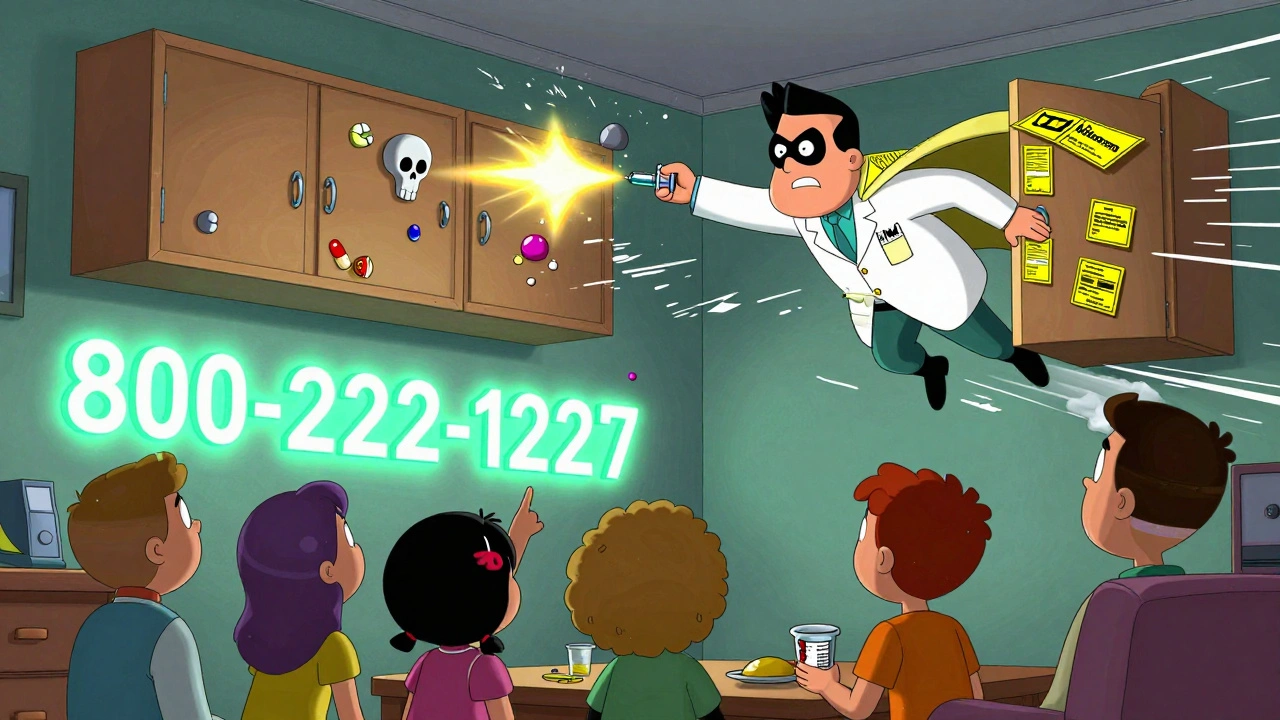
And here’s something simple but powerful: program 800-222-1222 into your phone. That’s the Poison Help number. Save it as “POISON” in your contacts. If something happens, you won’t have to search. You’ll know exactly where to call.
What You Should Never Give a Child
Some medicines are never safe for kids under certain ages.
Over-the-counter cough and cold medicines? Not for children under 6. Not even “natural” ones. They don’t work well-and the risks outweigh any tiny benefit. The FDA and American Academy of Pediatrics both say: avoid them completely.
Aspirin? Never for children. It can cause Reye’s syndrome, a rare but deadly condition that attacks the liver and brain.
Adult pain relievers? Don’t split pills. Don’t guess doses. Use only what’s labeled for children, and only at the right weight-based dose.
When to Call for Help
If you suspect your child has taken medicine they shouldn’t have-even if they seem fine-call Poison Help at 800-222-1222 immediately. Don’t wait for symptoms. Don’t try to make them throw up. Don’t give them milk or water unless instructed.
Signs to watch for: drowsiness, vomiting, unusual sleepiness, difficulty breathing, flushed skin, or seizures. But remember: many poisonings show no signs right away. That’s why calling early saves lives.
Training Matters-For Everyone
Studies show that hospitals that train nurses, pharmacists, and doctors in pediatric-specific safety protocols reduce medication errors by 85%. The same applies at home.
Ask your pharmacist: “Can you show me how to use the dosing tool?” Ask your doctor: “Is this dose based on my child’s weight?” Don’t be shy. You’re not wasting their time-you’re preventing a tragedy.
And teach your older kids: “Medicine is not a toy.” Talk to them about why pills are dangerous. Kids who understand the rules are less likely to experiment.
Medication safety for children isn’t about being perfect. It’s about building habits that make mistakes less likely. One locked cabinet. One labeled syringe. One saved phone number. These aren’t extra steps-they’re lifelines.
Comments
Ashley Farmer
December 6, 2025 AT 15:21I’ve seen this happen in my own family. My niece got into my mom’s blood pressure pills because they looked like Skittles. She was fine, but we almost lost her. Now everything’s locked up, and we use the syringe every time-no more guessing. It’s scary how easy it is to make a mistake when you’re tired or stressed.
David Brooks
December 8, 2025 AT 10:31OMG THIS IS SO IMPORTANT. I just found my 2-year-old holding a bottle of children’s Tylenol like it was candy. I screamed. I panicked. I called Poison Control. They said I did everything right by calling immediately. But I swear, if I hadn’t seen this post, I’d still be leaving meds on the nightstand. This is life or death, people. 🙏
Jennifer Anderson
December 9, 2025 AT 15:48sooo… i just realized i’ve been using a kitchen spoon for my kid’s antibiotics. like, for months. 😳 i thought it was fine since it’s ‘close enough’. but now i’m freaking out. i’m going to the pharmacy tomorrow to get a proper syringe. also, i’ve been calling it ‘medicine candy’ bc i thought it made it easier. guess not. smh. thanks for the wake up call.
Sadie Nastor
December 10, 2025 AT 21:59i’m so glad someone finally said this. i used to work in pediatrics and saw too many kids come in because someone thought ‘a little extra won’t hurt.’ it’s not just about the pills-it’s the mindset. medicine isn’t a snack. it’s not a game. and telling kids it’s like candy? that’s like handing a toddler a loaded gun and saying ‘it’s just a toy.’ 💔
Nicholas Heer
December 12, 2025 AT 20:56THIS IS ALL A GOVERNMENT PLOY TO CONTROL PARENTS. They want you to rely on syringes and ‘pharmacy drop-offs’ because they’re pushing the pharmaceutical agenda. Back in my day, we just gave kids what we had-no plastic cups, no locked cabinets. And guess what? We survived. Now they’re turning every parent into a paranoid lab tech. Wake up, sheeple. The real danger is the system that profits from your fear.
Sangram Lavte
December 13, 2025 AT 16:17In India, we often store medicine in open drawers because childproof caps are expensive and hard to find. But this post made me realize-we need to change. My nephew almost swallowed my mother’s diabetes pills last year. We didn’t know it was dangerous. Now we keep everything on the top shelf, even vitamins. Small steps matter.
Oliver Damon
December 14, 2025 AT 21:38There’s a deeper systemic issue here: medical literacy isn’t treated as a public health priority. We expect parents to navigate complex pharmacokinetics without training, then blame them when mistakes happen. The solution isn’t just better labeling-it’s universal access to clear, visual, culturally competent health education. Syringes and lockboxes help, but they’re band-aids on a broken system.
Kurt Russell
December 16, 2025 AT 06:40Listen up, parents. This isn’t just advice-it’s your child’s first line of defense. Lock it up. Measure it right. Never call it candy. Save 800-222-1222. Do it today. Not tomorrow. Not when you ‘have time.’ Do it now. One minute of effort could save a life. You owe it to your kid. I’ve seen what happens when you wait. Don’t be that parent. Be the one who acted.
Stacy here
December 16, 2025 AT 07:45They’re coming for your medicine cabinet next. First, they tell you to lock it. Then they’ll ban OTC meds. Then they’ll force you to use ‘approved’ apps for dosing. This is step one of the nanny state. Who’s next? Your vitamins? Your supplements? Your tea? They don’t trust you. They don’t trust parents. They want to control every pill, every drop, every breath. Wake up. This is not safety-it’s control.
Helen Maples
December 17, 2025 AT 23:54You’re all missing the point. This isn’t about storage or syringes-it’s about accountability. Pharmacists don’t verify dosing with caregivers. Doctors don’t explain weight-based math. Nurses rush through discharge instructions. Until we fix the system, no amount of lockboxes will stop this. Stop blaming parents. Start fixing the professionals who are supposed to protect kids.
Nancy Carlsen
December 19, 2025 AT 13:35My cousin from Mexico just told me they use a dropper made from a straw to give medicine. No measuring tools. No labels. Just trust and hope. This post made me cry. We’re so lucky to have access to syringes and poison control. Let’s not take it for granted. I’m sending this to my whole family. 💛
Ted Rosenwasser
December 19, 2025 AT 14:45Let’s be real: if your kid gets into medicine, you’re a bad parent. Period. No excuses. You didn’t lock it? You used a spoon? You called it candy? You failed. This isn’t ‘accidental’-it’s negligence. Stop acting like it’s okay. The fact that we even have to say this is embarrassing. Fix your house. Now.