

When it comes to skin cancer, melanoma is the one you can’t afford to ignore. It’s rare compared to other types - making up just 1.8% of all cancer cases - but it causes the vast majority of skin cancer deaths. The good news? If caught early, your chance of surviving five years or more is over 99%. If it spreads? That number drops to 32.1%. The difference between life and death often comes down to one thing: early detection.
What Makes Melanoma So Dangerous?
Melanoma starts in melanocytes - the cells that give your skin its color. Unlike basal cell or squamous cell carcinomas, which grow slowly and rarely spread, melanoma can move fast. It can go from a harmless-looking mole to a life-threatening tumor in months. That’s why waiting for symptoms isn’t enough. You need to look for changes - and act on them.
The ABCDE rule still works: Asymmetry, Border irregularity, Color variation, Diameter larger than 6mm, and Evolving size or shape. But even experienced doctors miss up to 40% of early melanomas during visual checks. That’s where new tools are changing the game.
How AI Is Transforming Early Detection
In 2025, AI isn’t just a buzzword in dermatology - it’s in clinics. Systems like Northeastern University’s SegFusion use deep learning to analyze skin images with 99% accuracy. It doesn’t just guess - it isolates the exact area of concern, then classifies it. This two-step approach reduces false alarms and catches tumors other systems miss.
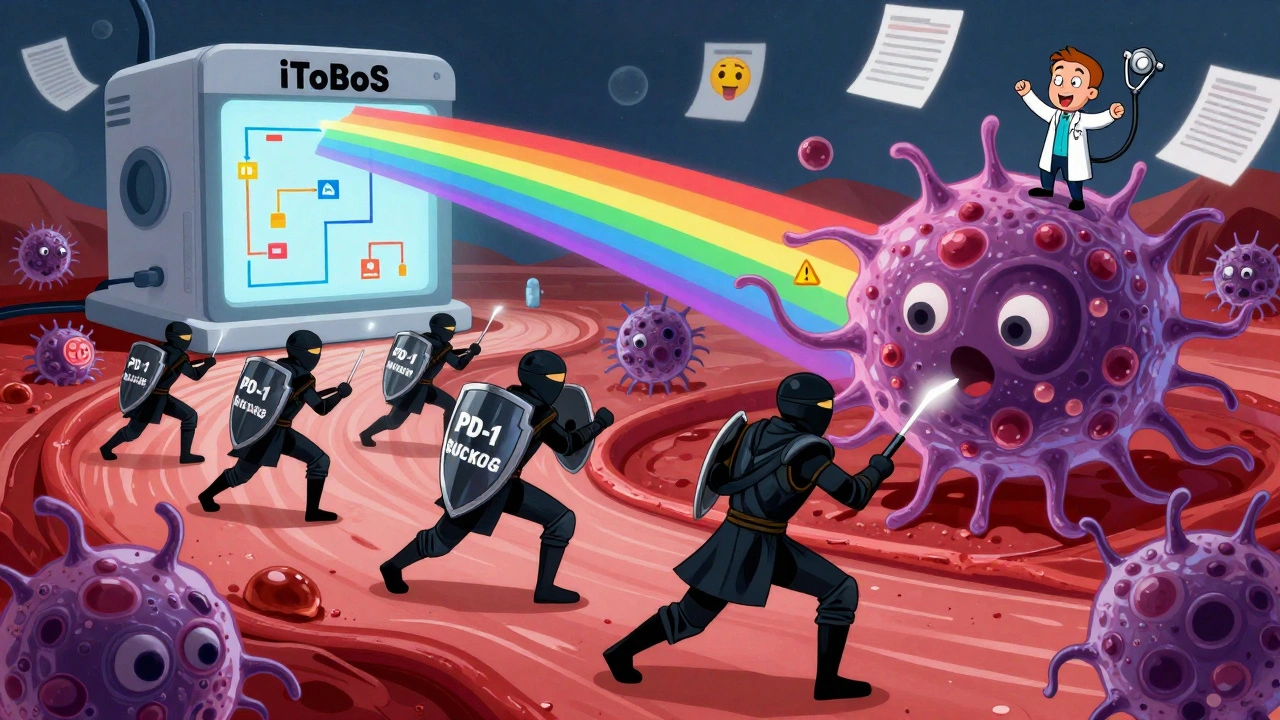
Another breakthrough is the iToBoS full-body scanner, used in European clinics. It scans your entire skin in six minutes, flags every suspicious spot, and explains its reasoning using explainable AI (XAI). Doctors don’t just get a yes/no answer - they see why the system flagged a spot. That builds trust and reduces guesswork.
Then there’s DermaSensor, an FDA-approved handheld device that shines near-infrared light on a mole and measures how it scatters. It’s simple enough for a family doctor to use after just 2-3 hours of training. In trials, primary care providers using it were 87% more confident in their decisions. But here’s the catch: its specificity is only 26-40%. That means for every 100 people it flags as high-risk, 60-74 are false alarms. More biopsies. More anxiety. More cost.
And that’s the double-edged sword of AI. These tools are incredibly good at finding melanoma - but they’re not perfect at ruling out harmless moles. Studies show they perform 12-15% worse on darker skin tones. That’s not a glitch - it’s a data problem. Most training images came from light-skinned patients. Fixing this isn’t optional. It’s essential.
The Wearable That Could Change Screening
What if you could check your skin at home - without a doctor? Researchers at Wake Forest developed a battery-free patch that sticks to your skin and measures electrical differences between healthy tissue and melanoma. In early tests on 10 people, it detected clear differences in bioimpedance. The patch is comfortable, wireless, and cheap to produce. If scaled, it could become a daily tool for high-risk patients - like those with a family history or many moles.
But it’s still early. The sample size is tiny. More testing is needed to prove it can reliably tell a melanoma from a benign mole. Still, the potential is real. Imagine getting a notification on your phone: “Check this spot.” That’s not science fiction anymore.
Immunotherapy: Turning Your Body Into a Cancer Fighter
When melanoma spreads, surgery isn’t enough. That’s where immunotherapy comes in. Before 2011, metastatic melanoma was a death sentence. Now, it’s a manageable disease for many.
Drugs like pembrolizumab and nivolumab block PD-1 - a protein cancer uses to hide from your immune system. When you take them, your T-cells wake up and attack. Combine them with ipilimumab (which targets CTLA-4), and the results are even stronger. In clinical trials, nearly half of patients with advanced melanoma lived five years or longer - something unheard of a decade ago.
Even more exciting? New drugs are on the horizon. Regeneron’s fianlimab, paired with a PD-1 blocker, showed strong results in early trials. And IMA203, a personalized cell therapy targeting the PRAME protein, achieved a 56% complete response rate in Phase 1b testing. These aren’t just incremental improvements - they’re paradigm shifts.
Immunotherapy isn’t magic. Side effects can be serious - fatigue, rash, colitis, even autoimmune reactions. But for many, the trade-off is worth it. And unlike chemo, it doesn’t kill healthy cells. It trains your body to do the job itself.
What Works Best? The Real-World Picture
Let’s compare what’s actually working in clinics today:
| Method | Sensitivity | Specificity | Training Needed | Best For |
|---|---|---|---|---|
| Visual Exam (Doctor) | 60-70% | 65-75% | Years | Initial screening |
| Dermoscopy | 80-90% | 75-85% | Months | Dermatologist clinics |
| DermaSensor (ESS) | 85-95% | 26-40% | 2-3 hours | Primary care settings |
| SegFusion (AI) | 95% | 87% | Weeks | Specialized imaging centers |
| iToBoS Full-Body Scanner | 92% | 65% | 40+ hours | High-risk patient screening |
There’s no single best tool. Dermoscopy still rules in specialist clinics. DermaSensor helps busy GPs. AI tools like SegFusion are becoming the gold standard in research hospitals. The future? Combining them - using AI to triage, dermatologists to confirm, and wearable patches for ongoing monitoring.
The Hidden Problem: Overdiagnosis
Not every melanoma found early needs to be removed. Some grow so slowly they’ll never harm you. But today’s systems are so sensitive, they find them all. That’s called overdiagnosis.
Studies warn that aggressive screening leads to unnecessary biopsies, scars, anxiety, and even surgeries for lesions that would’ve stayed harmless. One paper in Taylor & Francis called it “excess morbidity with little survival benefit.”
The key is balance. We need tools that don’t just find cancer - but tell us which ones are dangerous. That’s why explainable AI matters. If a system can say, “This lesion has a 90% chance of spreading because of its cell structure and vascular pattern,” doctors can make smarter calls. Not every spot needs to come off.
What You Can Do Right Now
You don’t need AI or a scanner to save your life. Start here:
- Check your skin monthly. Use a mirror. Look at your back, scalp, between toes, under nails.
- Know your ABCDEs. If a mole changes - even slightly - get it checked.
- Don’t wait for a doctor’s appointment if something looks wrong. Early = easier.
- If you have 50+ moles, a family history, or fair skin, see a dermatologist yearly.
- Wear sunscreen daily. UV exposure is still the #1 cause.
And if your doctor suggests a biopsy - ask why. Ask about the risk of it being cancer. Ask if there’s a better way to monitor it first. You’re not just a patient. You’re part of the team.
The Road Ahead
In 2025, melanoma treatment is more powerful than ever. AI finds it earlier. Immunotherapy kills it when it spreads. Wearables let you monitor at home. But technology alone won’t win this fight.
What will? Awareness. Action. Follow-up. The people who survive are the ones who notice the change, speak up, and stick with their care plan.
By 2030, AI-assisted detection could become standard. Immunotherapy might turn metastatic melanoma into a chronic condition - like diabetes. Survival rates could climb by 40-50%. But that future only happens if we use today’s tools wisely.
Can melanoma be cured if caught early?
Yes. When melanoma is found before it spreads beyond the top layer of skin, surgical removal alone cures it in over 99% of cases. That’s why monthly self-checks and annual dermatologist visits are so critical.
Is immunotherapy better than chemotherapy for melanoma?
For advanced melanoma, immunotherapy is now the first-line treatment. It works better, lasts longer, and has fewer side effects than chemo. Chemo is rarely used today unless immunotherapy fails or the patient can’t tolerate it.
Are AI skin scanners accurate for dark skin?
Current AI models are less accurate on darker skin tones - studies show 12-15% lower performance. This is because training data is mostly from light-skinned patients. Newer systems are being trained on diverse datasets, but this gap still exists. Always combine AI results with expert clinical judgment.
Do I need a biopsy if an AI tool says it’s melanoma?
Yes. No AI system - no matter how advanced - can replace a biopsy for a definitive diagnosis. AI helps prioritize which spots to check. Only a pathologist examining tissue under a microscope can confirm melanoma.
How long does immunotherapy last?
Treatment usually lasts 1-2 years, but some patients stay on it longer if they’re responding well. In many cases, the immune system continues to fight cancer even after treatment stops. Some patients remain in remission for over a decade.
Can I use an AI app on my phone to check moles?
Phone apps are not reliable for diagnosis. Many are not FDA-cleared and lack clinical validation. They can miss melanomas or cause unnecessary panic. Use them only as a reminder to see a doctor - never as a replacement.
What Comes Next?
By 2026, expect to see more wearable patches in trials. More AI tools integrated into electronic health records. More personalized immunotherapies based on your tumor’s genetic profile. The goal isn’t just to treat melanoma - it’s to prevent it before it becomes dangerous.
Right now, the tools are here. The science is solid. What’s missing is action - from patients who check their skin, to doctors who trust the data, to systems that make early detection easy for everyone.
Don’t wait for a symptom. Don’t hope it’s nothing. Look. Ask. Act. Your skin holds the answer - and now, we have the tools to read it.
Comments
James Kerr
December 3, 2025 AT 23:02Love this breakdown. I’ve been using sunscreen daily since my cousin got diagnosed - no joke, it’s non-negotiable now. Even on cloudy days. My dermatologist said I’m doing everything right. Just keep showing up.
sagar bhute
December 5, 2025 AT 10:45AI tools are just corporate hype. They’re trained on Western faces and then sold to developing countries like India as ‘cutting edge.’ Meanwhile, real doctors who’ve seen thousands of moles get ignored. This isn’t progress - it’s colonial tech with a glossy UI.
shalini vaishnav
December 5, 2025 AT 20:43Of course AI fails on darker skin - because Western researchers never bothered to include real Indian or African pigmentation in their datasets. We’ve had dermatologists in Mumbai diagnosing melanoma by eye since the 1980s. Why are we outsourcing our health to Silicon Valley’s biased algorithms? It’s arrogance wrapped in code.
Archie singh
December 6, 2025 AT 22:07Overdiagnosis is the real epidemic. Biopsies for benign nevi are now a $2 billion industry. Insurance companies push screenings because they profit from procedures not prevention. You think this is medicine? It’s a revenue stream disguised as care.
Gene Linetsky
December 7, 2025 AT 22:26They’re hiding something. Why is DermaSensor’s specificity so low? Why does the FDA approve it if 70% of flags are false? Someone’s got a contract. The pharmaceutical industry doesn’t want you catching melanoma early - they want you on lifelong immunotherapy. Watch the funding sources.
Ignacio Pacheco
December 8, 2025 AT 10:24So let me get this straight - we’ve got AI that can spot melanoma better than most docs, but we’re still stuck with biopsies because ‘only a pathologist can confirm’? That’s like having a self-driving car that sees the stop sign but still needs a human to tap the brakes. Why not let the AI guide the biopsy? Or better yet - why not train pathologists on AI outputs?
Jim Schultz
December 10, 2025 AT 01:26Let’s be real - the ‘ABCDE rule’ is a relic. It’s based on 1980s photography and white skin. Modern melanomas don’t always look like textbook examples. Some are amelanotic. Some are in places you’d never check - under nails, on the scalp, inside the mouth. Relying on a 40-year-old mnemonic is like using a rotary phone to call 911.
Kidar Saleh
December 10, 2025 AT 22:12I’ve worked in NHS clinics for 22 years. We don’t have SegFusion or iToBoS scanners - but we do have trained nurses who do monthly skin checks with patients at high risk. It’s low-tech, low-cost, and it works. Technology should augment care - not replace the human connection. A patient who feels seen is more likely to follow up. No algorithm can replicate that.
Chloe Madison
December 12, 2025 AT 06:38Monthly self-checks? Yes. But please - don’t just glance. Use a hand mirror. Take photos. Compare month to month. I started doing this after my mom’s melanoma diagnosis - and caught a changing spot on my own shoulder before my appointment. It was Stage 0. I’m alive because I didn’t wait for someone else to tell me something was wrong.
Vincent Soldja
December 12, 2025 AT 07:09The data is clear. Early detection saves lives. The rest is noise. Stop overcomplicating it.
Makenzie Keely
December 13, 2025 AT 07:49Can we talk about how incredible it is that immunotherapy is turning metastatic melanoma into a chronic condition? Just five years ago, this was a death sentence. Now, people are living 10, 12, even 15 years with it - and still working, traveling, raising kids. That’s not just science - that’s hope. And it’s real.
Kara Bysterbusch
December 15, 2025 AT 03:01Imagine a future where your skin patch sends a gentle vibration to your phone every morning - not because it’s alarmed, but because it’s curious. ‘Hey, this spot’s been shifting subtly over the last 6 weeks - want to take a closer look?’ That’s not surveillance. That’s companionship. Technology that whispers, not screams. That’s the future we need: quiet, consistent, kind. Not another app that makes you panic every time your mole looks ‘off.’
James Kerr
December 16, 2025 AT 18:38Love that you mentioned the patch. My sister got one in a trial last year - she says it’s like having a tiny, silent guardian on her back. No batteries, no charging. Just… there. And yeah, it’s weird at first, but now she forgets it’s even on. That’s the magic - tech that fades into life, not demands it.