
When you pick up a prescription, you might see two options: the name you recognize from TV ads, or a cheaper version with a plain label. Most people assume they’re the same. But are they? Over time, do generic drugs really perform just as safely as their brand-name cousins? The answer isn’t simple. It’s buried in real-world data, patient stories, and regulatory fine print - and what you find might surprise you.
What Does "Therapeutically Equivalent" Actually Mean?
The FDA says generics are bioequivalent to brand drugs. That means they must deliver the same active ingredient at the same strength and in the same form. The test? The amount of drug absorbed into your bloodstream can’t vary by more than 20% compared to the brand. For most drugs, that’s fine. But 20% is a wide window. For some medications - like blood thinners, thyroid pills, or seizure drugs - even a 5% difference can cause real problems. Take levothyroxine. A 2017 study found patients switching from brand Synthroid to generic versions had a 12.3% higher chance of abnormal thyroid hormone levels. That’s not a glitch. It’s a measurable shift in how your body responds. For someone managing hypothyroidism, that could mean fatigue, weight gain, or worse. The FDA allows this variation because it’s statistically acceptable for most drugs. But for drugs with a narrow therapeutic index - where the difference between effective and toxic is tiny - that margin becomes dangerous.The Austrian Study That Turned Assumptions Upside Down
In 2020, researchers in Austria looked at over 1.5 million people taking medications for high blood pressure, diabetes, and other chronic conditions. They tracked outcomes over five years. The results? Generics weren’t just as safe as brands - they were safer. For antihypertensive drugs, branded versions were linked to 53.8 deaths per 1,000 patient-years. Generics? Just 30.2. Major heart and stroke events dropped by more than 30%. Even after adjusting for age, income, and medical history, the trend held. The study’s authors concluded generics were at least as safe - and often better. Why? One theory: patients taking generics are more likely to stick with their meds because they’re cheaper. Better adherence means better outcomes. Another: the brand-name versions in the study were older, and newer generics had cleaner manufacturing standards. This isn’t about brand loyalty. It’s about real-world behavior and evolving production.When Switching Causes Harm - Real Patient Cases
Not everyone has a smooth transition. In 2013, two case reports in the medical literature showed clear harm after switching. One patient on generic ciprofloxacin kept getting infections. Symptoms didn’t improve until they switched back to Ciproxin. Another on generic levofloxacin developed a persistent fever - gone within days after switching to the brand. These aren’t rare. A 2013 analysis estimated that 30% of patients see no change after switching, 30% improve, 10% get worse side effects, and 30% stop taking the drug entirely because it didn’t work. These aren’t flukes. They’re signals. Some people’s bodies respond differently to fillers, coatings, or manufacturing processes - even when the active ingredient is identical. The FDA doesn’t require manufacturers to prove these excipients are harmless over decades of use. Only that the drug gets into the blood at roughly the same rate.
Where the Drug Is Made Matters More Than the Label
A 2018 study from Ohio State University dug into the FDA’s own adverse event database. They found something startling: generic drugs made in India were linked to 54% more severe adverse events - including hospitalizations and deaths - than those made in the U.S. For ciprofloxacin, Indian-made generics showed a 62% higher rate of serious side effects. The same drug, same active ingredient, same dosage - but different factories, different quality controls. This isn’t about generics vs. brands. It’s about manufacturer. A generic made by a U.S.-based company with FDA-inspected facilities might be safer than a brand made overseas. This is why authorized generics - the exact same drug as the brand, just sold under a generic label - often perform closer to the brand than other generics. They come from the same factory. Same batch. Same quality. But they’re cheaper because there’s no marketing cost.What the Numbers Don’t Tell You
The FDA’s adverse event database shows 1,247 reports of "generic drug ineffective" between 2018 and 2022. Only 289 for brand-name drugs. At first glance, that looks bad for generics. But here’s the catch: generics make up 92% of all prescriptions filled in the U.S. That means the rate of reports per prescription is actually lower for generics. Still, the reports matter. On Reddit, a patient with epilepsy reported their seizures jumped from 1-2 per month to 8-10 after switching from Lamictal to generic lamotrigine. Back on the brand? Back to normal. That’s one person. But multiply that by thousands, and it becomes a pattern. Meanwhile, a PatientsLikeMe analysis of 3,842 people on blood pressure meds found 78% saw no difference between brand and generic. Only 12% felt generics were less effective. So most people do fine. But for the 1 in 8 who don’t? It’s not a statistical outlier. It’s their life.Who’s Most at Risk?
Older adults. People with chronic diseases. Those on multiple medications. These groups are more vulnerable to small changes in drug absorption. A 2021 Harvard study looked at over 136,000 seniors on three blood pressure drugs. After generics hit the market, there was no spike in ER visits or hospitalizations. But the study admitted it couldn’t catch mild side effects - dizziness, fatigue, nausea - that might lead someone to stop taking their medicine. That’s the hidden cost. If you feel a little off after switching, you might not report it. You might just stop. And that’s when things get dangerous.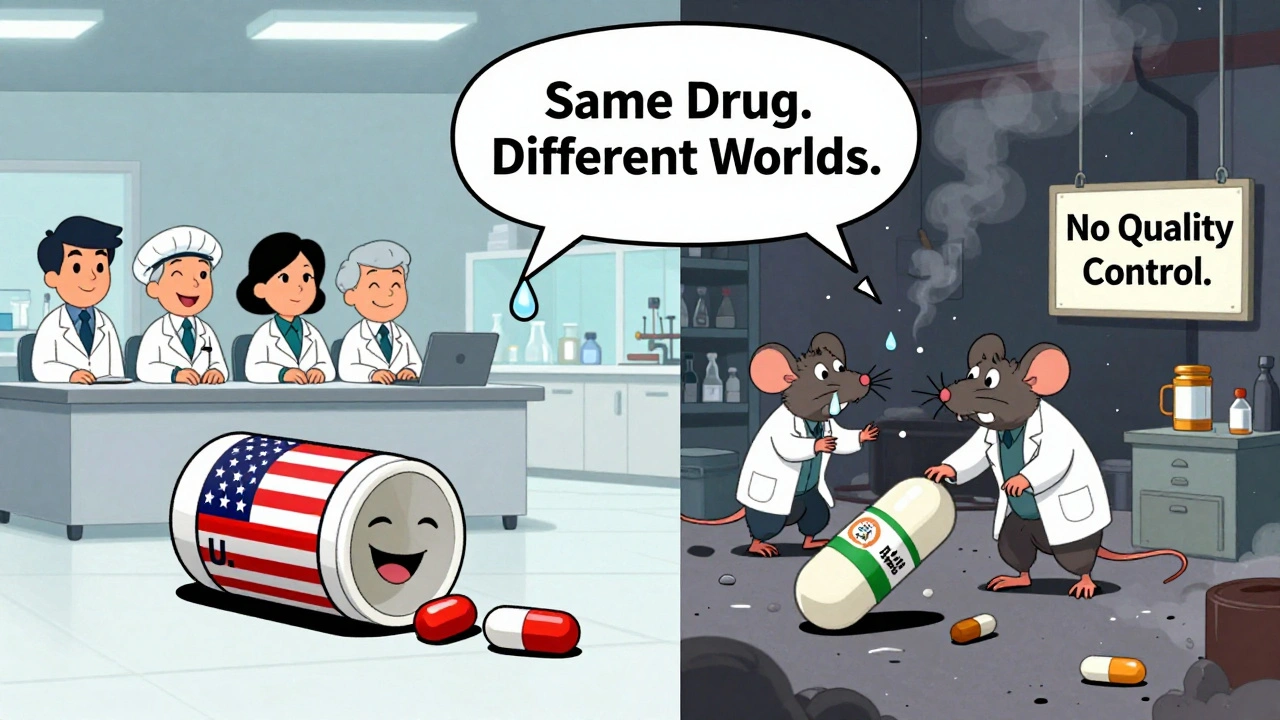
Comments
Tim Tinh
December 10, 2025 AT 06:19i switched my thyroid med to generic last year and honestly thought i was fine until i started feeling like a zombie at work. took me 3 months to connect the dots. my doc was like 'it's the same chemical' but bro, my body knew the difference. back on brand now and i can breathe again. 🙏
Shubham Mathur
December 12, 2025 AT 01:37in india we dont even have brand names anymore everyone uses generics and its fine. the problem is not generics its bad manufacturing. if your generic is made in usa or eu its fine. if its from some sketchy factory in bangladesh or china? yeah that might kill you. dont blame the label blame the factory
Katie Harrison
December 12, 2025 AT 11:35My partner has been on warfarin for 12 years. We tried switching to generic-once. INR went wild. We went back to brand immediately. The FDA’s 20% margin doesn’t account for individual biology. For some drugs, it’s not a gamble-it’s a risk we’re not willing to take.
Michael Robinson
December 14, 2025 AT 04:13so the drug is the same but the stuff around it isnt? that makes sense. like two cars with the same engine but one has bad tires. you still get where you’re going, but one might shake apart on the way.
ian septian
December 14, 2025 AT 06:10Stick with brand if it’s for seizures, blood thinners, or thyroid. Otherwise, generics are fine. Simple.
Arun Kumar Raut
December 15, 2025 AT 21:19my aunt in delhi takes generic blood pressure pills for 10 years no problem. but her cousin in texas switched and got dizzy all day. same drug different bodies different factories. its not about country its about your body and who made it
precious amzy
December 17, 2025 AT 20:19It is profoundly disingenuous to frame this as a binary between 'brand' and 'generic.' The real issue lies in the archaic regulatory framework that permits bioequivalence thresholds derived from 1984 legislation-designed for simple small-molecule drugs-to govern complex, multi-component formulations. The FDA’s statistical tolerance is not a biological one. To equate pharmaceutical interchangeability with therapeutic equivalence is not merely negligent-it is epistemologically incoherent.
Carina M
December 17, 2025 AT 20:36It is unconscionable that Americans are being forced to gamble with their lives over cost-cutting measures. If you cannot afford the brand, you should not be on the medication at all. The healthcare system has failed you-not the generic manufacturers. Your life is not a budget line item.
William Umstattd
December 18, 2025 AT 23:38My brother died from a stroke after switching to a generic blood thinner. The pharmacy didn’t even tell him. The FDA knows this happens. They just don’t care. This isn’t about money. This is about corporate greed and a government that sells out its citizens for profit. Wake up.
Lisa Whitesel
December 19, 2025 AT 14:3292% of prescriptions are generic so of course there are more reports. You’re bad at math. Also stop being dramatic. Most people are fine.
Larry Lieberman
December 20, 2025 AT 23:49just got my generic cipro from walmart and my UTI is gone 😎 but my friend’s dad in texas had a seizure after switching his epilepsy med… so yeah… it’s a gamble. check the manufacturer. if it’s teva or sandoz you’re probably good. if it’s some company you never heard of… maybe don’t.
Richard Eite
December 21, 2025 AT 14:26usa made generics are the only ones that matter. india? no thanks. we pay for american jobs. if you want cheap drugs go to mexico. but don’t let your life depend on some foreign factory. america first. always.