
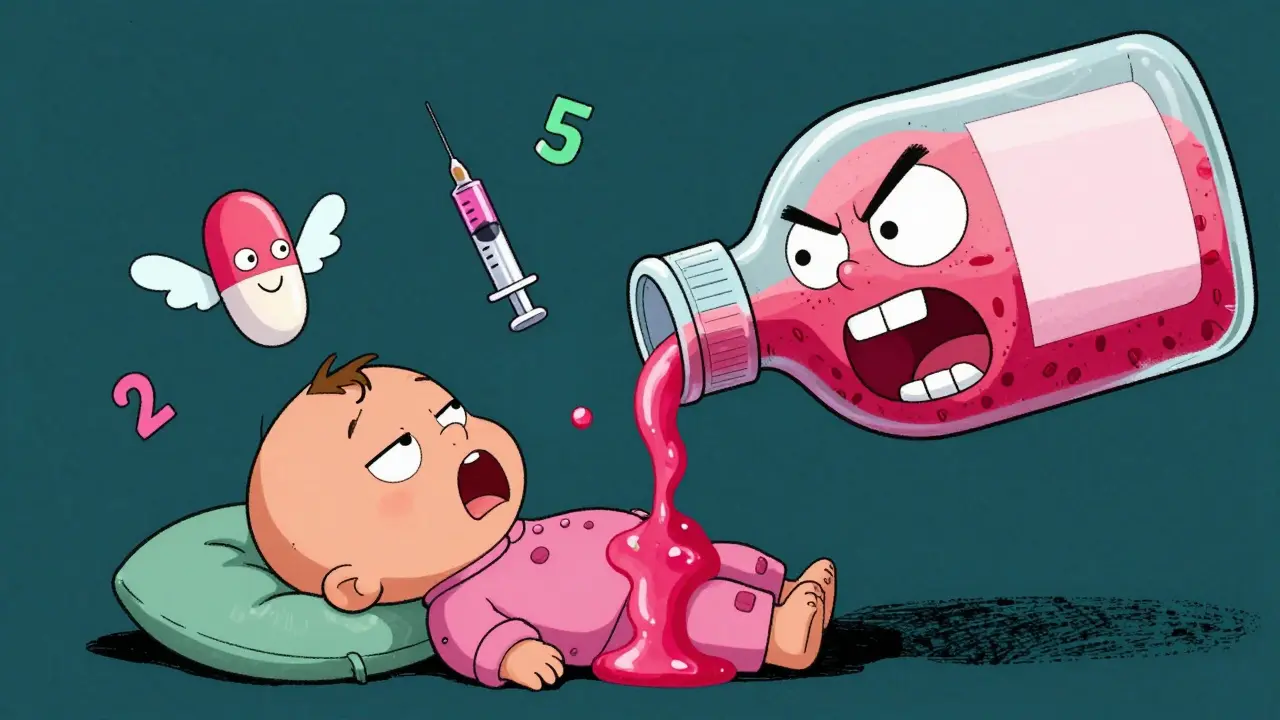
When your child is sick, the last thing you want is a battle over medicine. You’ve got the prescription in hand, but now you’re staring at two options: a sweet-tasting liquid or a tiny pill. Which one really works better? The old answer was simple-liquid, always. But that’s not the full story anymore. Today, the choice between liquid and tablet medications for children isn’t just about what’s easier to swallow-it’s about safety, cost, accuracy, and even long-term habits.
Why Liquid Medications Used to Be the Default
For decades, doctors and parents assumed kids couldn’t swallow pills. That belief shaped everything-from how medications were made to how prescriptions were written. Liquid forms were seen as the only safe, reliable option, especially for babies and toddlers. And yes, for infants under six months, liquids are still the gold standard. Their swallowing reflex isn’t fully developed, and precise dosing based on weight is critical. A 5-pound baby needs a completely different amount than a 30-pound toddler, and liquids allow for that fine-tuning. But here’s the problem: many of those liquid prescriptions aren’t actually necessary. Studies show that nearly two-thirds of liquid medications given to children could be replaced with solid forms like mini-tablets or orodispersible tablets. That’s not just a theory-it’s backed by data from the European Medicines Agency and the World Health Organization. The shift isn’t happening fast enough, though. In 2021, over 60% of U.S. pediatricians still automatically prescribed liquids for kids under eight, mostly because parents asked for them.The Hidden Costs of Liquid Medications
It’s easy to think of liquid meds as harmless. But behind the fruity flavors and easy-to-use syringes are real downsides. First, there’s the cost. A single bottle of liquid amoxicillin can cost three to four times more than the same dose in mini-tablets. Multiply that across thousands of prescriptions, and the numbers add up. In the UK, switching just 10,000 pediatric prescriptions from liquid to solid forms saved £7,842 in one year. For a hospital, that’s tens of thousands in annual savings. Then there’s storage. Many liquid medications need refrigeration. If you forget, or if the power goes out, the medicine can spoil. Some last only 14 to 30 days after opening. Tablets? They sit in your cabinet for two to three years without losing potency. No fridge needed. No waste. No guesswork. And then there’s measurement. The FDA found that 12% to 18% of liquid doses are given incorrectly-because parents use kitchen spoons, misread the syringe, or accidentally double-dose. One mom in Perth told me her son got twice the dose because she used a teaspoon instead of the syringe. It wasn’t her fault. The instructions weren’t clear. Tablets eliminate that risk entirely. You count the pill. You give it. Done.Why Tablets Are Better Than You Think
The biggest fear parents have? Choking. It’s understandable. But the data doesn’t back it up. Between 2010 and 2020, the FDA recorded fewer than 0.002% choking incidents from properly sized pediatric tablets. That’s less than one in 50,000 doses. In comparison, choking on a spoonful of thick liquid is far more common. Modern pediatric tablets aren’t what you remember from your childhood. These are mini-tablets-some as small as 2mm wide, smaller than a pencil eraser. They’re coated to mask bitter tastes, and many dissolve in your mouth in under 30 seconds without water. No swallowing required. No gagging. One study found that children as young as six months accepted these mini-tablets just as easily as liquids. In fact, in the 0.5 to 1-year age group, kids refused liquid meds 40% of the time-but only 15% refused tablets. And taste? That’s the real game-changer. A lot of liquid meds claim to be “strawberry flavored,” but they taste like chemical syrup. Kids know the difference. One parent on Reddit said her 4-year-old would rather swallow a pill than take the “strawberry” antibiotic that tasted like cleaning products. That’s not an exaggeration. Flavoring matters more than you think. If a liquid doesn’t taste like the real thing, kids will spit it out, hide it, or vomit it. Tablets? They’re neutral or pleasantly sweet.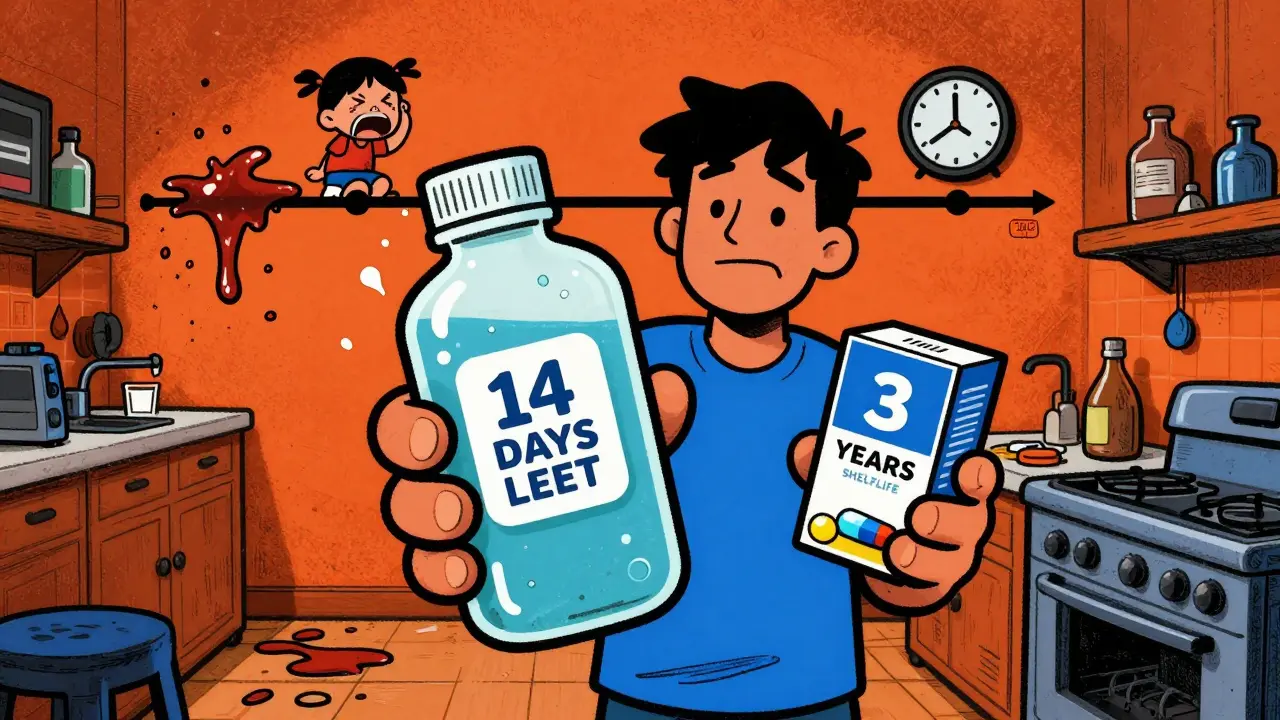
When Liquid Is Still the Better Choice
This isn’t about declaring one form superior across the board. There are real situations where liquid is the only option. For medications that need precise, tiny adjustments-like levothyroxine for thyroid conditions or warfarin for blood thinning-liquids allow for dosing down to 0.1mL. That level of control isn’t possible with tablets yet. Infants under six months still need liquids. Their digestive systems are sensitive, and swallowing solid forms isn’t safe or practical. Also, if your child has a medical condition that makes swallowing difficult-like cerebral palsy or severe reflux-liquids may be the only viable route. And let’s not forget: some medications simply aren’t available in tablet form. That’s changing, but slowly. A 2023 review found that 42% of pediatric medications still lack official dosing guidelines for solid forms in children under six. That uncertainty makes doctors hesitant to switch.How to Teach Your Child to Swallow Pills
If you’re thinking about switching to tablets, the biggest hurdle isn’t the medicine-it’s the fear. But teaching a child to swallow pills is easier than you think. Start around age three or four. Use practice items: tiny marshmallows, bread balls, or even sprinkles. Make it a game. Let them try with water first, then progress to actual mini-tablets under supervision. One proven method is the “pop-bottle trick.” Have your child place the tablet on their tongue, close their lips around a bottle of water, and take a big sip while tilting their head back slightly. The suction helps the pill go down. Studies show this works for over 90% of kids by age four, even those who previously refused pills. The American Academy of Pediatrics says most children can swallow 2-4mm tablets by age four, and standard 6-8mm tablets by age six or seven. You don’t need to wait until they’re older. With the right technique and patience, it’s doable.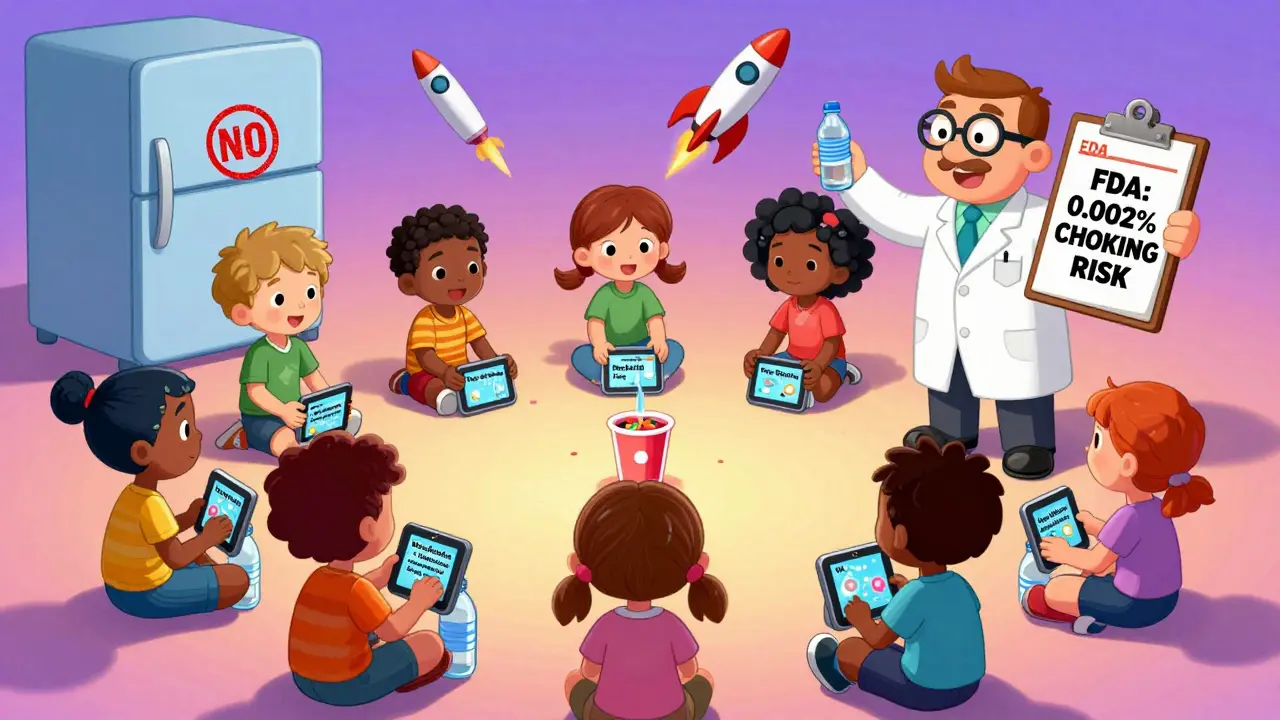
What to Ask Your Doctor
Don’t just accept the first prescription. Ask:- Is there a tablet form of this medication?
- Is it safe for my child’s age and weight?
- Can you show me how to give it properly?
- Will the tablet taste better than the liquid?
- Is there a cost difference?
The Future of Kids’ Medications
The trend is clear. By 2030, experts predict that 55% to 60% of pediatric prescriptions will be solid forms. Regulatory agencies like the FDA and EMA are pushing for it. Manufacturers are investing in mini-tablets and sprinkle capsules. The WHO’s 2024 update to its Essential Medicines List now recommends solid forms for children as young as two for certain drugs. The biggest barrier now isn’t science-it’s education. Only 18% of pediatricians feel trained to teach parents how to give pills. That’s changing. Hospitals in Australia and Europe are starting training programs for families. And more parents are realizing: giving a tablet isn’t just easier-it’s smarter.Final Decision Guide
Here’s a simple way to decide:- Under 6 months: Stick with liquid. No exceptions.
- 6 months to 2 years: Liquid is still preferred, but ask about mini-tablets if available. Some can be mixed into applesauce or dissolved in water.
- 2 to 4 years: Try tablets. Use the pop-bottle method. Practice with food first.
- 4 years and older: Tablets are usually the better choice-unless the drug requires precise dosing.
- Any age, if the liquid tastes awful: Ask for a tablet. Taste matters more than you think.
Can I crush a tablet and mix it with food if my child won’t swallow it?
Only if the doctor or pharmacist says it’s safe. Many tablets-especially extended-release or enteric-coated ones-lose their effectiveness or become dangerous if crushed. For example, crushing a time-release antibiotic can cause too much medicine to hit the system at once. Always check before crushing.
Are tablet medications more expensive than liquids?
Usually, no. In fact, tablets are often cheaper per dose. A bottle of liquid antibiotic can cost $30, while the same dose in mini-tablets might cost $8. The difference comes from packaging, preservatives, and flavoring in liquids. Insurance may also cover tablets better because they’re less wasteful.
What if my child chokes on a tablet?
Choking on properly sized pediatric tablets is extremely rare-less than 0.002% of cases according to FDA data. Most incidents happen when tablets are too large or given to a child who isn’t ready. Always use age-appropriate sizes and teach swallowing techniques first. If you’re worried, ask for orodispersible tablets-they dissolve in the mouth without swallowing.
Do liquid medications work faster than tablets?
Sometimes, but not always. Liquids can be absorbed 15% to 30% faster for certain drugs, especially those that need quick action like fever reducers. But for most antibiotics or chronic meds, the difference is negligible. The speed depends more on the drug itself than the form.
How do I know if a tablet is the right size for my child?
Ask your pharmacist. Pediatric tablets come in sizes designed for different ages: 2-4mm for toddlers, 6-8mm for school-aged kids. Don’t guess. If the tablet is too big, your doctor can prescribe a lower-strength tablet and give more than one. Never break a tablet unless instructed.
Comments
Edith Brederode
January 19, 2026 AT 20:18Arlene Mathison
January 21, 2026 AT 03:46Carolyn Rose Meszaros
January 22, 2026 AT 12:47Greg Robertson
January 22, 2026 AT 21:36Nadia Watson
January 23, 2026 AT 21:07Courtney Carra
January 25, 2026 AT 09:24thomas wall
January 26, 2026 AT 12:27Paul Barnes
January 28, 2026 AT 05:42Manoj Kumar Billigunta
January 29, 2026 AT 22:26Art Gar
January 30, 2026 AT 15:52Crystal August
January 30, 2026 AT 20:56Jacob Cathro
February 1, 2026 AT 14:44clifford hoang
February 2, 2026 AT 15:47Andy Thompson
February 3, 2026 AT 01:47