
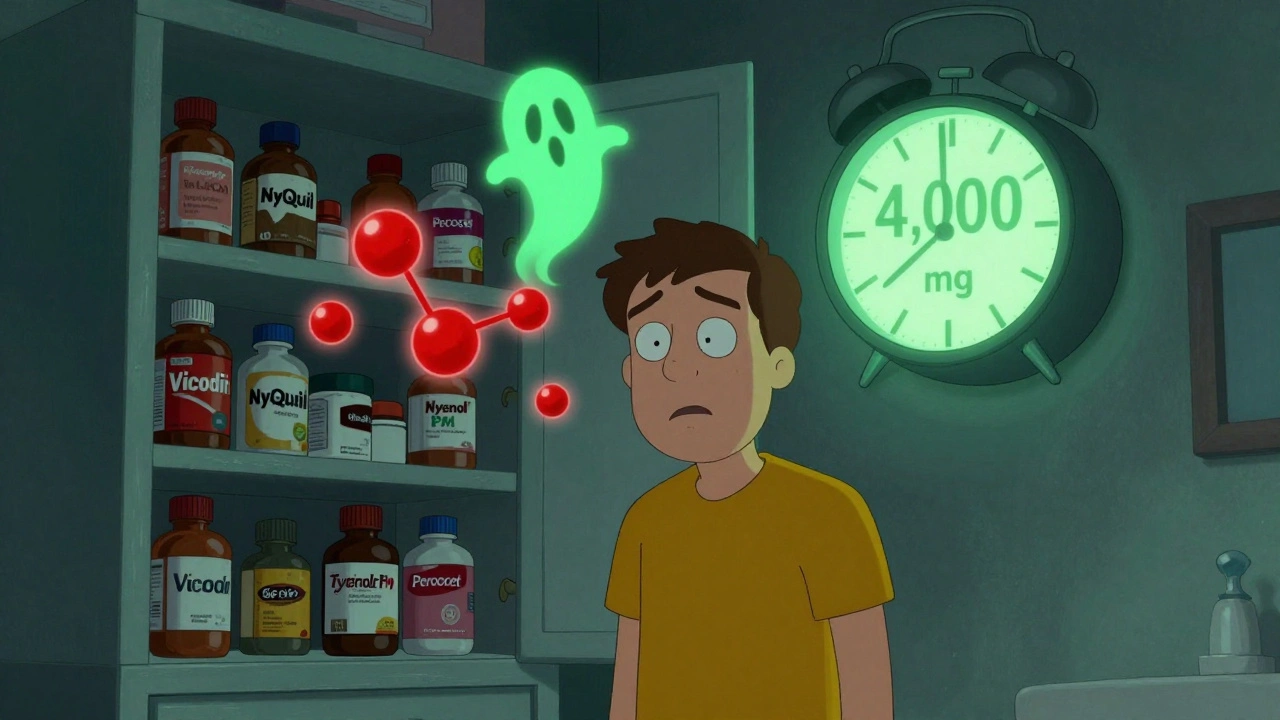
Every year, thousands of people end up in the hospital with severe liver damage-not from alcohol, not from viruses, but from a common painkiller they didn’t even realize was in their medicine cabinet. Acetaminophen, the active ingredient in Tylenol and dozens of prescription pain relievers, is safe when used correctly. But when it’s hidden in combination products-like hydrocodone/acetaminophen or oxycodone/acetaminophen-the risk of accidental overdose skyrockets. And most people don’t see it coming.
Why Combination Products Are Dangerous
Many people take prescription painkillers like Vicodin, Percocet, or Norco without realizing they contain acetaminophen. These drugs combine an opioid with acetaminophen to boost pain relief. But here’s the problem: if you’re also taking Tylenol for a headache, or a cold medicine like NyQuil, or even a sleep aid like Tylenol PM, you’re stacking acetaminophen doses without knowing it. The body can only handle so much. The maximum safe daily dose for most adults is 4,000 milligrams. But that’s easy to blow past when you’re juggling multiple meds.According to the FDA, nearly 40% of unintentional acetaminophen overdoses happen because of combination products. Even worse, a 2019 study in Hepatology found that 68% of those overdoses were completely accidental. People weren’t trying to hurt themselves-they just didn’t know what they were taking.
How Your Liver Gets Damaged
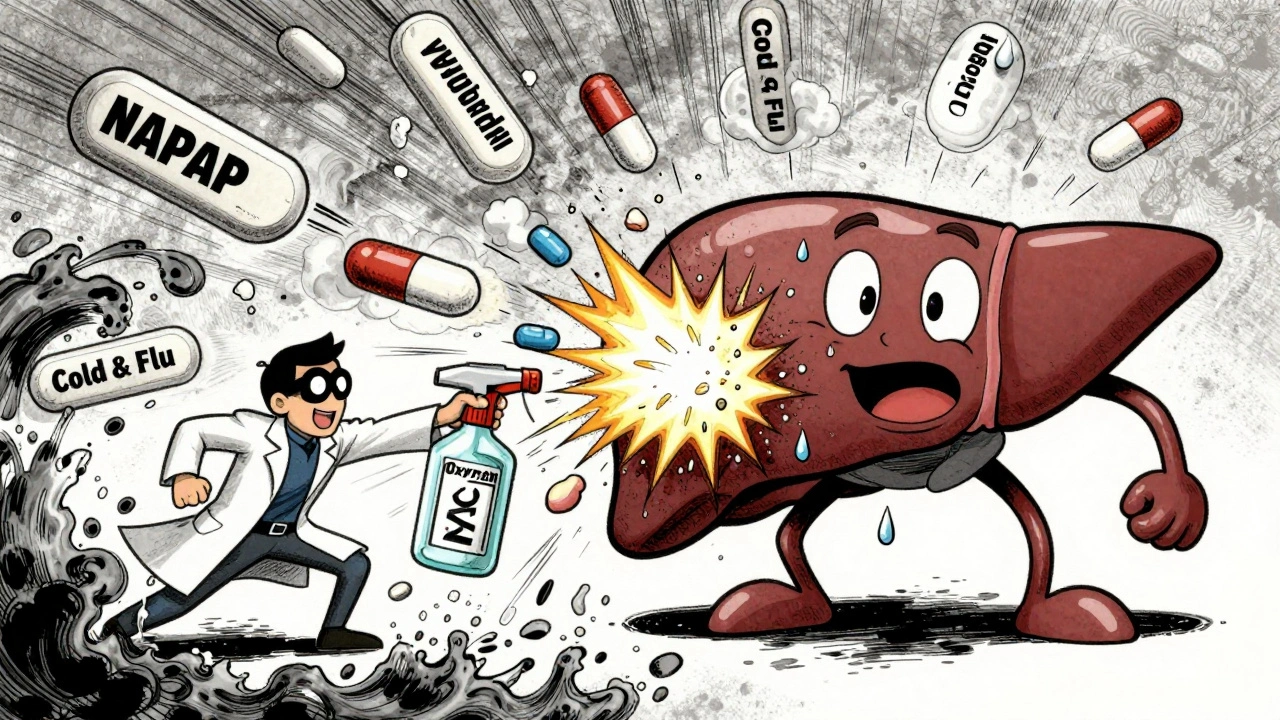
Acetaminophen is broken down in the liver. Most of it gets safely processed and flushed out. But when you take too much, the liver runs out of its normal cleanup pathways. That’s when a toxic byproduct called NAPQI builds up. Normally, your liver uses glutathione to neutralize NAPQI. But when glutathione runs low, NAPQI starts attacking liver cells, causing swelling, cell death, and sometimes total liver failure.It’s not just about how much you take at once. Even taking 3,000 mg a day for two weeks-something many people do when they’re on long-term pain meds-can slowly wear down your liver’s defenses. People with alcohol use disorder, malnutrition, or chronic liver disease are at even higher risk because their glutathione levels are already low.
What the FDA Did (And What’s Still Missing)
In 2011, the FDA stepped in. They forced manufacturers to limit acetaminophen in prescription combination products to 325 mg per pill or tablet. That rule took full effect by 2014. The goal? To make it harder to accidentally overdose. And it worked-at least a little. Since then, unintentional overdoses have dropped by 29%, according to the Institute for Safe Medication Practices.But here’s the catch: that rule doesn’t apply to over-the-counter products. You can still buy Tylenol in 1,000 mg tablets. And many cold and flu meds still pack 650 mg per dose. So you could take two of those, plus a prescription painkiller, plus a sleep aid-and hit 4,000 mg before lunch.
The FDA is now considering lowering the max OTC dose to 650 mg per tablet, but that change hasn’t happened yet. Until then, the burden falls on you.
How to Protect Yourself
The best way to prevent liver injury isn’t waiting for a new law. It’s changing how you take meds. Here’s how:- Read every label, every time. Look for “acetaminophen” on the drug facts panel. It’s also listed as APAP, which stands for N-acetyl-para-aminophenol. If you see either, you’re taking acetaminophen.
- Add up your daily dose. Write down every medicine you take in a day. Include prescriptions, OTC pills, cough syrups, and sleep aids. Add the milligrams together. If you’re over 3,000 mg, you’re in danger zone.
- Never take more than one acetaminophen-containing product at a time. Even if they’re for different symptoms, if they both have acetaminophen, don’t combine them.
- Ask your doctor or pharmacist to review all your meds. Bring a list of everything you take-including supplements and herbal products-to every appointment. Most people don’t realize their doctor doesn’t know about the OTC meds they’re taking.
- Use the lowest effective dose. If you’re on a prescription combo, ask if you can switch to a version without acetaminophen. For example, oxycodone alone might be enough if you’re not already taking other pain relievers.
Who’s at Highest Risk?
Some people need to be extra careful:- People who drink alcohol regularly. Even one drink a day can reduce your liver’s ability to handle acetaminophen.
- People with liver disease. If you have hepatitis, fatty liver, or cirrhosis, your liver is already stressed. Stick to 2,000 mg a day max.
- Older adults. As we age, our liver processes drugs slower. The safe limit should be lower.
- People on multiple prescriptions. If you take five or more medications a day, you’re at higher risk of hidden acetaminophen overlap.
Studies show Spanish-speaking patients are 2.3 times more likely to accidentally overdose, mostly because warning labels aren’t clear in their language. The FDA now offers multilingual medication guides in 14 languages. If you need one, ask your pharmacist.
What to Do If You Think You’ve Taken Too Much
If you’ve taken more than 7,000 mg in a day-or even 4,000 mg and you’re feeling nauseous, sweaty, or have pain in your upper right abdomen-go to the ER immediately. Don’t wait. Don’t call your doctor tomorrow. Liver damage from acetaminophen can start silently. By the time you feel bad, it might already be too late.The antidote is N-acetylcysteine (NAC), which works by restoring glutathione. It’s most effective if given within 8 hours of overdose, but it still helps up to 48 hours later. A new extended-release form of NAC, approved in early 2023, makes treatment easier-patients can take it orally at home instead of being hooked to an IV for days.
There’s also a newer option: fomepizole. Approved by the FDA in 2021, it blocks the liver from turning acetaminophen into NAPQI in the first place. It’s not a replacement for NAC, but when used together, it cuts severe liver injury by 32%.
Technology Is Helping Too
A new smartphone app, developed by the Acetaminophen Hepatotoxicity Prevention Consortium, lets you scan the barcode on any medicine. It instantly tells you how much acetaminophen is in it and adds it to your daily total. Beta testing showed it’s 89% accurate across 150 different combination products. If you’re on multiple meds, this app could save your life.Electronic health records now also track acetaminophen doses across prescriptions. If your doctor uses Epic or another modern system, they’ll get an alert if you’re being prescribed a new acetaminophen-containing drug while already on another. That feature is in 87% of major EHR systems as of early 2023.
What You Can Do Today
Start right now:- Check your medicine cabinet. Pull out every bottle. Look for “acetaminophen” or “APAP.”
- Write down the dose and how many you take per day.
- Add them up. If it’s over 3,000 mg, talk to your doctor about switching.
- Download a barcode scanner app like Medisafe or MyTherapy. Use it to scan your meds.
- Tell your family members. Many overdoses happen because someone else gave you a pill “for your headache,” not knowing it had acetaminophen.
There’s no magic pill that makes acetaminophen safe if you overdose. The only real protection is awareness. You don’t need to avoid painkillers. You just need to know what’s in them-and how to use them without risking your liver.
Can I take Tylenol with my prescription painkiller?
No, unless your doctor specifically says it’s safe. Most prescription painkillers like Vicodin, Percocet, and Norco already contain acetaminophen. Taking Tylenol on top of that can easily push you over the 4,000 mg daily limit. Even if you feel like you need more pain relief, adding more acetaminophen won’t help-it just increases your risk of liver damage.
Is it safe to take acetaminophen if I drink alcohol?
It’s risky. Alcohol slows down how your liver processes acetaminophen and lowers your glutathione levels, which are needed to detoxify the drug. Even one drink a day increases your risk of liver injury. If you drink regularly, limit acetaminophen to 2,000 mg per day at most. Better yet, avoid it altogether and ask your doctor for alternatives.
What are the early signs of acetaminophen liver damage?
The first signs are often mild and easy to ignore: nausea, vomiting, loss of appetite, and tiredness. You might feel like you have the flu. Pain in the upper right side of your abdomen is a red flag. By the time jaundice (yellow skin or eyes) appears, liver damage is already advanced. If you’ve taken too much acetaminophen and feel off, go to the ER-even if you don’t feel severely sick.
Are there safer alternatives to acetaminophen for pain relief?
Yes. For mild to moderate pain, ibuprofen or naproxen (NSAIDs) are options-but they come with their own risks, like stomach bleeding or kidney issues. For chronic pain, non-drug options like physical therapy, heat/cold therapy, or acupuncture may help. Always talk to your doctor before switching. They can help you find a safe plan based on your health history.
How do I know if my medication has acetaminophen?
Check the Drug Facts label on OTC meds or the prescribing information on prescriptions. Look for “acetaminophen” or “APAP.” It’s often listed right after the brand name. If you’re unsure, ask your pharmacist. They can check the ingredients and tell you if your meds overlap.
Can children get liver damage from acetaminophen too?
Yes, but the risks are different. Children’s doses are based on weight, not age. Giving too much-even just a little over the recommended amount-can cause liver damage. Always use the measuring tool that comes with the medicine. Never use a kitchen spoon. And never give adult-strength acetaminophen to a child.
Comments
Saurabh Tiwari
December 3, 2025 AT 16:23tylenol pm + cold medicine + my back pill = 4200mg before bed. i’m deleting all of them and switching to ibuprofen.
Michael Campbell
December 4, 2025 AT 12:30Victoria Graci
December 5, 2025 AT 16:18Our bodies are complex, delicate ecosystems-yet we treat them like spreadsheets: ‘Add this, subtract that, don’t exceed cell B7.’
Acetaminophen isn’t the villain. It’s the mirror. We’re the ones who forgot how to listen-to our pain, to our limits, to the quiet whispers of our own biology.
Maybe the real crisis isn’t overdose-it’s the cultural amnesia that lets us believe we can out-engineer our biology.
Saravanan Sathyanandha
December 6, 2025 AT 09:52But this article? It’s a gift. I’ve shared it with my family and even translated it into Hindi for my cousins in Delhi.
Knowledge is the only real antidote when the system fails. Thank you for writing this.
alaa ismail
December 7, 2025 AT 04:54ruiqing Jane
December 8, 2025 AT 05:32Fern Marder
December 8, 2025 AT 12:34Carolyn Woodard
December 9, 2025 AT 09:52Allan maniero
December 9, 2025 AT 23:41People don’t tell their doctors about the NyQuil they take at night. They don’t mention the Advil Cold they picked up last week. They think ‘OTC’ means ‘safe’ and ‘prescription’ means ‘controlled’-but the truth? The system’s designed to let them slip through.
I’ve seen patients come in with AST/ALT levels through the roof, and they’re crying because they didn’t know. Not because they were careless. Because they were never taught.
We need better labeling. We need multilingual warnings. We need pharmacists to ask ‘Are you taking anything else?’ every single time. Not just when they’re busy.
This isn’t about blame. It’s about care.
Anthony Breakspear
December 10, 2025 AT 22:13Zoe Bray
December 12, 2025 AT 01:38Girish Padia
December 12, 2025 AT 17:26