

When your triglyceride levels climb above 150 mg/dL, you’re not just looking at a number on a lab report-you’re facing real, life-threatening risks. High triglycerides don’t just quietly linger in your blood. They can trigger a sudden, excruciating attack of pancreatitis, or slowly damage your heart over years. And here’s the twist: lowering them isn’t just about avoiding one crisis-it’s about protecting your entire cardiovascular system.
Why High Triglycerides Are Dangerous
Triglycerides are the most common type of fat in your body. They store extra calories and release energy when needed. But when levels rise too high-especially above 500 mg/dL-they become dangerous. At this point, your body’s normal fat-processing system starts to back up. Your blood thickens. Pancreatic enzymes go haywire. And that’s when things turn serious.
More than 1 in 10 people with triglycerides over 1,000 mg/dL will develop acute pancreatitis. That’s not rare. It’s predictable. And it’s not just about extreme cases. Even levels between 177 and 885 mg/dL raise your risk, according to a major study of over 113,000 people in Denmark. For every 89 mg/dL increase, your chance of pancreatitis goes up by 17%. That’s a clear, measurable danger.
Here’s how it happens: Your pancreas breaks down triglycerides using an enzyme called lipase. But when there’s too much fat in your blood, the breakdown creates toxic byproducts-free fatty acids and lysophosphatidylcholine. These chemicals burn through the lining of your pancreas, cause inflammation, and trigger cell death. The result? Severe abdominal pain, nausea, vomiting, and often hospitalization. Some people need intensive care. Others don’t survive.
The Heart Connection: More Than Just a Number
While pancreatitis grabs headlines, the real killer with high triglycerides is heart disease. In fact, 70% of deaths in people with severe hypertriglyceridemia come from heart attacks and strokes, not pancreatitis. That’s because high triglycerides are often paired with low HDL (good cholesterol), high LDL (bad cholesterol), and insulin resistance. Together, they form a perfect storm for artery-clogging plaque.
Recent guidelines from the European Society of Cardiology now treat nonfasting triglyceride levels above 177 mg/dL as an independent risk factor for cardiovascular disease. That means even if your LDL is normal, your triglycerides alone can signal trouble. Studies show that people with levels over 200 mg/dL have a 25% higher risk of heart attack over 10 years. And it’s not just about quantity-it’s about persistence. Chronic high levels silently damage blood vessels over time.
That’s why lowering triglycerides isn’t just about avoiding pancreatitis-it’s about saving your heart. The REDUCE-IT trial showed that a high-dose, purified form of omega-3 (icosapent ethyl) reduced heart attacks and strokes by 25% in people with triglycerides over 150 mg/dL and existing heart disease. But not all omega-3s work the same. Over-the-counter fish oil supplements? They didn’t show the same benefit. The difference is in purity, dose, and formulation.
When Does It Become an Emergency?
Not all high triglycerides are equal. The risk isn’t linear-it spikes at certain thresholds.
- 500-999 mg/dL: Moderate risk. Pancreatitis is uncommon but possible. This is where lifestyle changes and medication should start.
- 1,000-1,999 mg/dL: High risk. About 10% of people in this range will develop pancreatitis. Urgent action is needed.
- 2,000+ mg/dL: Very high risk. Nearly 1 in 5 people will get pancreatitis. This is a medical emergency.
But here’s the confusing part: Some people with triglycerides over 10,000 mg/dL never get pancreatitis. Others have an attack at just 400 mg/dL. Why? Because genetics, metabolism, and other conditions play a role. People with familial chylomicronemia syndrome (FCS)-a rare inherited disorder-have 10 times the risk. They need specialized treatment, not just diet changes.
That’s why doctors don’t just look at one number. They look at your history: Have you had pancreatitis before? Do you have diabetes? Are you taking estrogen or drinking alcohol heavily? These factors can push your risk even higher.
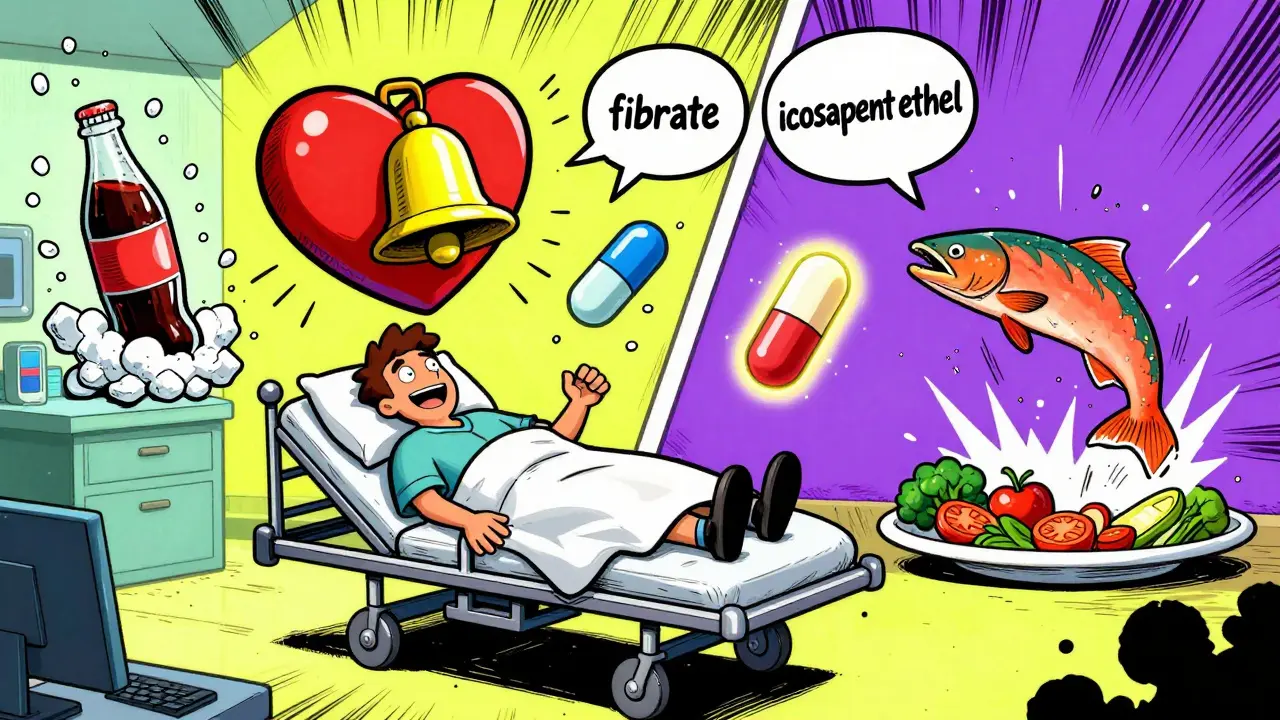
What Actually Works to Lower Triglycerides
There’s no magic pill, but there are proven strategies-and they work best together.
1. Diet: Cut the Sugar, Not Just the Fat
Most people think high triglycerides mean you need to avoid all fat. That’s wrong. The real culprit? Sugar and refined carbs. When you eat bread, pasta, soda, or candy, your liver turns excess sugar into triglycerides. Cutting out added sugar and processed carbs can drop your levels by 20-50% in just 12 weeks.
Focus on:
- Whole grains (oats, quinoa, brown rice)
- Vegetables and legumes
- Fatty fish (salmon, mackerel, sardines) at least twice a week
- Nuts and seeds (walnuts, flaxseeds)
- Healthy fats (olive oil, avocado)
Avoid:
- Sugary drinks (even fruit juice)
- White bread, pastries, cookies
- Alcohol (even one drink a day can raise levels by 20%)
- Trans fats (found in fried foods and margarine)
2. Medications: Not All Are Created Equal
If lifestyle changes aren’t enough, medications help-but choose wisely.
- Fibrates (fenofibrate, gemfibrozil): Reduce triglycerides by 30-50%. First-line for levels over 500 mg/dL. Also raise HDL.
- Icosapent ethyl (Vascepa): A purified EPA omega-3. Proven to reduce heart attacks and strokes. Only for people with heart disease or diabetes and triglycerides over 150 mg/dL.
- Statins (atorvastatin, rosuvastatin): Best for lowering LDL, but also help triglycerides by 15-30%. Often used with fibrates.
- Volanesorsen and olezarsen: New drugs for rare genetic conditions like FCS. They slash triglycerides by 70-80%. But they’re expensive ($450,000/year) and not widely covered by insurance.
Don’t waste money on regular fish oil supplements. They don’t have the same effect. Only prescription-grade EPA (icosapent ethyl) has shown clear cardiovascular benefits.
3. Control the Hidden Triggers
Many people don’t realize their high triglycerides are caused by something else:
- Uncontrolled diabetes (HbA1c over 9%)
- Excess alcohol (more than 1-2 drinks/day)
- Estrogen therapy (birth control pills or hormone replacement)
- Certain medications (steroids, beta-blockers, antipsychotics)
- Obesity and inactivity
Fixing these can cut triglycerides by 200-400% in just days. For example, one patient in Perth saw his levels drop from 1,800 to 600 mg/dL after quitting alcohol and starting metformin for prediabetes.
What Doesn’t Work (And Why)
There’s a lot of misinformation out there.
- Extreme low-fat diets: Many patients are told to eat less than 20g of fat per day. But this often backfires. It leads to eating more sugar and carbs to feel full-and triglycerides rise again.
- Over-the-counter omega-3s: These contain mostly DHA and low-dose EPA. They don’t reduce heart risk. Only high-dose, purified EPA does.
- Just taking statins: Statins are great for LDL, but they don’t reliably fix high triglycerides. You need something targeted.
- Waiting for symptoms: Pancreatitis can strike suddenly. Don’t wait for pain to act.

Real Stories, Real Challenges
Patients aren’t just numbers. One man in Perth, 52, had two pancreatitis attacks in 18 months. His triglycerides were 1,400 mg/dL. He tried dieting, but found it impossible to give up pasta and soda. His doctor switched him to fenofibrate and icosapent ethyl. Within 8 weeks, his levels dropped to 480 mg/dL. He hasn’t had another attack.
Another woman, 45, was misdiagnosed with alcohol-related pancreatitis. She didn’t drink. Her levels were high because of undiagnosed hypothyroidism. Once her thyroid was treated, her triglycerides fell by 60%.
But access is a problem. Volanesorsen and icosapent ethyl cost hundreds of dollars a month. Insurance often denies coverage. Many patients can’t afford them. That’s why lifestyle changes remain the foundation-even if you’re on medication.
What You Should Do Now
If you’ve been told your triglycerides are high, here’s your action plan:
- Get a fasting lipid panel. Don’t rely on nonfasting tests unless your doctor specifically recommends it.
- Check your HbA1c. If it’s over 5.7%, you have insulin resistance-this is a major driver.
- Eliminate sugar and alcohol for 30 days. Track how you feel.
- Ask your doctor: Should I be on a fibrate or icosapent ethyl? Don’t assume statins are enough.
- If your triglycerides are over 500 mg/dL, ask for a referral to a lipid specialist. Not all doctors know how to manage this.
High triglycerides aren’t a life sentence. They’re a warning sign-and one you can act on. The goal isn’t just to lower a number. It’s to prevent a hospital bed, a lost month of work, or a heart attack. You have the power to change it.
Can high triglycerides cause heart attacks?
Yes. High triglycerides are linked to a 25% higher risk of heart attack and stroke over 10 years, especially when combined with low HDL, high LDL, or diabetes. They contribute to plaque buildup in arteries and increase blood clotting risk. The REDUCE-IT trial proved that lowering triglycerides with prescription omega-3 (icosapent ethyl) reduces heart events by 25% in high-risk patients.
How high is too high for triglycerides?
Levels above 500 mg/dL are considered severe and require immediate treatment to prevent pancreatitis. At 1,000 mg/dL, the risk of pancreatitis jumps to about 10%. Above 2,000 mg/dL, the risk is 20% or higher. Even levels between 177-500 mg/dL increase long-term heart disease risk. The European Society of Cardiology now considers nonfasting triglycerides over 177 mg/dL a standalone risk factor.
Do I need medication if my triglycerides are high?
Not always. If your triglycerides are between 200-499 mg/dL and you’re otherwise healthy, lifestyle changes (diet, exercise, no alcohol) are the first step. But if they’re over 500 mg/dL, or you have diabetes, prior pancreatitis, or heart disease, medication is usually recommended. Fibrates or prescription omega-3 (icosapent ethyl) are the most effective options. Statins alone won’t cut it.
Can I lower triglycerides without medication?
Yes, for many people. Cutting sugar, refined carbs, and alcohol can reduce triglycerides by 20-50% in 6-12 weeks. Losing 5-10% of body weight helps significantly. Regular exercise (150 minutes/week) also lowers levels. But if your levels are over 500 mg/dL, medication is needed to prevent pancreatitis while lifestyle changes take effect.
Why do some people with very high triglycerides never get pancreatitis?
It comes down to individual biology. Some people have genetic differences that affect how their pancreas handles fat breakdown, how quickly they clear triglycerides from the blood, or how their immune system responds. Others may have protective factors like higher HDL or better insulin sensitivity. This is why doctors don’t treat just by number-they look at your full medical history, family background, and other risk factors.
Is it safe to take fish oil supplements for high triglycerides?
Over-the-counter fish oil supplements (containing EPA and DHA) are not proven to reduce heart risk or prevent pancreatitis. They may lower triglycerides slightly, but not enough to be reliable. Only the prescription version, icosapent ethyl (Vascepa), which contains pure EPA at 4 grams per day, has been shown in large trials to reduce heart attacks and strokes. Avoid cheap supplements-they’re not a substitute.
Comments
Jinesh Jain
March 15, 2026 AT 17:17douglas martinez
March 17, 2026 AT 13:06Sabrina Sanches
March 19, 2026 AT 01:15Emma Deasy
March 20, 2026 AT 05:56tamilan Nadar
March 22, 2026 AT 05:24Rosemary Chude-Sokei
March 24, 2026 AT 00:52Noluthando Devour Mamabolo
March 25, 2026 AT 22:03Ali Hughey
March 26, 2026 AT 00:47Lorna Brown
March 26, 2026 AT 05:53Kelsey Vonk
March 27, 2026 AT 20:24