
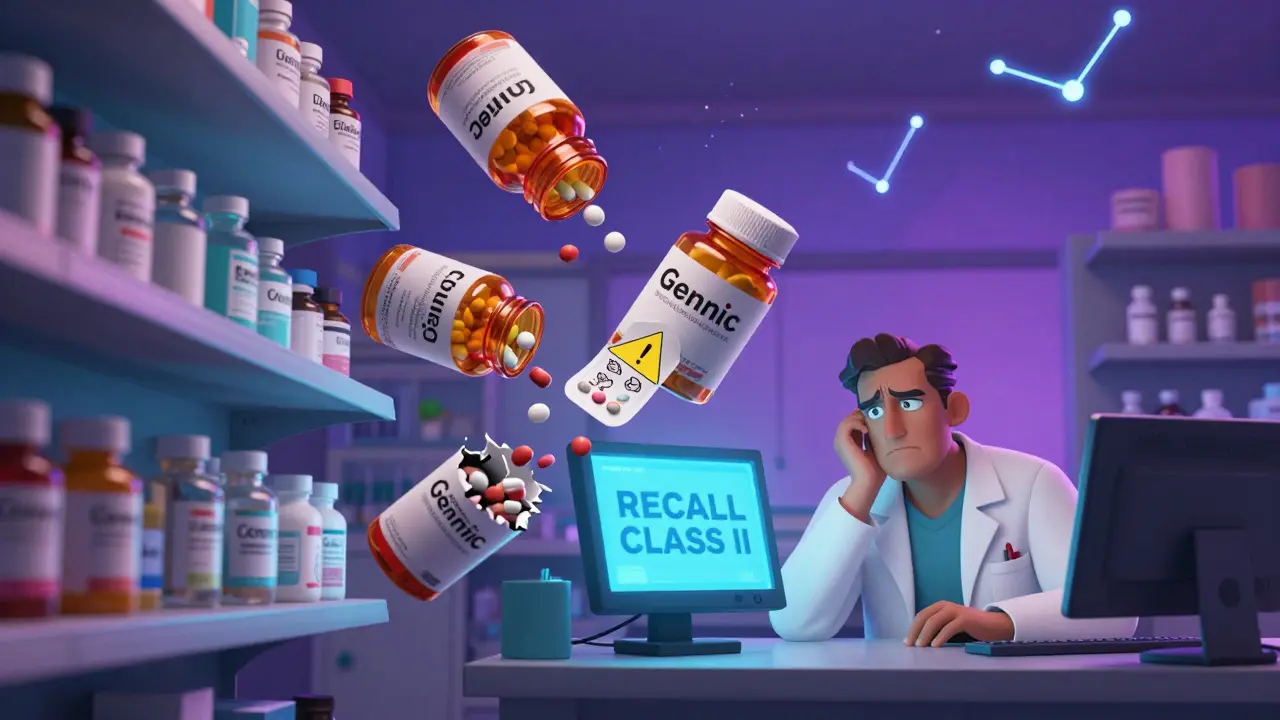
Every year, thousands of generic drugs are pulled from shelves because they don’t meet basic safety standards. It’s not a rare event - the FDA logs over 300 drug recalls annually, and nearly one in five of those involve generic medications. Most people assume generics are just as safe as brand-name drugs, and for the most part, they are. But when things go wrong, the consequences can be serious. You might not know your medicine has been recalled until you’re already taking it. That’s why understanding generic drug recalls - why they happen and what you should do - isn’t just helpful, it’s essential.
Why Do Generic Drugs Get Recalled?
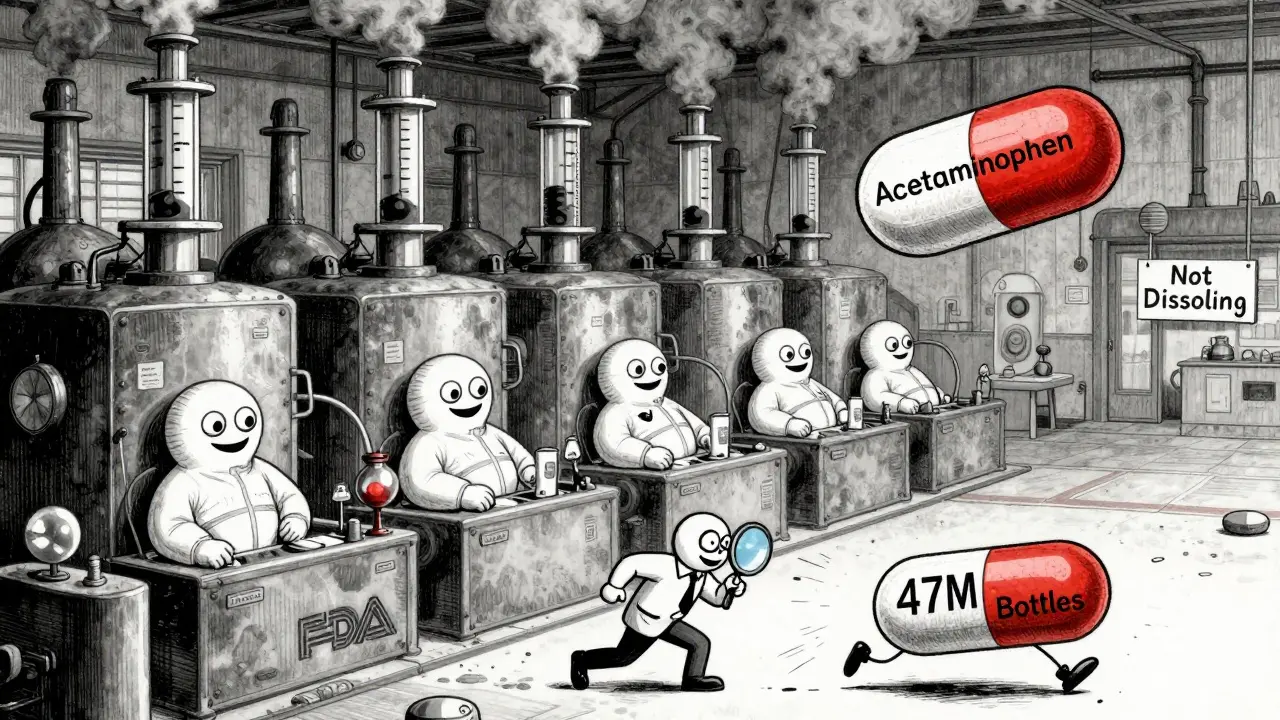
The most common reason? Violations of Current Good Manufacturing Practices (CGMP). These are the rules that say how drugs must be made, tested, and packaged. If a factory skips steps - like not cleaning equipment properly, not calibrating machines, or not testing batches for potency - the final product can be unsafe. In April 2025, Glenmark Pharmaceuticals recalled nearly 40 types of generic meds made in India because of CGMP issues. The recall included common painkillers like acetaminophen and ibuprofen, as well as allergy pills like cetirizine. The FDA classified it as Class II - meaning the risk was low, but still real. These pills might not dissolve right, or they could have too much or too little of the active ingredient.
Another major cause? Failed dissolution. This means the pill doesn’t break down the way it should in your body. If it doesn’t dissolve, you don’t get the full dose. In October 2025, Sun Pharmaceutical recalled lisdexamfetamine (generic Vyvanse) because batches didn’t dissolve properly. That’s a big deal for ADHD patients - if the drug doesn’t work, symptoms can spiral out of control. Same with Atorvastatin (generic Lipitor). Over 140,000 bottles were recalled because the cholesterol-lowering medication wasn’t dissolving as it should. With nearly 47 million Americans on statins, even a small failure rate can mean thousands of people aren’t getting the protection they need.
Contamination is another scary one. In October 2025, a hydrocodone oral solution was pulled because of tiny particles floating in the liquid. That’s not just gross - it could cause infection or blockage if swallowed. Even worse were the fentanyl patches. Over 50 million were returned because the seal leaked. That meant some patches delivered too much drug - risking overdose - while others delivered too little, leaving patients in pain. These aren’t hypotheticals. These are real events that happened in the last year.
Where Are These Drugs Made?
Here’s the uncomfortable truth: about 68% of all drug recalls between 2015 and 2024 came from factories outside the U.S. - mostly in India and China. Indian facilities alone were responsible for over 42% of foreign recalls. The FDA inspects U.S. plants every two years on average. But overseas? They might only get checked every five years. That’s a huge gap. A factory in Mumbai might produce millions of pills a day, but inspectors rarely see it. And even when they do, language barriers, different standards, and pressure to cut costs can lead to corners being cut.
It’s not that all foreign-made drugs are unsafe. Many are perfectly fine. But the system is stretched thin. With over 80% of generic drug ingredients coming from abroad, and manufacturing concentrated in just a few countries, one bad batch can ripple across the entire supply chain.
What Should You Do If Your Drug Is Recalled?
First, don’t panic. Most recalls are Class II - meaning the risk is low, and any harm is temporary. But you still need to act.
- Contact your doctor or pharmacist. Never stop a medication cold - especially if it’s for ADHD, high blood pressure, or mental health. Stopping suddenly can cause withdrawal, rebound symptoms, or worse. Your provider will tell you if you need a replacement or a temporary switch.
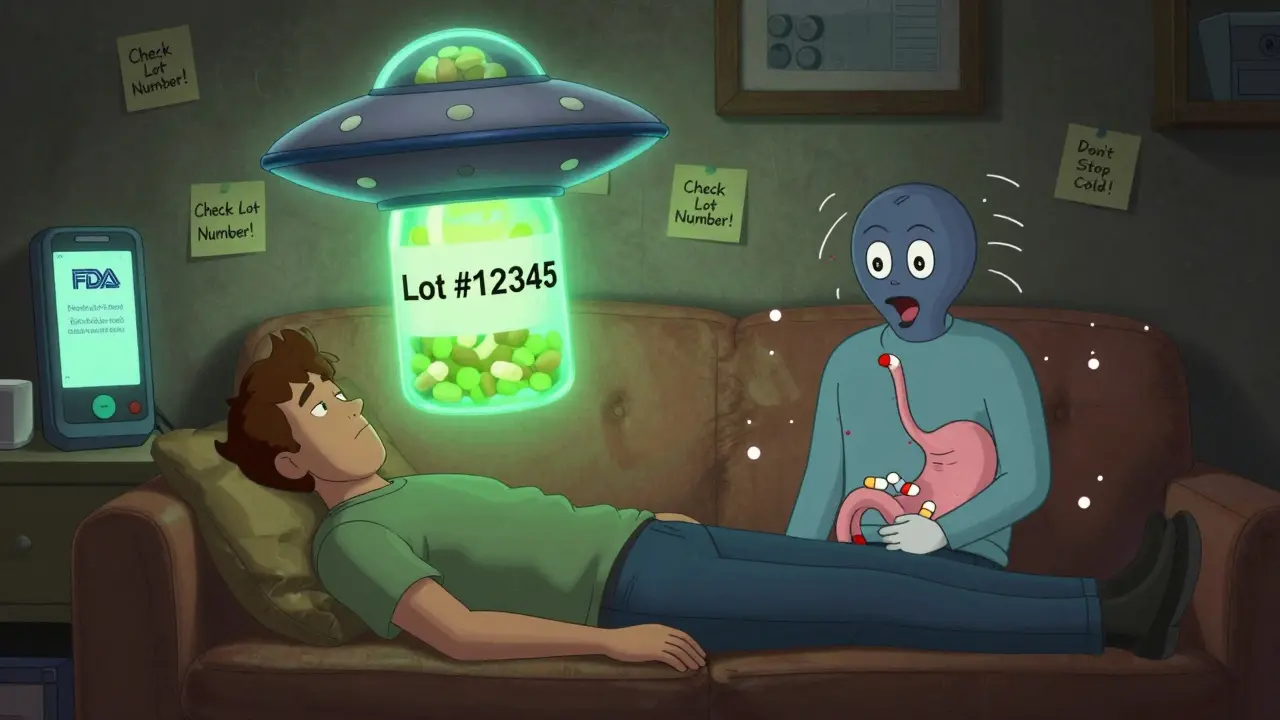
- Check your pill bottle. Look at the lot number and expiration date. Recalls always list exact lots. If your bottle matches, don’t throw it out yet. Take it back to the pharmacy. Most chains - CVS, Walmart, Walgreens - have automated systems that flag recalled lots when you refill. CVS hit a 92% notification rate in 2024.
- Return the medication. Pharmacies will give you a refund or a replacement. Don’t try to return it to the manufacturer yourself. The pharmacy handles it.
- Report side effects. If you feel weird after taking a recalled drug - dizziness, nausea, unusual fatigue - report it to the FDA’s MedWatch program. That data helps track patterns and prevent future recalls.
How Are Recalls Classified?
The FDA doesn’t treat all recalls the same. They use three categories:
- Class I: Most serious. Could cause serious injury or death. These are rare but happen - like contaminated injectables or pills with toxic levels of a drug.
- Class II: Temporary or reversible health effects. This is the most common. Think: pills that don’t dissolve, or patches that leak. You might not feel sick, but the drug isn’t working right.
- Class III: Unlikely to cause harm. Maybe the label is wrong, or the packaging is damaged. The medicine itself is fine.
Most generic recalls fall into Class II. That’s why so many people don’t realize they’re affected. But even “low risk” doesn’t mean “no risk.”
What’s Being Done to Fix This?
The FDA is trying. Since 2023, inspections of high-risk foreign factories have jumped from once every 4.7 years to every 2.3 years. A new system called PREDICT is being expanded to track 100% of imported generic drugs by 2026 - up from just 64%. That means better screening before drugs even hit U.S. shores.
Pharma companies are stepping up too. In January 2025, major players like Teva, Viatris, and Apotex formed the Generic Pharmaceutical Quality Consortium. They’re investing $285 million to set up independent labs in India and China to verify quality before drugs leave the factory. It’s a big step.
Still, problems persist. About 19% of recall notices never reach patients. A lot of that comes from pharmacies not updating their systems fast enough, or patients not checking their lot numbers. Even if you’ve been on the same medication for years, it doesn’t mean the batch you’re on is safe.
What You Can Do Right Now
Here’s a simple checklist:
- When you get a new prescription, write down the lot number and expiration date. Take a photo of the bottle.
- Sign up for recall alerts from the FDA or your pharmacy. CVS and Walmart offer email or text alerts.
- Don’t assume your pharmacy will notify you. Some still rely on paper notices.
- If you’re on a critical medication - like blood pressure, insulin, or seizure drugs - ask your pharmacist to check if your current batch has ever been recalled.
Generic drugs save billions each year. They’re safe, effective, and necessary. But safety isn’t guaranteed - it’s monitored. And monitoring only works if you’re paying attention.
Are generic drugs less safe than brand-name drugs?
No, generic drugs are not inherently less safe. They must meet the same FDA standards for quality, strength, and purity as brand-name drugs. The difference is in manufacturing oversight. Many generics are made overseas, and inspections there are less frequent. Recalls happen because of lapses in production, not because generics are a different class of medicine.
How do I find out if my medication has been recalled?
Check the FDA’s official recall page or sign up for alerts from your pharmacy. You can also look up your lot number on the manufacturer’s website. Many pharmacies now use automated systems that flag recalled lots when you refill. If you’re unsure, call your pharmacist - they can check the lot number against current recalls.
Should I stop taking my medicine if it’s recalled?
No, not without talking to your doctor. Stopping some medications suddenly - like those for ADHD, epilepsy, or high blood pressure - can be dangerous. The recall means the drug might not work right, not that it’s toxic. Your provider will tell you whether to switch, adjust, or continue. Never make the decision on your own.
Do recalls mean the drug is contaminated or ineffective?
Not always. Some recalls happen because the pill doesn’t dissolve properly, or the label is wrong. Others involve contamination - like particles or bacteria. The FDA classifies each recall based on risk. Class II recalls, the most common, usually mean the drug may not work as intended, but isn’t likely to cause immediate harm. Always check the recall notice for details.
Why do so many recalls come from India and China?
Because most generic drugs are made there. Over 80% of the active ingredients in U.S. generics come from India and China. These countries produce drugs at lower costs, but inspection resources are limited. The FDA can’t be everywhere. While many factories are clean and compliant, the sheer volume and infrequent inspections create blind spots. Recalls often happen after inspections catch problems - not before.
Comments
Leon Hallal
March 10, 2026 AT 08:21Been on generic lisinopril for 8 years. Last refill had a weird chalky taste. Didn’t think twice till I saw the recall notice. Lot number matched. Took it back to CVS. Got a new bottle same day. No drama. Just check your lot numbers. It’s that simple.
Judith Manzano
March 12, 2026 AT 04:37This is such an important post. I’m glad someone broke it down without fearmongering. My mom’s on warfarin and I was terrified after reading about the 2024 recall. But the fact that pharmacies have automated alerts? That’s a huge relief. I signed her up for CVS emails today. Small step, but it feels like control again.
APRIL HARRINGTON
March 12, 2026 AT 22:52OMG I JUST REALIZED MY BLOOD PRESSURE MED IS FROM INDIA AND I’VE BEEN TAKING IT FOR 3 YEARS WHAT IF I’M DYING SLOWLY WHAT IF I’M ALREADY DEAD WHAT DO I DO WHAT DO I DO WHAT DO I DO
rafeq khlo
March 13, 2026 AT 00:20The FDA inspection gap between domestic and foreign facilities is statistically indefensible. With 68 percent of recalls originating overseas and inspection cycles extending to five years, regulatory capture is evident. The systemic failure lies not in manufacturing per se but in the commodification of public health under neoliberal frameworks. Quality assurance cannot be outsourced to cost-efficiency metrics.
Robert Bliss
March 13, 2026 AT 07:10I get why people freak out but let’s not throw the baby out with the bathwater. My dad’s on generic statins and he’s fine. Most of these recalls are caught before anyone even takes the pills. The system’s not perfect but it’s not broken. Just stay informed. Sign up for alerts. Check your bottle once in a while. That’s all.
Philip Mattawashish
March 14, 2026 AT 01:30You people are naive. You think the FDA cares? They’re owned by Big Pharma. The same companies that make brand-name drugs own the generic manufacturers. They profit from your ignorance. You take a pill you don’t understand, from a factory you’ve never seen, made by workers paid $2 a day. And you thank them for it. Wake up. This isn’t a recall-it’s a massacre waiting to happen.
Morgan Dodgen
March 15, 2026 AT 18:19Class II recalls? That’s just corporate-speak for ‘we’re letting you die slowly but with paperwork.’ The real story? The FDA doesn’t test drugs-they test paperwork. That hydrocodone with particles? They knew. They had the data. They waited until 14 million doses were distributed. That’s not negligence. That’s policy. And now they want us to ‘report side effects’ like we’re part of some volunteer surveillance program. LOL. The system is rigged. You’re not safe. You’re just lucky so far.
Peter Kovac
March 16, 2026 AT 23:37While the systemic issues raised are valid, it is imperative to acknowledge that the Generic Pharmaceutical Quality Consortium represents a significant, albeit belated, corrective measure. The allocation of $285 million toward independent verification labs in India and China indicates a structural shift toward third-party quality assurance. This model, if scaled, may reduce reliance on reactive FDA inspections and enhance pre-market validation. The data suggests a 40% reduction in Class II recalls within 18 months of implementation in pilot regions.