
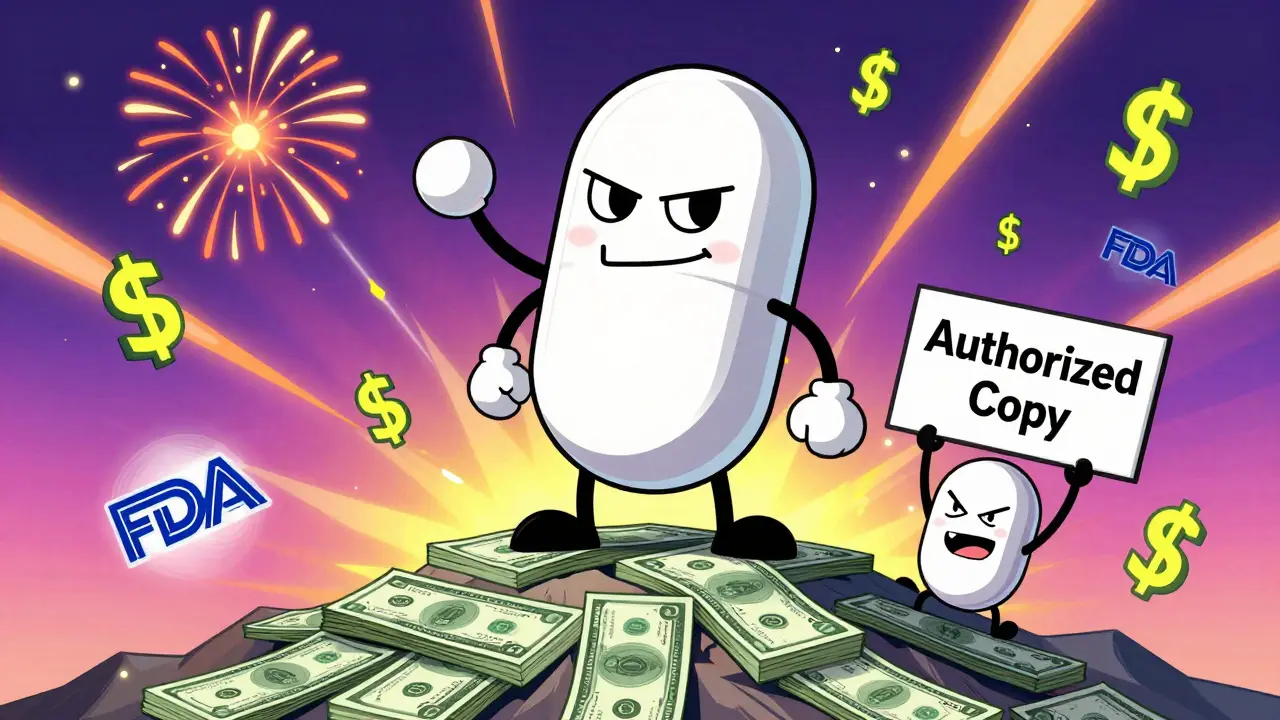
The pharmaceutical market is changing fast, and authorized generics are at the center of it. These aren’t the same as regular generic drugs made by third-party companies. Authorized generics are exact copies of brand-name drugs, but they’re sold under a generic label by the original manufacturer itself. Think of it like a company selling its own product under a cheaper name to compete with its own knockoffs. It sounds odd, but it’s a smart, strategic move - and it’s becoming more common as patents expire and prices come under pressure.
Why Authorized Generics Exist
Authorized generics started showing up after the Hatch-Waxman Act of 1984. That law let generic drugmakers enter the market faster by using a simpler approval process called an ANDA. But brand-name companies didn’t just sit back and watch their profits vanish. They found a way to stay in the game: launch their own version as a generic. This lets them keep some control over pricing and distribution while undercutting other generic competitors. Between 2010 and 2019, there were 854 authorized generic launches, according to Health Affairs. Most of them didn’t hit the market until after the first traditional generic was approved. Why? Because brand manufacturers didn’t want to hurt their own branded sales too early. They waited - sometimes for months - until the market was ready. Then they dropped the authorized generic at just the right time to steal market share from the first generic entrant. In cases where a generic company got 180 days of exclusivity, about 70% of authorized generics launched before or during that window. That’s not coincidence. It’s strategy. The brand company uses its own authorized generic to cut off the exclusivity advantage before it even has time to build momentum.Where They’re Most Common
Not all drugs see authorized generics. They’re mostly found in oral solid forms - pills and capsules. Why? Because those are easier and cheaper to replicate. The chemistry is stable, the manufacturing process is well understood, and the FDA approves ANDAs for them faster. That makes them perfect targets for brand companies looking to protect revenue. You won’t see many authorized generics for injectables, inhalers, or complex biologics - yet. But that’s changing. Drugs like ustekinumab and vedolizumab, which treat autoimmune diseases, are losing patent protection starting in 2025. These are high-revenue products, worth billions. And while biosimilars are expected to dominate this space, brand manufacturers are already preparing. Some may launch authorized generics to hold onto market share before biosimilars even arrive.The Market Is Growing - Fast
The U.S. generic drug market is expected to hit $196.9 billion by 2034, up from $138.2 billion in 2024. That’s a 3.6% annual growth rate. Globally, the market could hit $700-800 billion by the early 2030s. Why? Because hundreds of brand-name drugs are about to lose exclusivity. Between 2025 and 2030, drugs generating $217-236 billion in annual sales will go generic. That’s a tidal wave of competition. Authorized generics are one of the tools brand companies have to manage that flood. They’re not going away - they’re evolving. And it’s not just about money. Generic and biosimilar drugs saved the U.S. healthcare system $467 billion in 2024 alone. Over the past decade, that total hits $3.4 trillion. Authorized generics contribute to that savings - but they also complicate it. When a brand company launches its own generic, it can delay price drops. That’s why some experts say they can hurt competition.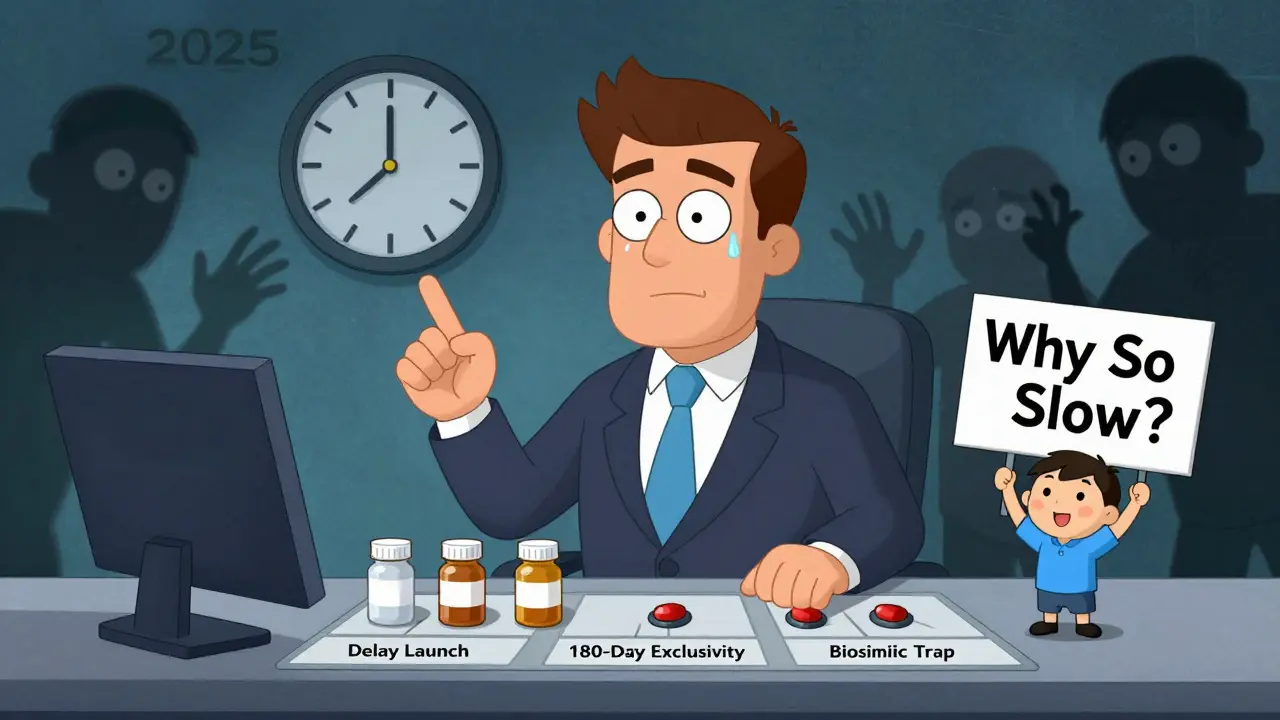
Regulatory Shifts Are Changing the Game
In October 2025, the FDA announced a new pilot program: it will fast-track ANDA reviews for generic drugs made entirely in the United States. Ingredients, manufacturing, testing - all done domestically. That’s a big deal. It’s the government saying: we want more drug production here, not overseas. This could reshape how authorized generics are made. Brand companies might start shifting their authorized generic production to U.S.-based facilities to get faster approval. That means more jobs, more supply chain security - but also higher costs. Will those costs get passed on to patients? Maybe. But the FDA hopes the trade-off is worth it: faster access to generics, better control over quality, and less reliance on foreign suppliers. There’s also more scrutiny from lawmakers. Policymakers are asking: are authorized generics helping patients, or just helping big pharma delay price drops? A 2025 study in JAMA Health Forum found that when companies stretch out exclusivity - often by delaying generic entry - it costs commercial insurers and Medicare billions. Drugs like imatinib and celecoxib are prime examples.Is the Strategy Changing?
Here’s the twist: the practice of delaying authorized generic launches is declining. According to RAPS in June 2025, brand manufacturers are launching these products sooner - sometimes even before the first traditional generic hits the market. Why? Two reasons. First, regulators are watching closer. Second, patients and payers are demanding lower prices. Companies that wait too long risk backlash. If you’re seen as blocking competition, you’re seen as gouging patients. That’s bad for your reputation - and your stock price. Some companies are now using authorized generics as a signal of goodwill. Launching early shows they’re not trying to hold the market hostage. It’s a subtle shift - from defense to cooperation.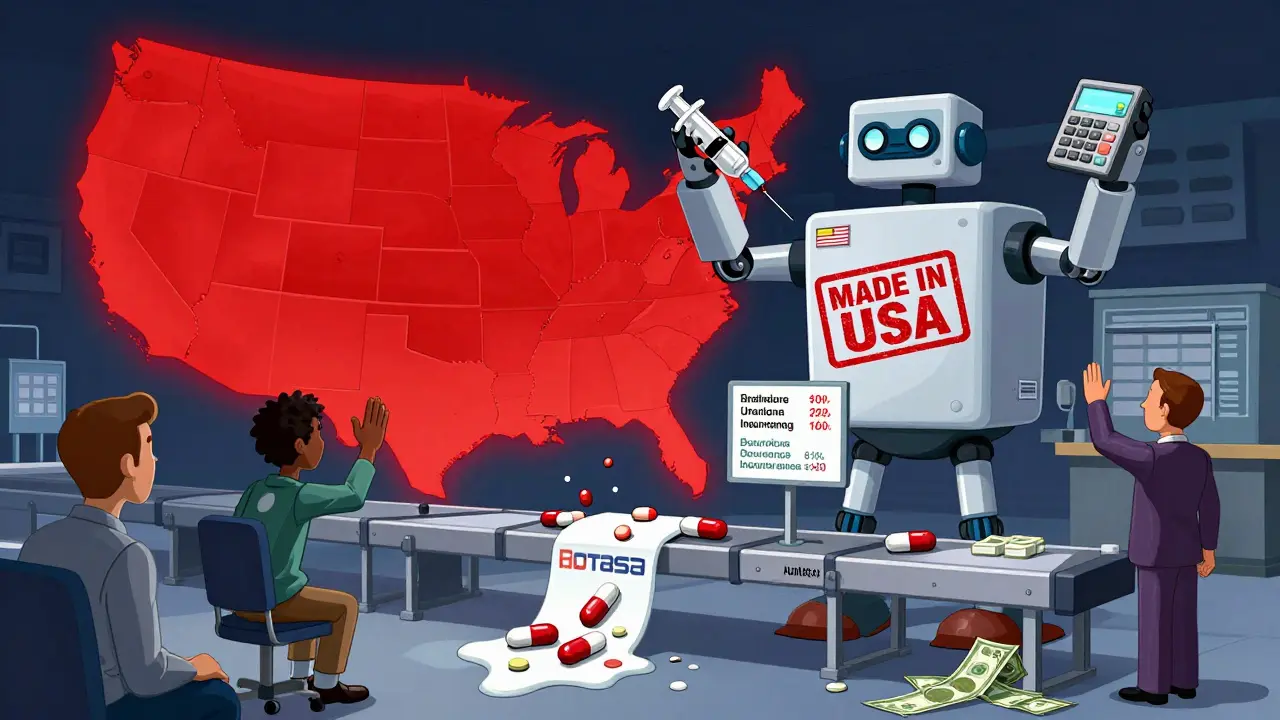
Comments
jeremy carroll
December 15, 2025 AT 05:59Edward Stevens
December 15, 2025 AT 17:35Jocelyn Lachapelle
December 16, 2025 AT 07:11Jonny Moran
December 16, 2025 AT 12:17Cassie Henriques
December 17, 2025 AT 00:33Mike Nordby
December 18, 2025 AT 19:38John Samuel
December 20, 2025 AT 02:52Michelle M
December 20, 2025 AT 09:05Christina Bischof
December 20, 2025 AT 23:18Rulich Pretorius
December 21, 2025 AT 12:43Jake Sinatra
December 23, 2025 AT 01:06Sinéad Griffin
December 24, 2025 AT 15:53Sai Nguyen
December 25, 2025 AT 02:55