
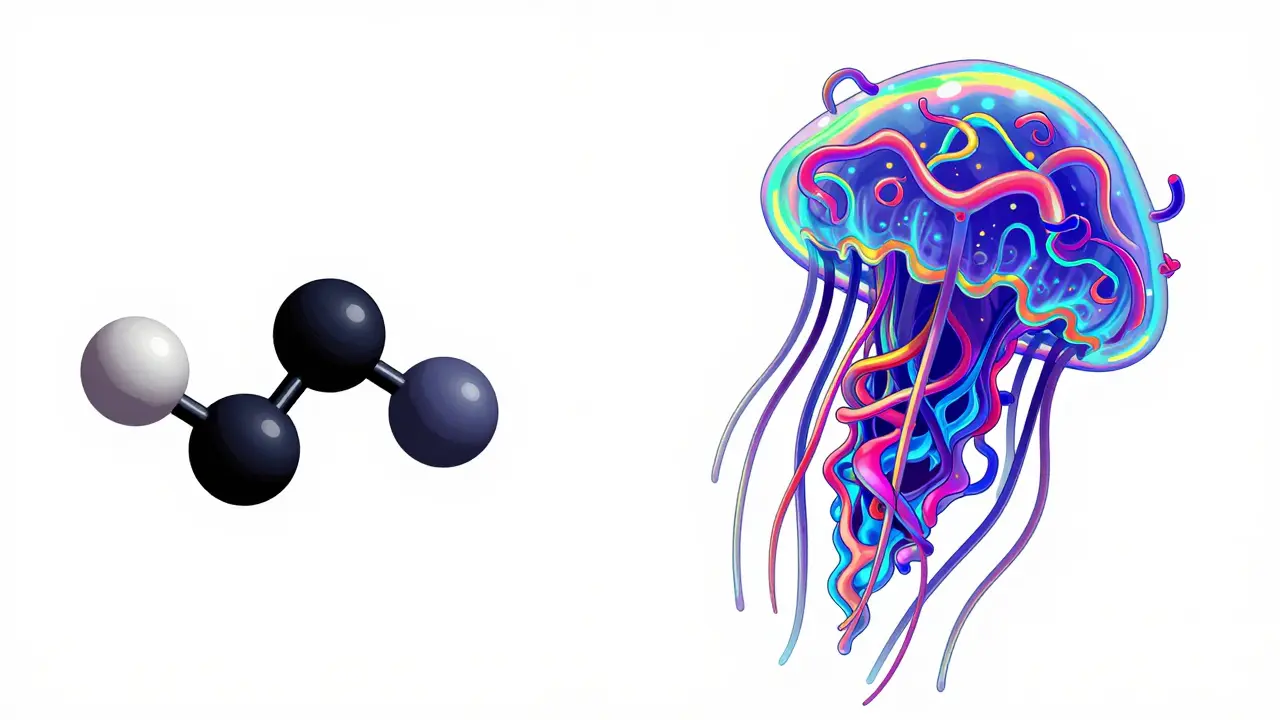
Imagine paying $100,000 a year for a medication that keeps a chronic illness in check, only to find out there's a version that does the exact same thing for a fraction of the cost. That's the promise of biosimilars. But unlike a simple generic aspirin, you can't just copy a biologic drug using a chemical formula. Biologics are grown from living cells, making them incredibly complex. Because of this, the FDA is the U.S. Food and Drug Administration, the federal agency responsible for protecting public health by ensuring the safety and efficacy of medications. They've had to build a specialized review process to make sure these "alternatives" are safe without requiring every single company to spend a decade and $300 million on new trials.
The Core Difference: Generics vs. Biosimilars
To understand how the FDA reviews these drugs, we first have to clear up a common misconception: biosimilars are not "generics." A generic drug is a chemical copy; it's identical in every way to the original. Biologics, however, are massive molecules produced by living organisms. Because biological processes vary, you can't make an exact replica. Instead, the goal is biosimilarity, which means the alternative is highly similar to the reference product, with no clinically meaningful differences in safety, purity, and potency.
This distinction is why the review process is so rigorous. The FDA doesn't just look at the final product; they look at the "recipe" and the "kitchen." They examine the cell lines used and the purification process to ensure the resulting protein structure matches the original reference biologic.
How the FDA Reviews Biologic Alternatives
The legal backbone of this process is the BPCIA, or the Biologics Price Competition and Innovation Act of 2010. Under this law, the FDA uses a tiered approach to prove that a biosimilar will work the same way as the original. In the past, this required massive, expensive clinical trials, but a landmark draft guidance released on October 29, 2025, has changed the game.
The modern review process focuses on three main pillars:
- Analytical Studies: This is the most critical part. Using tools like mass spectrometry and chromatography, the FDA checks over 200 quality attributes to see if the molecular structure is the same.
- Pharmacokinetics (PK) and Pharmacodynamics (PD): These studies track how the drug moves through the body and what it does to the target cells.
- Immunogenicity Evaluations: Because these are proteins, the body might see them as foreign and attack them. The FDA checks if the biosimilar triggers an immune response different from the original.
The big news from the 2025 guidance is that the FDA no longer routinely requires "comparative efficacy studies." Essentially, if the analytical data is strong enough to prove the molecules are nearly identical, the FDA may waive the need for a three-year trial to prove the drug works, since the original drug's efficacy is already well-known.
| Feature | Traditional Pathway | Streamlined 2025 Pathway |
|---|---|---|
| Comparative Efficacy Trials | Almost always required | Often waived if analytical data is strong |
| Avg. Development Time | 8-10 years | 5-7 years |
| Estimated Cost | $100M - $300M | $50M - $150M |
| Primary Focus | Clinical outcomes | Analytical characterization |

The Confusion Around Interchangeability
One of the most debated parts of the FDA review is the interchangeability designation. In the pharmaceutical world, an "interchangeable" product is one that a pharmacist can swap without calling the doctor for permission. Previously, the FDA required "switching studies"-where patients were flipped back and forth between the original and the biosimilar-to prove there was no risk.
However, FDA Commissioner Marty Makary has recently pushed a more aggressive stance, suggesting that interchangeability is a "legislative term, not a scientific term." He has argued that every biosimilar should be considered interchangeable. This has created some tension. While the FDA is streamlining the process, 34 states still have restrictive rules that prevent pharmacists from swapping these drugs, regardless of what the FDA says. This means a patient might be approved for a cheaper biosimilar, but their local pharmacy might still require a new prescription from their doctor to dispense it.
Real-World Impact: Costs and Patient Experience
Why does all this regulatory jargon matter? Because it affects your wallet and your health. Reference biologics for conditions like rheumatoid arthritis or cancer can cost between $50,000 and $100,000 annually. The FDA estimates that increasing biosimilar competition could save the U.S. healthcare system $250 billion over the next decade.
But is the switch safe? Data from patient communities, such as those on Reddit, show that about 63% of people switching to a biosimilar for rheumatoid arthritis find the efficacy comparable. However, about 22% note minor differences, such as injection site reactions. This is a normal part of biological variation; the proteins are similar, but not identical, and different bodies react differently to those tiny variations.
From a systemic level, the savings are real. The Mayo Clinic reported a 37% reduction in biologic drug costs after switching oncology treatments to biosimilars, saving them roughly $18 million a year. That money can then be reinvested into more patient care or lower costs for the patients themselves.
Challenges for Developers and Patients
Even with a faster pathway, getting a biosimilar to market isn't easy. Smaller biotech companies often struggle because the analytical requirements are so high. To meet FDA standards, you need state-of-the-art labs and highly specialized scientists. This is why the majority of approved biosimilars come from giants like Sandoz, Pfizer, and Amgen.
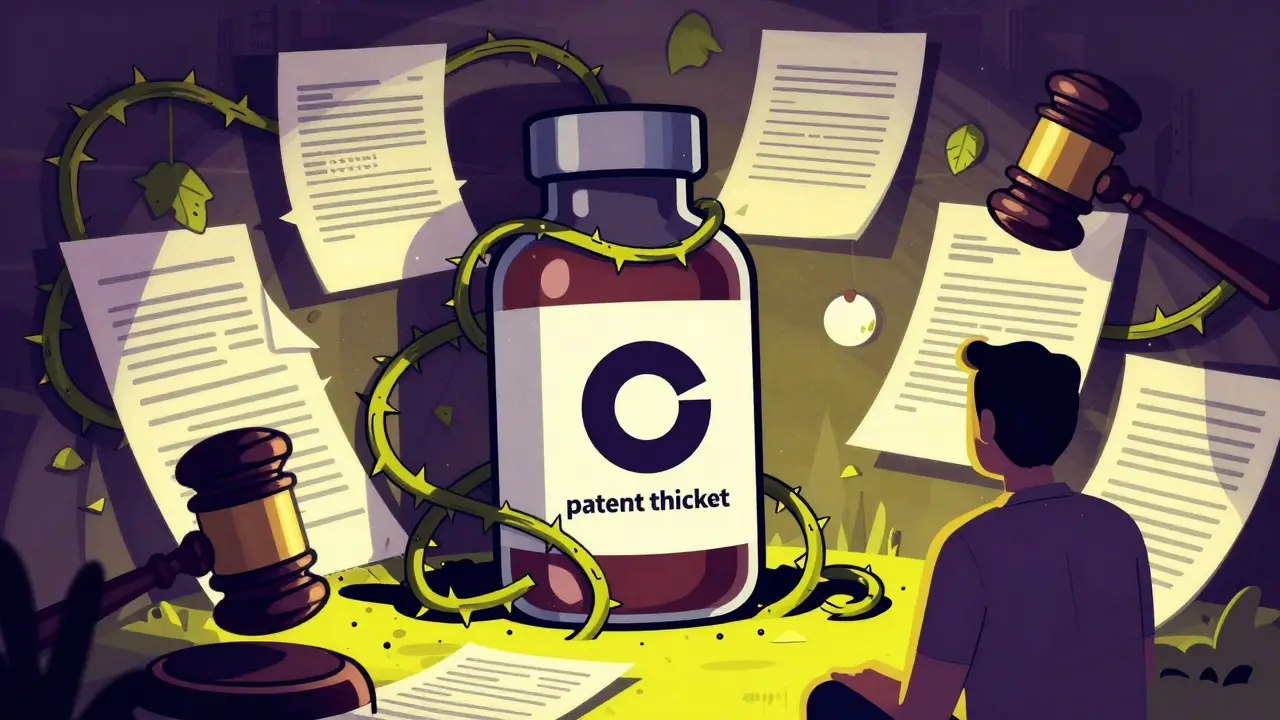
There's also the "patent thicket." Even after the FDA approves a biosimilar, the original manufacturer often sues to protect their patents. According to the FTC, patent litigation has delayed the entry of 68% of approved biosimilars. This creates a bottleneck where the FDA says a drug is safe and effective, but it still can't be sold in stores because of a legal battle.
What's Next for Biologic Alternatives?
The landscape is shifting rapidly. We are seeing the first simultaneous interchangeability approvals for multiple products, such as the recent denosumab biosimilar pairs (Enoby and Xtrenbo). As the FDA finalizes its 2025 draft guidance by June 2026, we can expect a surge in approvals-potentially jumping from 8-10 per year to 15-20.
For patients, the goal is simple: more choices and lower prices. For the FDA, it's about balancing that access with absolute safety. By moving away from expensive clinical trials and toward high-precision analytical science, the agency is betting that we can predict how a drug works in a human body just by looking at its molecular fingerprints.
Is a biosimilar the same as a generic drug?
No. A generic is a chemically identical copy of a small-molecule drug. A biosimilar is a highly similar version of a complex biologic drug grown in living cells. Because they are made from living organisms, they cannot be identical, but they are designed to have the same clinical effect.
What does "interchangeable" actually mean?
An interchangeable biosimilar is one that can be substituted for the reference product by a pharmacist without the intervention of the prescribing healthcare provider. While the FDA is moving toward treating all biosimilars as interchangeable, state laws may still require a doctor's approval for the switch.
Why are biosimilars cheaper than the original biologic?
The original manufacturer spent billions on the initial research, development, and clinical trials to prove the drug works. Biosimilar developers don't have to repeat those massive efficacy trials; they only need to prove their version is "highly similar" to the one already on the market, which significantly lowers development costs.
Will switching to a biosimilar affect my treatment's effectiveness?
For the vast majority of patients, the effect is the same. Most patients report comparable efficacy. However, some may experience slight differences in side effects, such as different reactions at the injection site, due to the slight structural differences between the two biological products.
How long does it take for the FDA to approve a biosimilar?
Historically, it took 8 to 10 years. With the new 2025 streamlined guidance, that timeline is expected to drop to 5 to 7 years by reducing the reliance on long-term comparative efficacy studies.