
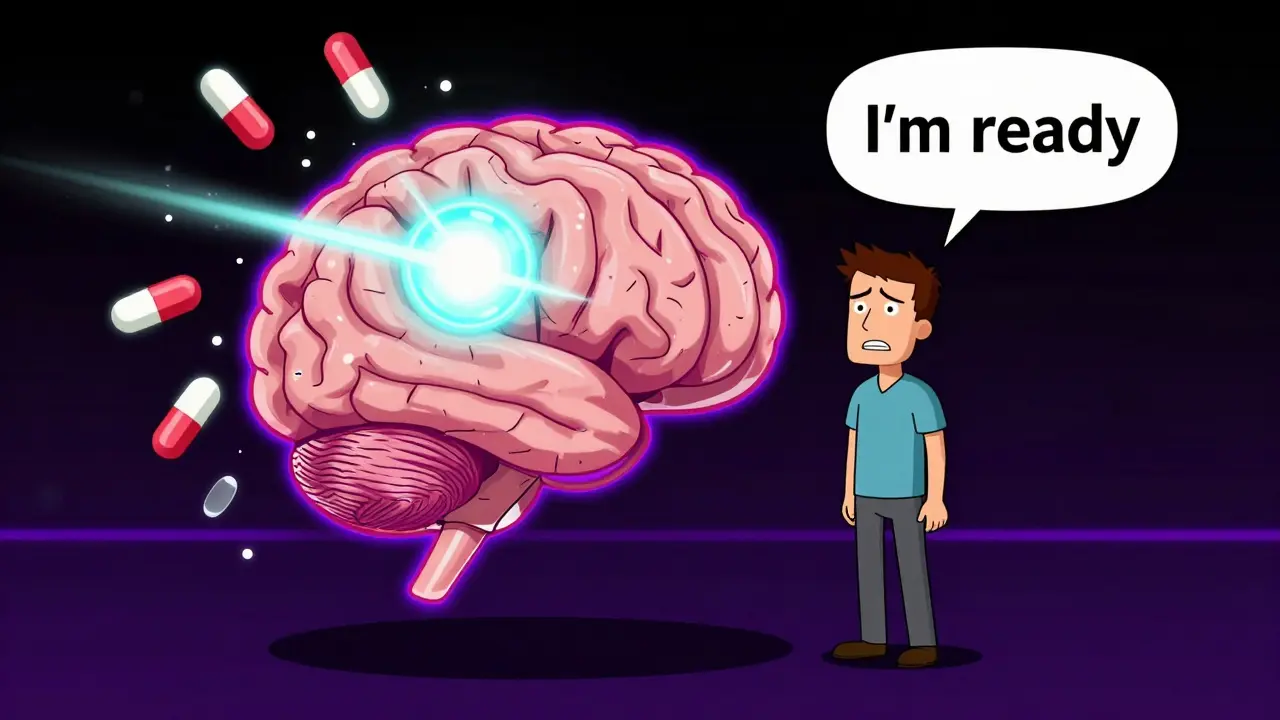
When medications stop working for epilepsy, surgery isn’t just an option-it’s often the best chance at a normal life. For many people with drug-resistant epilepsy, surgery offers a real shot at becoming seizure-free. Yet, too many wait years, afraid or unaware, while their lives stall. The truth is, epilepsy surgery isn’t a last resort. It’s a targeted, effective treatment-if you know when to consider it.
Who Actually Qualifies for Epilepsy Surgery?
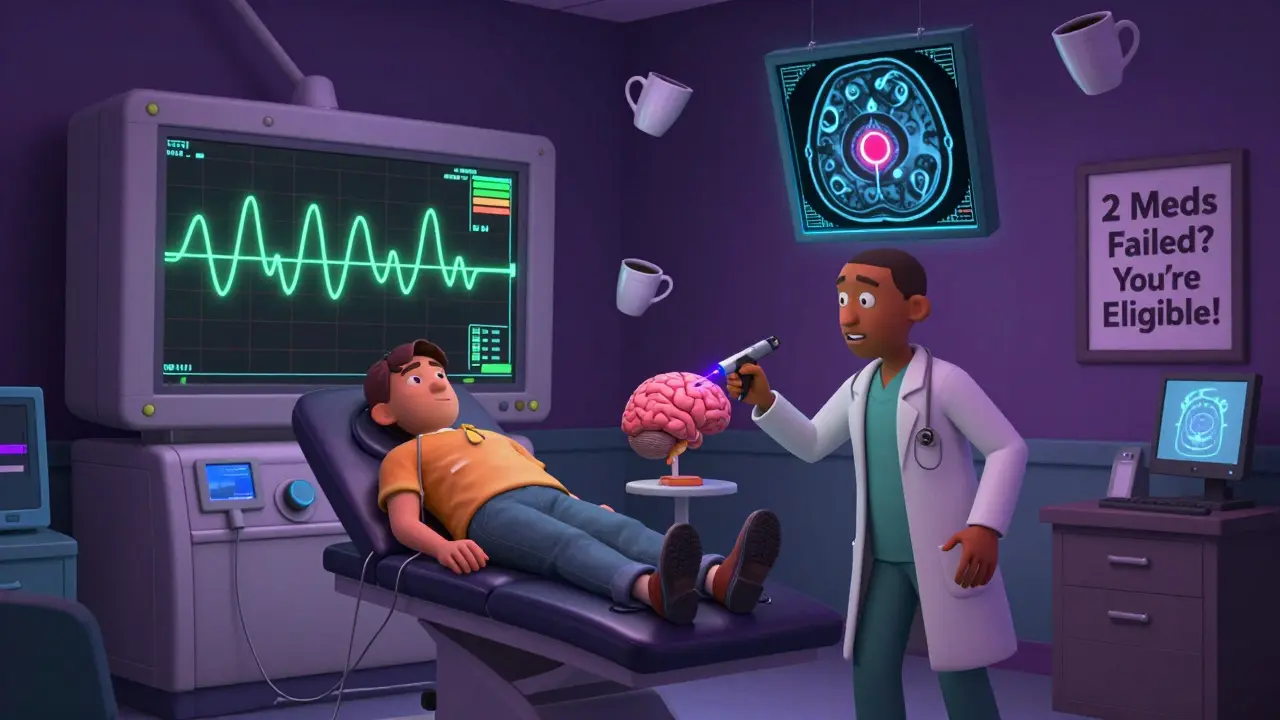
You don’t need to try every drug under the sun before thinking about surgery. The International League Against Epilepsy (ILAE) says if two appropriate anti-seizure medications have failed, it’s time to get evaluated. That’s it. No waiting two years. No waiting until seizures become "bad enough." If your seizures are disabling-whether you’re having 15 seizures a month or just one that leaves you injured or unable to drive-surgery should be on the table.
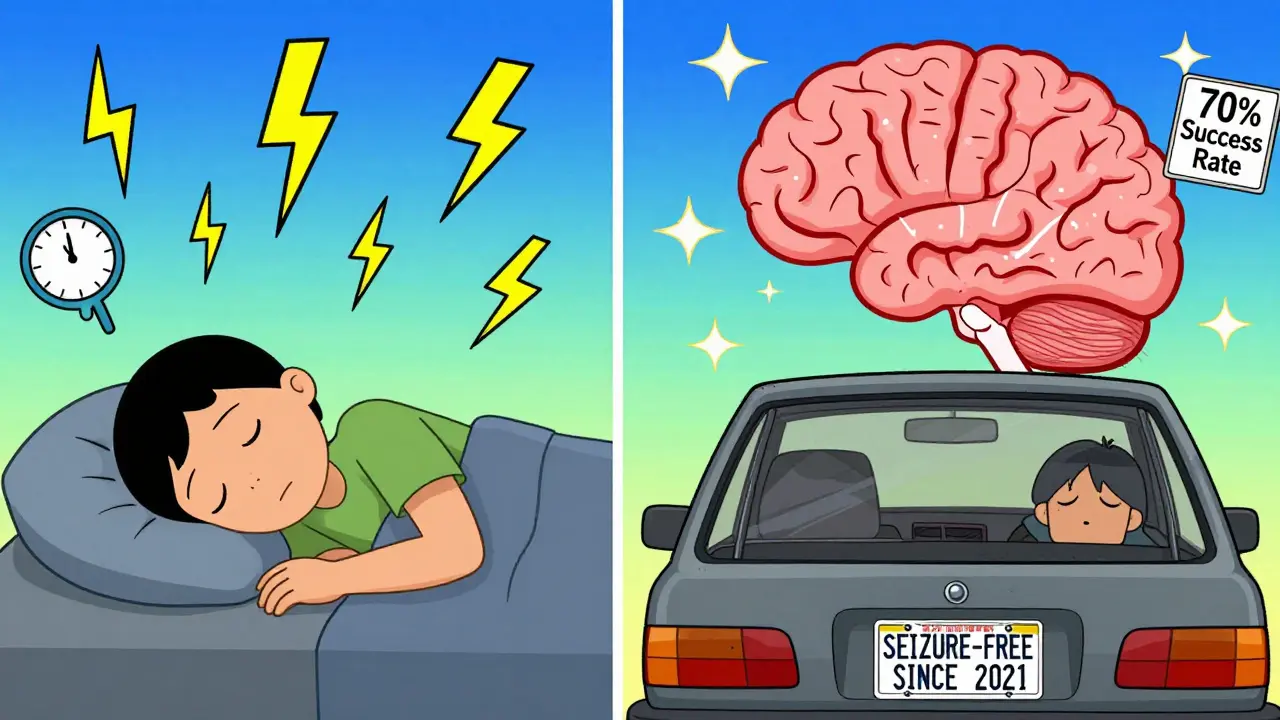
But not everyone with drug-resistant epilepsy is a candidate. The key is localization. Your seizures must come from a single, identifiable area in the brain. This is most common in mesial temporal lobe epilepsy with hippocampal sclerosis, where the seizure origin is clear and the brain region can be safely removed. About 65-70% of people with this specific condition become seizure-free after surgery.
For kids, the rules are even more urgent. If a child has tuberous sclerosis complex, infantile spasms (West syndrome), or another known condition with a 80-90% chance of drug resistance, surgery shouldn’t wait. The brain is still developing. The sooner seizures are stopped, the better the long-term cognitive outcomes.
On the flip side, if seizures come from multiple areas or spread quickly across the brain-like in generalized epilepsy-resection surgery won’t help. That doesn’t mean no options exist. Devices like responsive neurostimulation (RNS) or vagus nerve stimulation (VNS) might still be viable. But for resective surgery, a clear, single seizure focus is non-negotiable.
The Risks Are Real-But Often Overstated
People hear "brain surgery" and think of paralysis, memory loss, or death. The reality is more nuanced. For a standard temporal lobectomy, the most common epilepsy surgery, the risk of permanent neurological damage is just 1-2%. That means most people walk out with no new deficits. Transient side effects-like temporary weakness, trouble finding words, or mild memory blips-are more common, affecting 5-10%. These usually fade within weeks.
Memory issues are the biggest concern, especially for those with left-sided surgeries. If the seizure focus is on the left side (the language-dominant hemisphere), some patients report difficulty recalling names or words afterward. But studies show this is often mild and improves over time. A 2021 multicenter study found that 78% of patients had no lasting memory decline one year after surgery.
There’s also the risk of infection, bleeding, or swelling. These happen in about 5% of cases and are treatable. The real danger? Not doing anything. Sudden unexpected death in epilepsy (SUDEP) kills about 1 in 1,000 people with epilepsy each year. Surgery cuts that risk dramatically. One long-term study showed a 70% reduction in SUDEP among those who became seizure-free after surgery.
On Reddit, a user wrote: "After my left temporal lobectomy, I went from 15-20 seizures a month to zero. I got my license back at 38. I’ve been seizure-free for three years." That’s not a miracle. It’s the expected outcome for many.
What Can You Actually Expect After Surgery?
Success isn’t just "seizure-free" or "no change." Outcomes are measured in tiers. The Engel Classification is the gold standard:
- Class I: Completely seizure-free (65-80% for temporal lobe cases)
- Class II: Rare, disabling seizures (maybe one every few months)
- Class III: Noticeable improvement, but still has seizures
- Class IV: No change or worse
For people with temporal lobe epilepsy, about 70% reach Class I within two years. For those with focal cortical dysplasia or tumors, results are similar. But if your seizures come from the frontal lobe or the brain’s deeper structures, the chance of complete freedom drops to 50-60%.
The biggest win isn’t just fewer seizures-it’s life back. A 2021 study found that 79% of patients who became seizure-free regained the ability to drive. Many returned to work, stopped relying on caregivers, and finally slept through the night. One woman, 52, told her neurologist: "I didn’t realize how tired I was until I stopped having seizures. I feel like I’ve been living in slow motion for 20 years. Now I’m awake."
Even if you don’t go completely seizure-free, a 75% reduction in seizures can be life-changing. Fewer hospital visits. Less medication. Less fear. That’s still a win.
Why So Few People Get Evaluated
Here’s the shocking part: an estimated 1.2 million Americans have drug-resistant epilepsy. But only about 5,000 surgeries are done each year. That’s less than 2% of those who could benefit.
Why? Three big reasons:
- Doctors don’t refer early. Many neurologists still wait two years or until three drugs fail. The ILAE says: don’t wait. Refer at two.
- Patients are scared. A 2019 study found half of those referred declined evaluation because they feared brain surgery. Fear of memory loss, paralysis, or death keeps people from even starting the process.
- Access is limited. Only 150 centers in the U.S. are designated Level 4 epilepsy centers-where the full team (epileptologist, neurosurgeon, neuropsychologist, EEG techs) is available. Most are in big cities. Rural patients often travel hundreds of miles.
Insurance is another hurdle. Nearly half of initial authorization requests get denied. But 78% of appeals get approved. If you’re told "no," ask for help. Patient navigator programs-like the one from the Epilepsy Surgery Alliance-have cut no-show rates by more than half.
What the Evaluation Process Actually Looks Like
It’s not a single test. It’s a 2-6 week deep dive into your brain and your life:
- Video-EEG monitoring: You’re hooked up for 5-7 days while your seizures are recorded. This pins down exactly where they start.
- High-res 3T MRI: Looks for scars, tumors, or abnormal brain tissue. A 1mm slice is needed to catch small lesions.
- FDG-PET scan: Shows areas of low brain metabolism-often the seizure focus.
- Neuropsychological testing: Checks memory, language, and thinking skills. This helps predict what might change after surgery.
- Intracranial EEG (if needed): Electrodes are placed directly on the brain to map seizures with extreme precision. This happens in about 20-30% of cases.
And yes, you need to keep a detailed seizure diary. Not just "I had a seizure." But time, duration, symptoms, triggers, and what happened right before. This helps the team match your experience with the brain data.
What’s New in Epilepsy Surgery
Traditional open surgery isn’t the only option anymore. Laser interstitial thermal therapy (LITT) is a minimally invasive alternative. A thin laser probe is inserted through a small hole in the skull. Heat destroys the seizure focus under real-time MRI guidance. Recovery is faster-often just 1-2 days in the hospital. Seizure freedom rates are around 55% at one year, slightly lower than open surgery but with far fewer complications (only 2.3% vs. 8.7%).
For patients who aren’t candidates for resection, devices like responsive neurostimulation (RNS) are growing. The FDA expanded its approval in 2022 to include some generalized epilepsies. It doesn’t cure epilepsy, but it can cut seizures by 50-70% over time.
And the future? Better imaging. AI that predicts seizure zones. More centers outside major cities. The ILAE’s Global Surgery Initiative aims to raise referral rates to 5% annually by 2025. That’s still low, but it’s progress.
Is It Worth It?
Let’s talk numbers. A 2023 cost-analysis study found that if surgery stops your seizures, it pays for itself in three years. How? Fewer ER visits. Less medication. Fewer missed workdays. One patient saved $120,000 in healthcare costs over five years after surgery. The societal benefit? Over $1.2 million per person over ten years.
But money isn’t the point. The point is: you can live again. You can drive. You can work. You can sleep without fear. You can plan for the future.
If you’ve tried two meds and still have disabling seizures, you’re not too late. You’re right on time.
How do I know if I’m a candidate for epilepsy surgery?
You’re a candidate if you have drug-resistant epilepsy-meaning two appropriate anti-seizure medications have failed-and your seizures originate from a single, identifiable area of the brain. You must also be medically fit for surgery and willing to undergo a full presurgical evaluation. Pediatric patients with conditions like tuberous sclerosis or infantile spasms may qualify even earlier. A team of epileptologists, neurosurgeons, and neuropsychologists will review your case to determine if the benefits outweigh the risks.
What’s the success rate for epilepsy surgery?
Success depends on the type of epilepsy. For mesial temporal lobe epilepsy with hippocampal sclerosis, about 65-70% of patients become seizure-free after surgery. For other focal epilepsies, rates range from 50-70%. If seizures come from multiple brain areas or are generalized, surgery is less likely to help. Even if you’re not completely seizure-free, a 50-75% reduction in seizures can dramatically improve quality of life.
What are the most common risks of epilepsy surgery?
The most common risks include temporary memory or language changes, especially with left-sided temporal surgery. Permanent neurological deficits-like weakness or vision loss-occur in only 1-2% of cases. Infection, bleeding, or swelling happen in about 5% of surgeries but are usually treatable. The risk of death is less than 0.5%. For many, the bigger risk is not acting: continuing to live with uncontrolled seizures increases the chance of sudden unexpected death in epilepsy (SUDEP).
How long does the evaluation process take?
The full presurgical evaluation typically takes 2 to 6 weeks. It includes prolonged video-EEG monitoring (5-7 days), high-resolution 3T MRI, FDG-PET scans, neuropsychological testing, and sometimes intracranial EEG. The goal is to confirm where seizures start and ensure removing that area won’t damage essential functions like speech or memory.
Is surgery the only option if medications fail?
No. If surgery isn’t an option-because seizures come from multiple brain areas or can’t be localized-other treatments exist. Devices like responsive neurostimulation (RNS) or vagus nerve stimulation (VNS) can reduce seizure frequency. Dietary therapies like the ketogenic diet may also help. But for those with a clear seizure focus, surgery offers the highest chance of long-term freedom.
Comments
Pat Fur
March 24, 2026 AT 22:43Just read this and I’m crying. Not because it’s sad, but because I wish someone had told me this five years ago. I waited until I almost lost my job, then my license, then my confidence. Surgery wasn’t "last resort"-it was my first real chance. Now I drive, I travel, I sleep through the night. It’s not magic. It’s medicine. And it works.
Linda Foster
March 26, 2026 AT 06:26Thank you for presenting this information with such clinical precision and evidentiary support. The data presented aligns with current guidelines from the International League Against Epilepsy and reinforces the importance of early referral. This is precisely the kind of evidence-based communication that improves patient outcomes.
Rama Rish
March 26, 2026 AT 20:46Chris Farley
March 28, 2026 AT 00:55You people act like brain surgery is some miracle cure. Meanwhile, in Russia, China, and even Germany, they use cheaper, smarter methods-like neural feedback and diet protocols. We’re overmedicalizing everything. This country spends billions on invasive procedures while ignoring lifestyle factors. You’re being sold a bill of goods.
Darlene Gomez
March 28, 2026 AT 13:58Chris, I hear you-but you’re ignoring the data. The 70% seizure-free rate for temporal lobe cases isn’t anecdotal. It’s replicated across 12 countries over 20 years. And yes, diet and lifestyle help-but they don’t replace a lesion in the hippocampus. This isn’t about American overmedicalization. It’s about giving people back their lives. I’ve seen kids who couldn’t walk after seizures, walk into graduation after surgery. That’s not a scam. That’s science.
Katie Putbrese
March 29, 2026 AT 17:09How can you just say "surgery is safe" like it’s no big deal? What about the people who lose their memory? Or their personality? I know a guy who got surgery and now he can’t remember his wife’s name. You’re glorifying risk. What about natural healing? Prayer? Energy work? There’s more to life than cutting open skulls.
Jacob Hessler
March 30, 2026 AT 19:14Amber Gray
April 1, 2026 AT 01:02Danielle Arnold
April 1, 2026 AT 19:04Wow. A 10-page essay on how to cut open someone’s brain and call it hope. Meanwhile, the real problem is that no one told me this until I was 40. And now I’m the one who has to beg for insurance approval. Congrats, you wrote a textbook. The system still sucks.