
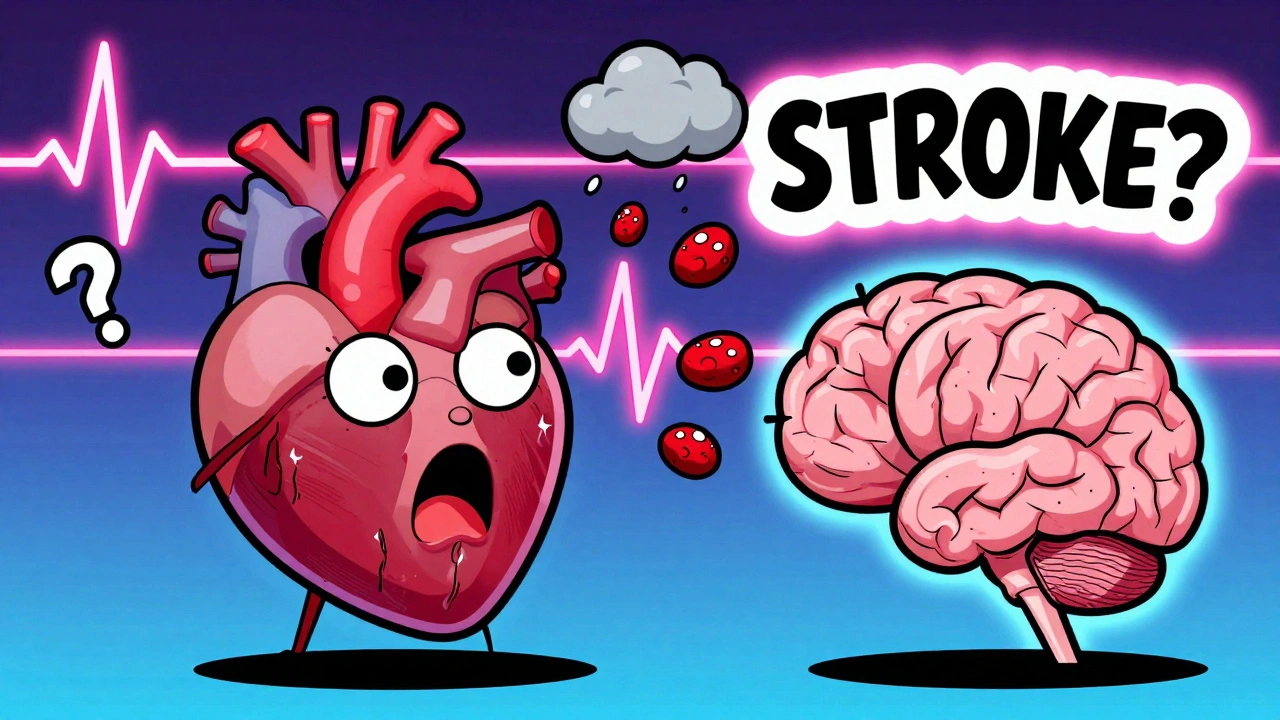
When you’re diagnosed with atrial fibrillation (AFib), one of the first big questions you’ll face is: rate control or rhythm control? And how does any of this actually help prevent a stroke?
It’s not just about slowing down your heartbeat. It’s about choosing a path that fits your life, your age, your other health problems, and your long-term goals. For decades, doctors leaned hard on rate control. But things have changed-fast. New studies, better procedures, and smarter drugs are turning the old playbook upside down.
What Is Atrial Fibrillation?
Atrial fibrillation is when the upper chambers of your heart (the atria) beat irregularly and often too fast. Instead of pumping blood smoothly, they quiver. That messes up blood flow. Blood can pool, clot, and then get swept into the rest of your body. If that clot reaches your brain? Stroke.
People with AFib are four to five times more likely to have a stroke than those without it. That’s why anticoagulants like warfarin or newer blood thinners (apixaban, rivaroxaban) are almost always part of the plan-no matter which strategy you pick.
AFib isn’t just about strokes, though. It can cause fatigue, shortness of breath, dizziness, and chest pressure. For some, it’s barely noticeable. For others, it’s life-limiting.
Rate Control: Slowing Down the Pace
Rate control means accepting that your heart might stay in AFib-but keeping the lower chambers (ventricles) from racing. The goal? Keep your resting heart rate between 60 and 100 beats per minute, or up to 110 if you’re older or less active.
The RACE II trial in 2011 showed that letting your heart go up to 110 bpm at rest (lenient control) works just as well as trying to keep it under 80 bpm (strict control). That’s huge. It means less medication, fewer side effects, and simpler management.
Common drugs for rate control:
- Beta-blockers (metoprolol, atenolol): Reduce heart rate and blood pressure. Good for people with high blood pressure or coronary disease.
- Calcium channel blockers (diltiazem, verapamil): Also slow the heart. Avoid if you have heart failure.
- Digoxin: Slows the heart but doesn’t work well during exercise. Often used in older adults.
Amiodarone can also be used for rate control in emergencies, especially in the ER, and studies show it works faster and more reliably than digoxin in rapid AFib.
Rate control is often the first choice for older patients (75+), those with few symptoms, or people with multiple other health issues. It’s easier to start, easier to manage, and carries fewer risks from drug side effects.
Rhythm Control: Getting Back to Normal
Rhythm control tries to fix the problem at its source: the irregular rhythm itself. The goal is to restore and keep your heart in normal sinus rhythm.
This used to mean electrical cardioversion (a quick shock under sedation) or antiarrhythmic drugs like amiodarone, flecainide, or sotalol. But those drugs have serious side effects-lung damage, thyroid problems, liver issues. And they often stop working over time.
Now, catheter ablation is changing everything. A thin tube is threaded into your heart to burn or freeze the spots causing the bad signals. Complication rates have dropped from over 20% in the 2000s to under 5% today. Success rates are higher, especially for younger patients with paroxysmal AFib (that comes and goes).
The big shift came with the EAST-AFNET 4 trial in 2020. It followed nearly 2,800 people diagnosed with AFib within the past year. Half got early rhythm control-drugs or ablation-within 12 months. The other half got standard rate control.
After five years, the early rhythm group had 21% fewer major events: fewer heart attacks, fewer strokes, fewer hospitalizations for heart failure, and fewer deaths. That’s not a small difference. It’s life-changing.
Because of this, the 2023 European Society of Cardiology guidelines now say: “Early rhythm control should be offered to patients with AFib regardless of symptom severity.” That’s a huge change from just five years ago.
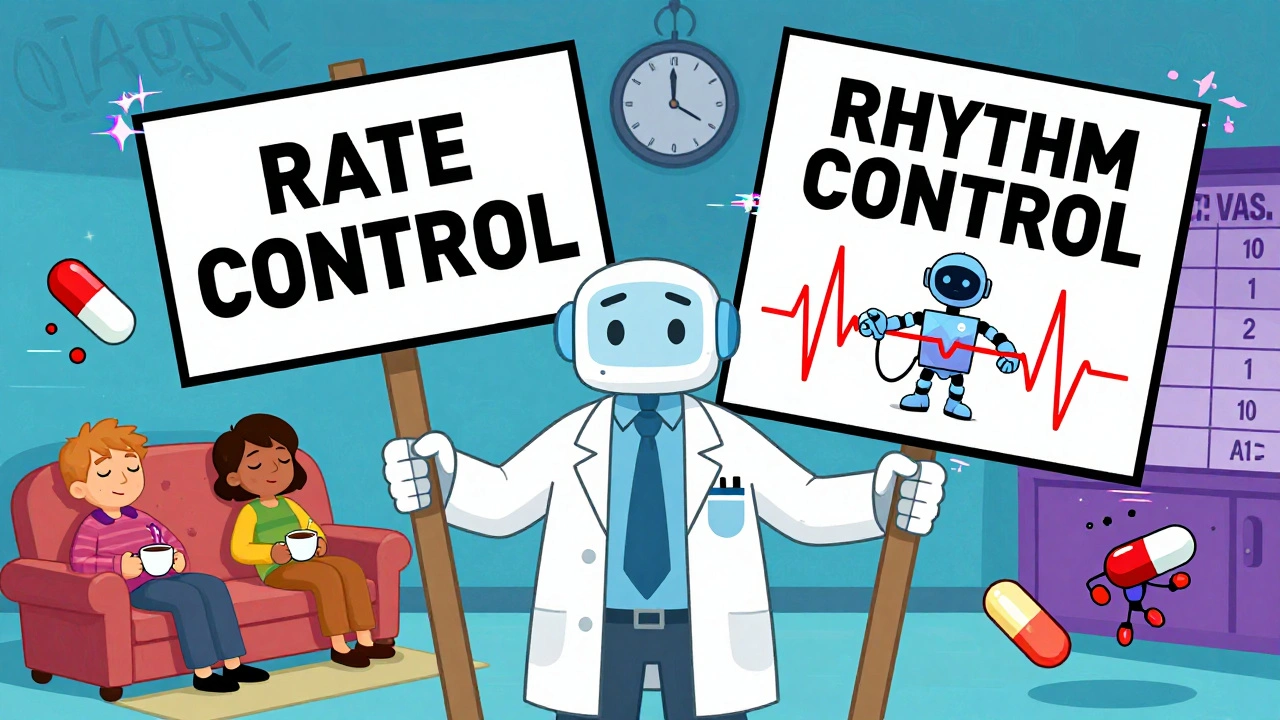
Stroke Prevention: The One Thing Both Strategies Share
Here’s the critical point: whether you choose rate or rhythm control, you still need anticoagulation. Many people think if their heart rhythm is back to normal, they can stop blood thinners. That’s dangerous.
The AFFIRM trial showed most strokes in AFib patients happened when warfarin was stopped-or when the blood-thinning level was too low. Even if you’ve had a successful ablation and are in normal rhythm for months, you can still develop clots.
Doctors use the CHA₂DS₂-VASc score to decide who needs blood thinners. It looks at things like age, high blood pressure, diabetes, prior stroke, and sex. If your score is 2 or higher, you almost always need a blood thinner-even if you’re in rhythm.
There’s no shortcut here. Skipping anticoagulation is the #1 preventable cause of stroke in AFib patients.
Who Gets Which Strategy?
There’s no one-size-fits-all. Your choice depends on your age, symptoms, heart health, and lifestyle.
Rate control is often better for:
- People over 75
- Those with few or no symptoms
- Patients with multiple chronic conditions (like kidney disease or COPD)
- Those who don’t want to risk drug side effects or invasive procedures
Rhythm control is often better for:
- People under 65
- Those with paroxysmal AFib (comes and goes)
- Patients with heart failure, especially if their pumping ability is low
- Anyone whose symptoms don’t improve with rate control
- Those with a CHA₂DS₂-VASc score of 2 or higher who want to reduce long-term stroke risk
And here’s something new: even if you’re not having symptoms, if you’re under 75 and diagnosed early, rhythm control is now recommended. Why? Because early intervention may protect your heart from long-term damage.

What About the Old Studies?
You might hear doctors say, “The AFFIRM trial showed no difference in survival.” That’s true-but it’s outdated.
The AFFIRM trial ended in 2002. The average patient was nearly 70. Ablation was risky and rarely used. The drugs were older and harsher. The trial didn’t even look at early intervention.
Today, we have better tools, better timing, and better data. The EAST-AFNET 4 trial didn’t just confirm what we thought-it changed it. It proved that acting early, not waiting until symptoms get bad, makes a real difference.
Don’t let old studies steer your care. Ask: “What does the latest evidence say for someone like me?”
The Future: Personalized Care
AFib treatment is moving away from one-size-fits-all. Now it’s about matching the strategy to your biology, your age, your heart structure, and your goals.
Some people will always do better with rate control. Others will thrive with rhythm control. And for many, it’s not an either-or choice. You might start with rate control, then switch to rhythm control if symptoms return.
Emerging trials like ASSERT II (expected results in 2025) are testing whether early ablation helps people with AFib and heart failure with preserved ejection fraction-a group that’s been hard to treat.
The message is clear: AFib isn’t just a rhythm problem. It’s a heart health problem. And the best way to protect yourself isn’t just to slow your heart-it’s to protect your brain, your heart muscle, and your future.
What Should You Do Next?
If you have AFib:
- Get your CHA₂DS₂-VASc score calculated. Know your stroke risk.
- Ask if you’re on the right blood thinner-and if you’re taking it consistently.
- Discuss your symptoms: Are you tired? Short of breath? Can you walk up stairs?
- Ask your doctor: “Based on my age, heart health, and symptoms, do you recommend rate or rhythm control?”
- If you’re under 75 and newly diagnosed, ask about early rhythm control-even if you feel fine.
- Find out if ablation is an option in your area. It’s not available everywhere, but access is improving.
AFib doesn’t have to mean a life of limitations. With the right strategy, many people live full, active lives-without strokes, without hospitalizations, without constant fear.
Is rhythm control better than rate control for preventing stroke?
Rhythm control doesn’t directly prevent stroke-anticoagulants do. But by restoring normal heart rhythm earlier, rhythm control reduces the risk of heart failure and other events that can lead to stroke. The EAST-AFNET 4 trial showed early rhythm control lowered stroke risk by 21% over five years compared to rate control alone. That’s because keeping the heart in rhythm reduces long-term damage and clot formation.
Can I stop blood thinners if I get a successful ablation?
No-not without your doctor’s approval. Even after a successful ablation, you may still need blood thinners for months or years. The risk of stroke doesn’t disappear just because your rhythm is normal. Doctors use your CHA₂DS₂-VASc score to decide when it’s safe to stop. Many patients stay on anticoagulants long-term, regardless of rhythm.
What are the risks of rhythm control drugs like amiodarone?
Amiodarone is effective but can cause serious side effects over time: lung scarring, thyroid problems, liver damage, and vision changes. It’s usually reserved for patients who can’t tolerate other drugs or need long-term rhythm control. Newer drugs like dronedarone or flecainide have fewer side effects but aren’t safe for everyone-especially those with heart failure. Always get regular blood tests and lung checks if you’re on these medications.
Is ablation worth it for someone over 70?
It depends. For healthy, active people over 70 with severe symptoms and no major heart disease, ablation can be very effective. But if you have multiple other health problems, the risks may outweigh the benefits. Success rates drop slightly with age, and recovery takes longer. Your doctor should weigh your overall health, not just your age, when recommending ablation.
Can I switch from rate control to rhythm control later?
Yes, absolutely. Many people start with rate control because it’s simpler, then switch to rhythm control if symptoms return or worsen. There’s no rule that says you have to stick with one strategy forever. The key is to monitor how you feel and talk to your doctor regularly. If you’re getting more tired, short of breath, or having more episodes, it’s time to reconsider.
Why do some doctors still recommend rate control?
Because it still works well for many people-especially older adults with few symptoms or multiple health issues. Rate control is less invasive, cheaper, and has fewer side effects than rhythm control drugs or ablation. It’s not outdated-it’s just not the only option anymore. Doctors who stick with rate control aren’t ignoring new science-they’re choosing what’s safest and most practical for their patient’s individual situation.
Comments
Elizabeth Crutchfield
December 4, 2025 AT 14:16Ben Choy
December 6, 2025 AT 14:08Jenny Rogers
December 6, 2025 AT 17:23zac grant
December 7, 2025 AT 11:28michael booth
December 7, 2025 AT 21:27Carolyn Ford
December 7, 2025 AT 23:17Heidi Thomas
December 9, 2025 AT 02:27Alex Piddington
December 9, 2025 AT 15:24Libby Rees
December 11, 2025 AT 09:41Dematteo Lasonya
December 12, 2025 AT 16:24Rudy Van den Boogaert
December 14, 2025 AT 14:17Gillian Watson
December 15, 2025 AT 09:39Jordan Wall
December 16, 2025 AT 13:17Gareth Storer
December 16, 2025 AT 20:18Pavan Kankala
December 17, 2025 AT 02:44