
Benzodiazepine Interaction Checker
Check Your Medications
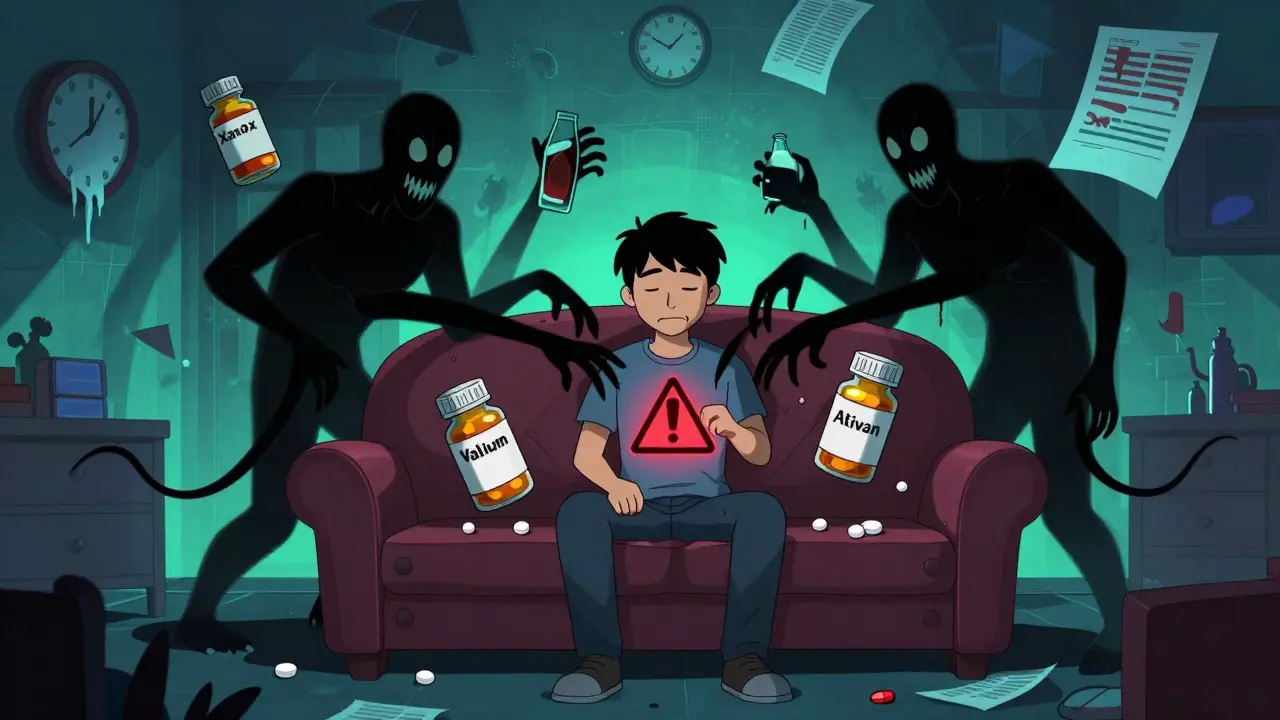
When anxiety hits hard, doctors sometimes turn to benzodiazepines - drugs like Xanax, Valium, and Ativan - because they work fast. Unlike SSRIs that take weeks to help, these medications can calm panic in under an hour. But what most people don’t realize is how dangerous they become when mixed with other common drugs. The risks aren’t just theoretical. They’re written in hospital records, overdose reports, and patient stories that start with, "I didn’t know it could kill me." Benzodiazepines work by boosting GABA, a calming chemical in the brain. That’s why they help with anxiety, muscle spasms, seizures, and even alcohol withdrawal. But that same mechanism makes them powerful depressants. When you add another depressant - like an opioid painkiller, alcohol, or even some sleep meds - your breathing slows down. Not just a little. Enough to stop. And sometimes, it does. In 2019, the U.S. Food and Drug Administration (FDA) made a rare move: they forced every benzodiazepine drug to carry a Boxed Warning - the strongest type of alert they can issue. The message? Combining these drugs with opioids, alcohol, or other CNS depressants can cause respiratory failure, coma, or death. The data behind it is chilling. Between 2011 and 2016, 75% of benzodiazepine-related overdose deaths involved opioids. That’s not coincidence. It’s chemistry. Consider this: if you’re taking oxycodone for chronic pain and your doctor adds alprazolam for anxiety, your risk of fatal overdose jumps 15 times higher than if you were just using opioids alone. A 2018 CDC study confirmed this. And it’s not just opioids. Mixing benzodiazepines with alcohol is equally dangerous. One drink might not seem like much, but when paired with a single dose of diazepam, it can turn a night in with friends into an emergency room visit. Older adults face even greater risks. A 2019 study in the Journal of the American Geriatrics Society found that people over 65 who take benzodiazepines have a 50% higher chance of falling and breaking a hip. That risk triples if they’re also on a sleep aid, antihistamine, or painkiller. Falls aren’t just painful - they’re often deadly for seniors. Yet many doctors still prescribe these drugs without checking what else the patient is taking. Compare this to alternatives like buspirone or SSRIs. Buspirone doesn’t cause dependence or interact dangerously with other drugs. SSRIs like sertraline or escitalopram take 4 to 6 weeks to work, but once they do, they’re safe for long-term use. And they don’t slow your breathing. In 2022, 68% of new anxiety prescriptions were SSRIs. Only 22% were benzodiazepines. The shift is real. More doctors are choosing safety over speed. But here’s the problem: benzodiazepines are still widely prescribed. In 2019, about 1 in 8 U.S. adults used one. Many get them for "short-term" anxiety - after surgery, during a crisis, or while waiting for an SSRI to kick in. That’s fine… if it stays short-term. The real danger starts when prescriptions stretch into months or years. About 40% of people who use benzodiazepines for six months or longer develop physical dependence. Quitting suddenly can trigger seizures, hallucinations, or rebound anxiety worse than before. Withdrawal isn’t just uncomfortable. It’s dangerous. Short-acting drugs like alprazolam (Xanax) leave your system quickly, so withdrawal hits harder and faster. Tapering off requires slow, careful reductions - often 5% to 10% every one or two weeks. Long-acting drugs like diazepam (Valium) are easier to taper, but still require medical supervision. Most people don’t realize this. They stop cold turkey because they think they’re "just tired of taking pills." That’s how some end up in the ER. Patient stories online reveal how common this is. One Reddit user, u/AnxietyWarrior2020, wrote about being prescribed Xanax while already on oxycodone. Within two weeks, he stopped breathing in his sleep and was rushed to the hospital. A pharmacy student on Drugs.com shared seeing multiple near-fatal cases from the same combo. These aren’t outliers. They’re predictable outcomes of poor prescribing. The FDA’s 2020 warning wasn’t just a recommendation. It was a mandate. All benzodiazepine packaging now includes clear warnings about interactions with opioids, alcohol, and CNS depressants. Medication guides must be handed out at the pharmacy. But awareness is still low. A 2022 American Medical Association report found that only 43% of primary care doctors routinely screen for these dangerous combinations. Some states are stepping in. Since 2020, states with prescription drug monitoring programs (PDMPs) that flag benzodiazepine-opioid combinations have seen a 27% drop in these risky pairings. In January 2023, Medicare started requiring prior authorization for any prescription that includes both a benzodiazepine and an opioid. The message? This combination is too dangerous to be handed out casually. The American Psychiatric Association updated its guidelines in 2023: benzodiazepines should only be used after SSRIs or SNRIs have failed, and never for longer than four weeks. And if a patient is already on opioids? Don’t prescribe benzodiazepines at all. Period. So what should you do if you’re on one of these drugs? First, know what you’re taking. Check the name and dosage. Second, tell your doctor every other medication you use - even over-the-counter sleep aids, muscle relaxers, or antihistamines. Third, never mix with alcohol. Not even a glass of wine. Fourth, if you’ve been on it for more than a few weeks, don’t quit on your own. Ask about a taper plan. The truth is, benzodiazepines aren’t evil drugs. They’ve helped people survive panic attacks, seizures, and trauma. But they’re like power tools - useful in the right hands, deadly when misused. The real issue isn’t the medication. It’s the lack of awareness around what it does when combined with other things. That’s changing. Slowly. But you don’t have to wait for the system to catch up. Ask questions. Know your risks. And if your doctor doesn’t bring up interactions, bring it up yourself. There’s a better way to manage anxiety. But if you’re using benzodiazepines, you need to know the rules. Because the stakes aren’t just about feeling better. They’re about staying alive.
Comments
Mike Hammer
February 15, 2026 AT 14:39Also, doctors never asked what else I took. Just wrote the script.
Joe Grushkin
February 16, 2026 AT 17:20Virginia Kimball
February 17, 2026 AT 19:31Also, SSRIs made me feel like a zombie for six months. No thanks. I’ll take the short-term tool any day.
Michael Page
February 18, 2026 AT 05:13Josiah Demara
February 18, 2026 AT 09:57Charlotte Dacre
February 19, 2026 AT 17:47Esha Pathak
February 20, 2026 AT 18:55Daniel Dover
February 22, 2026 AT 10:28Chiruvella Pardha Krishna
February 23, 2026 AT 19:12Kapil Verma
February 23, 2026 AT 20:28Mandeep Singh
February 25, 2026 AT 08:40Betty Kirby
February 26, 2026 AT 20:22Kaye Alcaraz
February 26, 2026 AT 22:05Sarah Barrett
February 27, 2026 AT 13:10Erica Banatao Darilag
February 27, 2026 AT 22:53