

Medication Interaction Checker
Select medications, supplements, and alcohol to check for potential interactions. This tool is for informational purposes only and doesn't replace professional medical advice.
Not all medicines are created equal - and neither are their side effects. Whether you're taking a prescription pill, an over-the-counter pain reliever, or a herbal supplement labeled "natural," each one carries its own risks. What works for one person might cause a reaction in another. And the biggest surprise? Sometimes the safest-looking option - like an herbal tea or vitamin - can be the most dangerous when mixed with your regular meds.
Prescription and OTC Drugs: Same Active Ingredient, Different Risks
When your doctor prescribes a medication, you’re getting something tested, approved, and tightly regulated. The FDA requires brand-name drugs to go through years of clinical trials before they hit the market. Generic versions must prove they deliver the same active ingredient at the same strength and work the same way in your body. By law, they must be absorbed within 80-125% of the brand-name version. That’s considered clinically acceptable - and most of the time, it is. But here’s what most people don’t realize: generics and brand-name drugs often have different inactive ingredients. These include fillers, dyes, preservatives, and binders. For someone with a lactose intolerance, a generic version of a blood pressure pill might contain lactose as a filler - triggering bloating, cramps, or diarrhea. Another person might be allergic to the dye in the brand-name version but tolerate the generic just fine. For drugs with a narrow therapeutic index (NTI), even tiny differences matter. Levothyroxine (for thyroid issues) and warfarin (a blood thinner) are two of the most common NTI drugs. A small change in how much of the drug gets into your bloodstream can mean the difference between effective treatment and a dangerous side effect - like a stroke or uncontrolled bleeding. That’s why many pharmacists and doctors recommend sticking with the same manufacturer for these drugs, whether it’s brand or generic. Switching between different generic brands of levothyroxine? That’s not advised without close monitoring.Complementary Medicines: The Wild West of Side Effects
Echinacea. Feverfew. St. John’s Wort. Ginkgo. These sound harmless, right? They’re sold in health food stores, labeled "natural," and often assumed to be safe. But here’s the truth: they’re not regulated like prescription drugs. The FDA doesn’t require pre-market testing for supplements. That means no one checks if they actually contain what’s on the label, or if they’re contaminated with heavy metals, pesticides, or even hidden pharmaceuticals. Echinacea, often taken for colds, has been linked to more than 20 different reactions - including asthma attacks, hives, swelling, and stomach upset. Feverfew, used by some for migraines, can trigger uterine contractions. In animal studies, it’s been tied to miscarriages. Pregnant women should avoid it completely. St. John’s Wort is one of the most dangerous supplements when mixed with other meds. It boosts serotonin levels - which sounds good, until you’re also taking an antidepressant like sertraline or fluoxetine. The result? Serotonin syndrome: tremors, high fever, rapid heartbeat, low blood pressure, and in severe cases, death. It doesn’t take much - just one extra capsule a day. Ginkgo and chamomile? Both increase bleeding risk. If you’re on warfarin, aspirin, or even ibuprofen, combining them with these herbs can turn a minor cut into a serious bleed. And alcohol? It doesn’t just interact with antibiotics - it can cause liver damage when mixed with acetaminophen, spike blood pressure with certain antidepressants, and cause dizziness or fainting with blood pressure meds.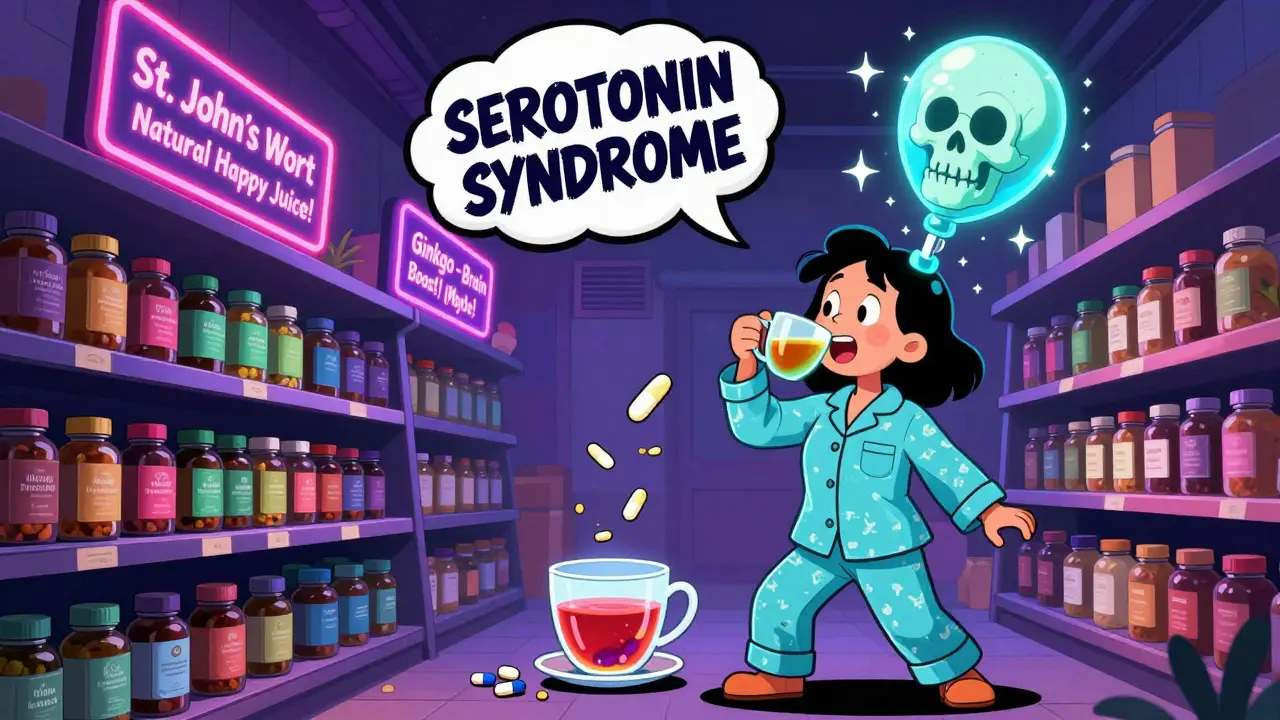
Why Switching Between Brand and Generic Can Backfire
You’ve probably been told that generics are just as good. And for most drugs - yes, they are. A major 2008 study reviewed 837 patients on cardiovascular medications and found no meaningful difference between brand and generic versions. For beta-blockers, diuretics, statins, and antiplatelet drugs, the evidence shows they work the same. But here’s the catch: not all drugs are created equal in practice. Some patients report worse symptoms after switching from Celexa to generic citalopram for depression. Others with epilepsy say their seizures returned after switching to a different generic version of their antiepileptic drug. A 2008 study in the PMC database found that patients who switched generics for seizure meds ended up with more doctor visits and higher overall costs - not because the drug failed, but because side effects spiked. Why? Because even small changes in absorption, or differences in inactive ingredients, can throw off people with sensitive systems. If you’ve been stable on a brand-name drug for years, switching to a generic isn’t always a simple swap. Talk to your doctor before making the change. And if you do switch, watch for new symptoms - fatigue, mood swings, dizziness, or unusual pain - for the first two weeks.What You Should Do Before Taking Anything New
Don’t assume something is safe just because it’s natural or sold without a prescription. Here’s what to do before adding any new medication - prescription, OTC, or supplement - to your routine:- Check the label - Look for inactive ingredients. If you’re allergic to soy, lactose, or sulfites, read the full list. Generic versions often change fillers, so check every time you refill.
- Ask about interactions - Tell your doctor or pharmacist every supplement, herb, or vitamin you take. Even if you think it’s "just a tea." Many people don’t mention them because they don’t think it counts.
- Be extra careful with NTI drugs - If you’re on warfarin, levothyroxine, digoxin, or certain seizure meds, stick with the same version. Don’t switch between brands or generics without your doctor’s approval.
- Monitor your body - Keep a simple log: what you took, when, and any new symptoms. Even mild ones. A rash, upset stomach, or strange fatigue could be a reaction.
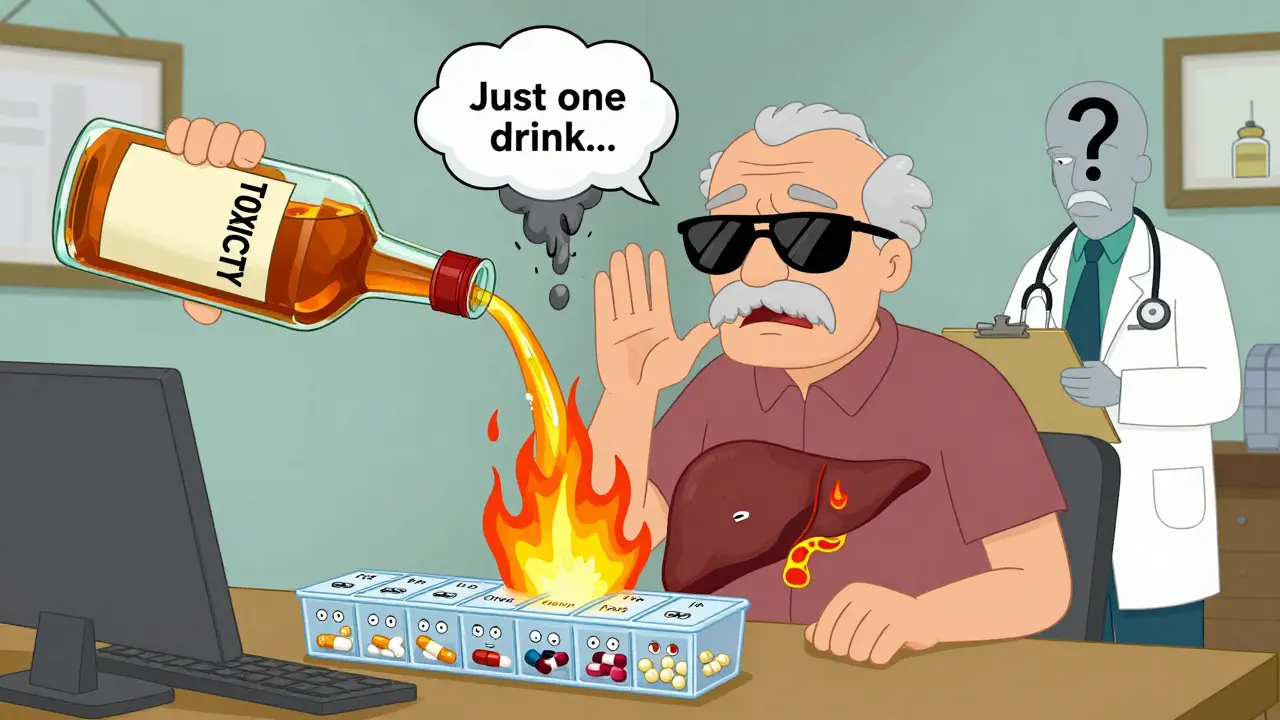
- Don’t mix with alcohol - Alcohol stays in your system for hours. Even if you had a drink the night before, it can still interact with your meds the next day.
Who Should Be Extra Cautious?
Some people are at higher risk for bad reactions:- Pregnant or breastfeeding women - Many herbs and OTC meds are unsafe. Feverfew, ginkgo, and even high-dose vitamin A can harm fetal development.
- Older adults - Metabolism slows with age. A dose that was fine at 50 might be too strong at 70. Multiple medications also increase interaction risk.
- People with liver or kidney disease - Your body can’t clear drugs the same way. Side effects build up faster.
- Those on multiple medications - The more drugs you take, the higher the chance of a dangerous interaction. Five or more meds? You’re in the high-risk zone.
It’s not about avoiding medicine. It’s about using it wisely. A pill that helps your blood pressure might be perfect - until you start taking a new supplement that makes it too strong. Or a generic version that works fine for most people triggers a reaction in you because of a hidden filler.
When to Call Your Doctor
You don’t need to panic over every little change. But if you notice any of these after starting or switching a medication, call your provider:- Sudden skin rash, hives, or swelling
- Unexplained bruising or bleeding
- Confusion, dizziness, or fainting
- Heart palpitations or chest pain
- Severe nausea, vomiting, or dark urine
- Changes in mood, sleep, or energy that don’t match your condition
These aren’t normal. They’re signals. And they’re more common than people think - especially with complementary medicines.
Are generic drugs really the same as brand-name drugs?
For most medications, yes - the active ingredient is identical and works the same way. But inactive ingredients like fillers or dyes can differ, which may cause reactions in people with allergies or intolerances. For drugs with a narrow therapeutic index - like warfarin or levothyroxine - even small differences in absorption can matter, so switching isn’t always safe without monitoring.
Can herbal supplements really cause serious side effects?
Absolutely. St. John’s Wort can trigger life-threatening serotonin syndrome when mixed with antidepressants. Echinacea can cause asthma attacks or allergic reactions. Feverfew may trigger miscarriages in pregnancy. And because supplements aren’t regulated like drugs, you can’t always trust what’s in the bottle - some contain hidden pharmaceuticals or contaminants.
Why do some people have bad reactions when switching from brand to generic?
It’s usually not the active ingredient - it’s the inactive ones. A person allergic to a dye in the brand-name version might tolerate the generic. But others, especially those on NTI drugs like seizure medications or blood thinners, can experience worsened symptoms due to slight differences in how the drug is absorbed. Studies show some patients need more doctor visits and higher costs after switching.
Is it safe to take supplements with prescription meds?
Not without checking. Ginkgo, chamomile, and garlic increase bleeding risk with blood thinners. Echinacea interferes with liver-metabolized drugs. St. John’s Wort can cancel out birth control or cause serotonin overload with antidepressants. Always tell your pharmacist or doctor everything you’re taking - even if you think it’s "just a tea."
What should I do if I think a medication is causing side effects?
Don’t stop suddenly unless it’s an emergency. Write down what you’re taking, when you started, and what symptoms you’re having. Then contact your doctor or pharmacist. They can help determine if it’s the medication, an interaction, or something else. For NTI drugs, never switch brands or generics without professional guidance.
Comments
Sue Stone
January 24, 2026 AT 07:56I switched from brand Celexa to generic citalopram last year and started having panic attacks out of nowhere. No one warned me. My doctor said "it's the same drug"-but my body said otherwise. Took me three months to figure it out. Now I only take the brand. Don't let them gaslight you about generics.
Oladeji Omobolaji
January 26, 2026 AT 07:14Man, I just took some St. John’s Wort because my cousin said it helped her anxiety. Two days later I felt like my brain was buzzing under a microwave. Had to go to urgent care. Never again. Natural doesn’t mean safe.
Stacy Thomes
January 27, 2026 AT 10:27THIS. THIS IS SO IMPORTANT. I’m a nurse and I’ve seen people end up in the ER because they thought turmeric was "just a spice." It’s not. It thins your blood. Combine that with warfarin? You’re playing Russian roulette with your veins. Please, please read labels. Your body will thank you.
dana torgersen
January 27, 2026 AT 12:50ok so i just wanna say… i took ginkgo because i wanted to "boost my memory" and then i started bleeding from my gums?? like… not a lot but enough to be scary?? and then i found out it interacts with my blood pressure med?? and i didn’t even know i was on a NTI drug?? i feel so dumb but also like… why is this not on the bottle??
Susannah Green
January 29, 2026 AT 07:14People treat supplements like candy because they’re sold next to granola bars. But they’re pharmacologically active compounds-some with half-lives longer than your average antidepressant. The FDA doesn’t regulate them because Congress passed the DSHEA in 1994 under pressure from lobbyists. That’s not a loophole-it’s a liability. And if you’re over 65 and on five meds? You’re not just at risk-you’re a walking pharmacokinetic minefield. Read the insert. Every time. Even if the bottle says "natural."
Also, lactose isn’t just in dairy. It’s in 15% of all generic pills. If you’re sensitive, ask for a lactose-free version. Pharmacists can special-order them. Don’t suffer bloating because someone thought "filler" didn’t matter.
And for the love of all that’s holy-don’t mix alcohol with acetaminophen. Even one drink. Liver failure doesn’t come with a warning label. It comes with a transplant list.
And yes, switching levothyroxine brands can make you feel like you’re slowly drowning in fatigue. It’s not in your head. It’s in the excipients. The TSH might look fine, but your mitochondria are screaming.
Document everything. Name, dose, time, symptom. Even if it’s "just a headache." Patterns matter. Your doctor won’t remember your 17 supplements. You have to.
And if your pharmacist says "it’s fine," ask them to check the interaction database. Not all of them do. I’ve seen too many patients get dismissed because their symptoms don’t fit a textbook.
Knowledge isn’t power here. It’s survival.
Anna Pryde-Smith
January 30, 2026 AT 08:47HOW IS THIS NOT A PUBLIC HEALTH CRISIS?? People are dying from herbal tea and no one’s talking about it. The FDA is asleep at the wheel and pharmacies are pushing generics like they’re a sale at Walmart. My aunt had a stroke because she switched levothyroxine brands and no one told her. She’s paralyzed now. This isn’t science-it’s negligence.
Dawson Taylor
January 31, 2026 AT 03:06The distinction between active and inactive ingredients reveals a deeper truth: medicine is not merely chemistry, but also biology in context. What is inert to one body may be catastrophic to another. The assumption of equivalence is a simplification that ignores individuality. Regulation may standardize labels, but it cannot standardize human physiology.
charley lopez
February 2, 2026 AT 00:06Pharmacokinetic variability in NTI drugs is well-documented in the literature, particularly regarding bioequivalence thresholds. The 80–125% AUC range, while statistically acceptable for population-level efficacy, fails to account for pharmacodynamic heterogeneity in subpopulations with comorbidities or polypharmacy. Furthermore, the absence of mandatory labeling of excipient profiles in OTC supplements represents a critical gap in risk mitigation infrastructure.
Janet King
February 2, 2026 AT 22:57