

When your body can’t make enough of the hormones that keep you alive, even small stressors like a cold or a missed meal can turn dangerous. That’s the reality for people living with Addison’s disease - a rare but life-threatening condition where the adrenal glands stop producing cortisol and aldosterone. It doesn’t show up on routine blood tests. It’s often mistaken for the flu, chronic fatigue, or depression. And without the right treatment, it can kill you in hours.
What Actually Happens in Addison’s Disease?
Addison’s disease isn’t just low energy. It’s a complete breakdown of your body’s stress response system. Your adrenal glands - small triangles on top of your kidneys - normally make cortisol to handle stress, and aldosterone to balance salt and water. In Addison’s, these glands are destroyed, usually by your own immune system. This autoimmune attack doesn’t happen overnight. It takes years. By the time symptoms appear, you’ve already lost 90% of your adrenal function.
The classic signs aren’t subtle. Skin darkens - especially on knuckles, gums, and scars - because your body is pumping out too much ACTH, the hormone that tells your adrenals to work. You feel weak, dizzy, and nauseous. You crave salt. Your blood pressure drops. Your potassium rises. Sodium falls. These aren’t random quirks. They’re the direct result of missing cortisol and aldosterone.
Most cases today are autoimmune. In the 1800s, tuberculosis was the main cause. Now, in places like Australia, the US, and Europe, it’s almost always your immune system attacking your adrenals. About 80% of people with Addison’s have antibodies against 21-hydroxylase, a key enzyme in hormone production. That’s the fingerprint of the disease.
How Do Doctors Diagnose It?
Many patients wait years before getting the right diagnosis. One study found the average delay was over three years. Gastroenterologists see the vomiting and weight loss. Psychiatrists see the fatigue and depression. It’s not until someone orders a cortisol test that the truth comes out.
The gold standard is the ACTH stimulation test. You get a shot of synthetic ACTH. In a healthy person, cortisol jumps within 30 minutes. In someone with Addison’s, it barely moves. A cortisol level below 5 mcg/dL with an ACTH over 50 pg/mL is a clear red flag. Blood tests also show low aldosterone and high renin - proof the problem is in the adrenals, not the brain.
That’s the difference between primary and secondary adrenal insufficiency. In secondary, the pituitary gland doesn’t signal the adrenals. But the adrenals themselves are fine. So aldosterone stays normal. No skin darkening. No salt cravings. Only cortisol is low. That’s why testing both hormones matters.
Why Steroid Replacement Isn’t Just a Pill - It’s Survival
There’s no cure. But there is treatment. Lifelong steroid replacement. Not one pill. Two.
First, hydrocortisone. It replaces cortisol. Most people take 15-25 mg per day, split into two or three doses. The morning dose is bigger - mimicking your body’s natural rhythm. You need it for energy, blood sugar, and immune function. But here’s the catch: too much raises your risk of heart disease. Too little, and you risk adrenal crisis. The window is razor-thin.
Second, fludrocortisone. It replaces aldosterone. Usually 50-300 mcg daily. It stops you from losing salt, keeps your blood pressure up, and prevents dangerous potassium spikes. Without it, you’d be in constant danger of fainting or heart rhythm problems.
These aren’t optional. They’re as essential as insulin for type 1 diabetes. Miss a dose? You’re one step away from crisis.
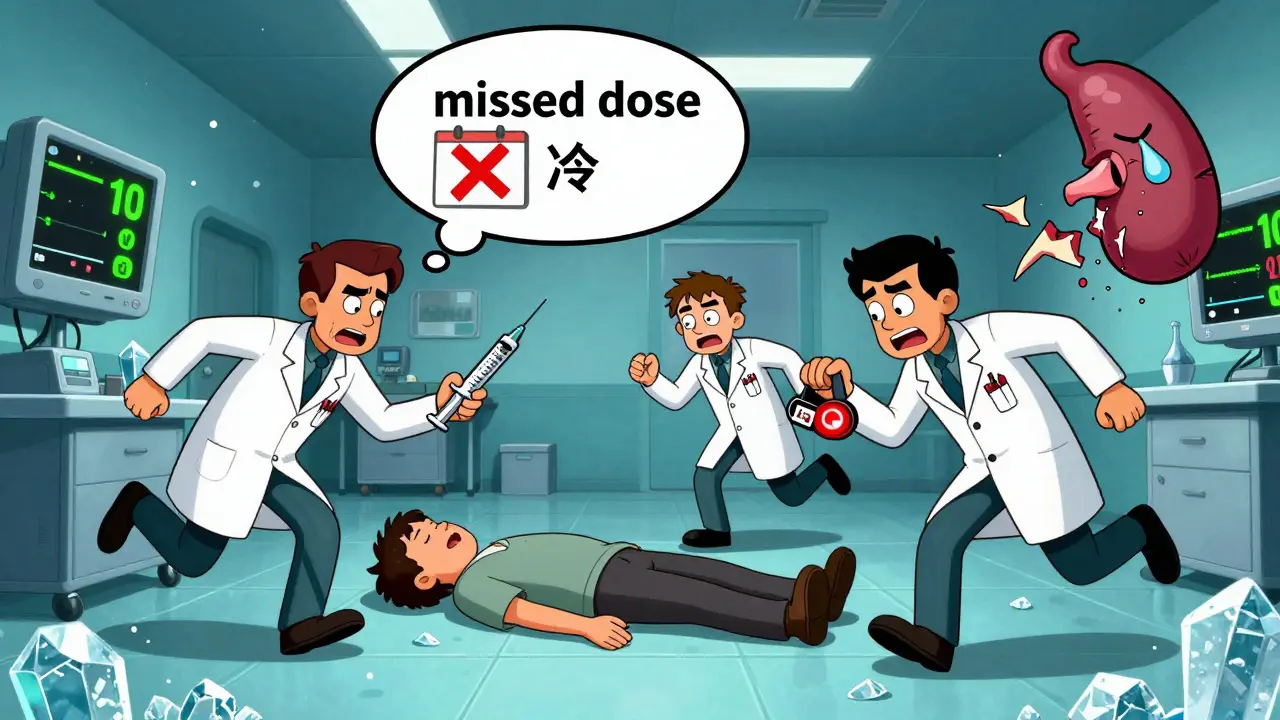
Adrenal Crisis: The Silent Killer
An adrenal crisis is a medical emergency. It’s not a bad day. It’s shock. Vomiting. Severe pain. Low blood pressure. Unconsciousness. Death can come in hours if you don’t act.
The most common triggers? Infection (39%), gastroenteritis (25%), and forgetting to take your meds (18%). Even a dental cleaning or a fever can set it off. That’s why every patient must carry an emergency injection kit - 100 mg of hydrocortisone for IM or IV use.
Doctors don’t wait for tests in crisis. They give the shot immediately. Every hour of delay increases death risk by 3-5%. The Endocrine Society says: “Treat first, confirm later.”
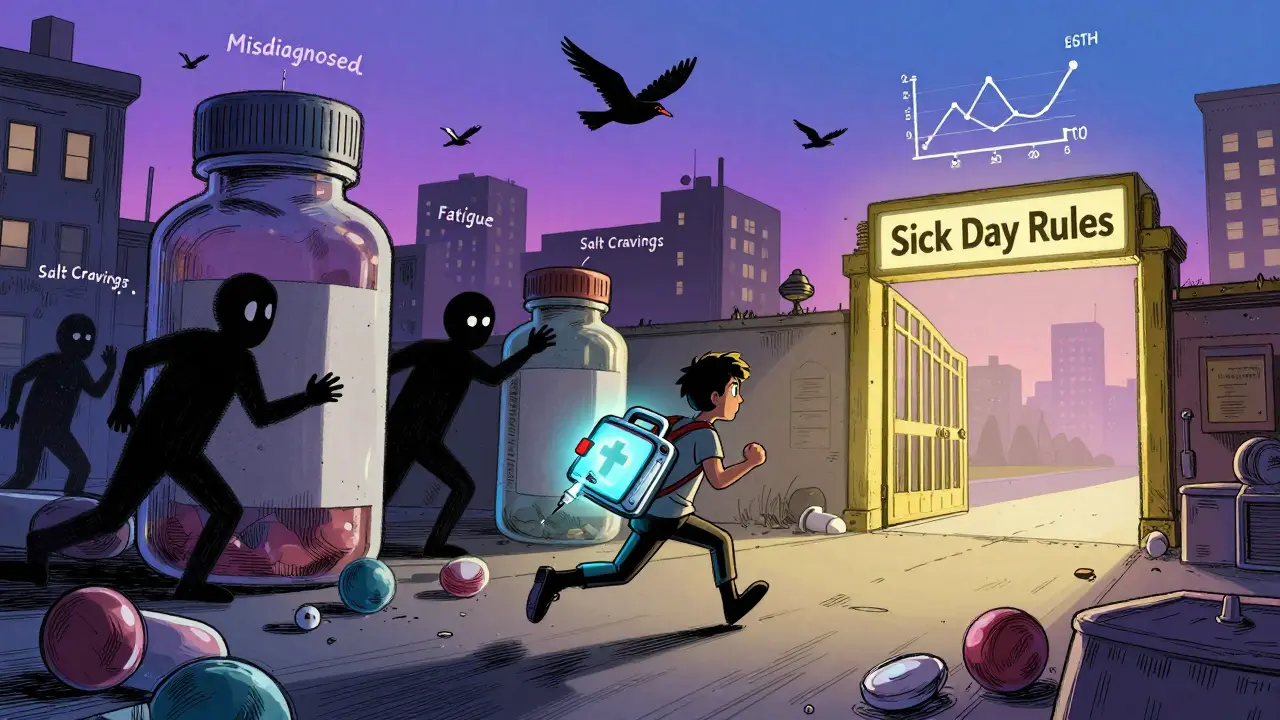
But prevention is better than rescue. That’s where the “sick day rules” come in. If you’re sick - even with a cold - you double or triple your hydrocortisone. If you can’t keep pills down, you use the injection. No exceptions. The Addison’s Disease Self Help Group found that 85% of patients who learned these rules had fewer crises.
The Hidden Burden: Life on Steroids
People with Addison’s aren’t just managing a hormone deficiency. They’re managing fear.
One Reddit user wrote: “The constant fear of crisis during illness is exhausting.” Another: “Finding doctors who understand the 3 a.m. dose adjustment during fever is nearly impossible.” These aren’t complaints. They’re survival strategies.
Many patients are misdiagnosed for years. Some end up in emergency rooms multiple times before being correctly identified. Even after diagnosis, getting the dose right is hard. Over-replacement increases heart attack risk by 44%. Under-replacement triples your chance of crisis. That’s why regular blood tests - electrolytes, renin, cortisol - are non-negotiable.
And the costs? In the US, hydrocortisone can run $350-$500 a month without insurance. One in four patients ration their meds. In Australia, it’s more affordable, but not always covered fully. That’s why adherence drops - not because people are careless, but because they can’t afford it.
New Hope: Better Treatments on the Horizon
For decades, treatment meant taking hydrocortisone 2-3 times a day. It didn’t mimic natural rhythm. It caused spikes and crashes.
Now, Chronocort - a modified-release hydrocortisone - was approved in 2023. It’s taken once daily and keeps cortisol levels steady. In trials, it cut cortisol swings by 37%. That means fewer crashes, better sleep, less fatigue.
And it’s not just pills. Researchers are testing wearable sensors that monitor cortisol in real time. One study predicts these devices could cut adrenal crises by 60% in five years. Imagine a device that alerts you before your cortisol drops too low - like a glucose monitor for diabetics.
Also, testing for 21-hydroxylase antibodies is now standard. It confirms autoimmune Addison’s, helps predict other autoimmune conditions (like thyroid disease or type 1 diabetes), and guides family screening.
What You Need to Do - Right Now
If you’ve been told you have Addison’s disease:
- Carry your emergency injection kit - always. Not in your purse. Not in your car. On your person.
- Wear a medical alert bracelet. It says “Addison’s Disease” and “Emergency Hydrocortisone Required.”
- Know your sick day rules. Double or triple your dose at the first sign of illness. If you vomit, use the injection.
- Get your electrolytes checked every 6-12 months. Ask for renin and cortisol levels.
- Screen for other autoimmune conditions. Thyroid, diabetes, B12 deficiency - they often come together.
If you suspect you might have it - unexplained fatigue, dark skin, salt cravings, dizziness - demand a cortisol test. Don’t wait. Don’t accept “it’s just stress.”
Final Thought: You’re Not Alone
Addison’s disease is rare. But the community isn’t. Thousands of people live with it - and thrive. They work. They travel. They raise kids. They run marathons. They just do it with a different set of rules.
The key isn’t perfection. It’s preparedness. One injection. One alert. One conversation with your doctor. That’s what turns a life-threatening condition into a manageable one.
Can Addison’s disease be cured?
No, Addison’s disease cannot be cured. The damage to the adrenal glands is permanent. But it can be managed effectively with lifelong steroid replacement therapy - hydrocortisone for cortisol and fludrocortisone for aldosterone. With proper dosing and emergency preparedness, people with Addison’s can live full, active lives.
What happens if I miss a dose of hydrocortisone?
Missing one dose isn’t immediately dangerous, but it increases your risk of adrenal crisis, especially if you’re under stress - like during illness, injury, or surgery. If you forget a dose, take it as soon as you remember. If you’re feeling unwell, double or triple your next dose. Always carry an emergency injection kit. Never wait to see if symptoms get worse.
Why do people with Addison’s have dark skin?
The darkening, called hyperpigmentation, happens because your body produces too much ACTH - the hormone that normally tells your adrenals to make cortisol. When the adrenals fail, ACTH builds up. High ACTH also stimulates melanocytes (skin pigment cells), leading to dark patches on knuckles, elbows, gums, and scars. This is a hallmark of primary adrenal insufficiency and doesn’t occur in secondary forms.
Can I still exercise and play sports with Addison’s disease?
Yes - but you need to adjust your medication. Physical stress counts. Before intense exercise, you should increase your hydrocortisone dose by 50-100%. After, you may need to take extra fluids and salt. Many athletes with Addison’s compete at elite levels. The key is planning: know your body’s limits, carry emergency medication, and communicate with coaches or trainers.
Is Addison’s disease hereditary?
Addison’s disease itself isn’t directly inherited. But the autoimmune tendency that causes it often runs in families. If you have a close relative with autoimmune Addison’s, your risk of developing it - or another autoimmune disease like thyroiditis or type 1 diabetes - is higher. Genetic testing isn’t routine, but if you have a family history, it’s worth discussing antibody screening with your doctor.
What should I do if I’m going to the hospital for surgery?
You must inform your surgical team that you have Addison’s disease. You will need stress-dose steroids - typically 100 mg of hydrocortisone given intravenously before surgery, followed by a tapering schedule over 24-48 hours. Never assume they know. Bring your emergency injection kit and a letter from your endocrinologist. Many hospitals have protocols for adrenal patients, but you’re the one who must ensure they’re followed.
Can stress or emotional trauma trigger an adrenal crisis?
Yes. Emotional stress - like a divorce, job loss, or the death of a loved one - can be as triggering as physical illness. Cortisol is your body’s natural stress hormone. If you can’t make it, any major emotional event can push you into crisis. You should increase your hydrocortisone dose during prolonged emotional stress, even if you feel physically fine. Talk to your doctor about a stress dosing plan.
Are there any foods I should avoid or eat more of?
You don’t need a special diet, but salt is critical. Because you lose sodium through urine, you often need more salt than the average person - especially in hot weather or after exercise. Add extra salt to meals. Drink electrolyte solutions if you’re sweating a lot. Avoid very low-sodium diets. Potassium-rich foods (like bananas, potatoes, spinach) are fine, but monitor your levels - high potassium can be dangerous if your aldosterone is too low.
Comments
Shivam Pawa
February 28, 2026 AT 23:16Been living with this for 12 years. Hydrocortisone and fludrocortisone are non-negotiable. Miss a dose during a fever? You’re not just tired. You’re one step from crashing. Carrying the injection isn’t paranoia. It’s physics. Your body can’t make cortisol. So you supply it. Simple. No drama.
Diane Croft
March 1, 2026 AT 22:50This is the kind of post that makes me want to hug every person reading this. You’re not broken. You’re not lazy. You’re not imagining it. You’re surviving a biological betrayal and still showing up. That’s strength. Keep going.
Donna Zurick
March 2, 2026 AT 02:53My sister was misdiagnosed for 5 years as depression. Then she collapsed at work. Cortisol was 2.1. Now she’s on the right dose and runs marathons. Don’t wait. Demand the test. ACTH stimulation isn’t optional. It’s your lifeline.
Tobias Mösl
March 3, 2026 AT 10:39Let’s be real. This isn’t medicine. It’s corporate pharmacy control disguised as treatment. Hydrocortisone costs $500/month? That’s a racket. And Chronocort? A profit play. They don’t want you cured. They want you dependent. Always. Forever. The system doesn’t care if you live. It cares if you pay.
tatiana verdesoto
March 4, 2026 AT 04:20I’ve met so many people with Addison’s online. We’re not a niche. We’re a quiet army. And we’re not just surviving. We’re thriving. I work full-time, raise two kids, and hike every weekend. It’s not easy. But it’s possible. You’re not alone. Seriously. Look around. We’re here.
Ethan Zeeb
March 4, 2026 AT 16:53Stop calling this a ‘rare’ disease. It’s underdiagnosed because doctors are lazy. You don’t test cortisol unless you’re told to. That’s systemic negligence. And now you’re telling patients to carry emergency injections like it’s normal? No. It’s a failure of the entire healthcare infrastructure.
Darren Torpey
March 5, 2026 AT 02:54Imagine your body’s gas tank is broken. You don’t have a fuel pump. You just have a jug of gas in your pocket. Every morning, you pour it in. Not too much. Not too little. If you skip a pour, the engine sputters. If you pour too much, it catches fire. That’s Addison’s. No fancy tech. Just you. And your jug. And the quiet terror of forgetting.
Lebogang kekana
March 5, 2026 AT 05:35My cousin died in 2018 because the ER doctor thought it was food poisoning. No cortisol test. No injection. Just a chart that said ‘viral gastro.’ He was 27. This isn’t a medical condition. It’s a death sentence waiting for paperwork.
Jessica Chaloux
March 5, 2026 AT 06:54I cried reading this. I’ve had Addison’s since I was 19. Now I’m 34. I’ve lost jobs. Relationships. Sleep. But I still wear my bracelet. Still carry the shot. Still double my dose when I’m sad. This isn’t just hormones. It’s grief. And I’m so tired of being tired.
Mariah Carle
March 6, 2026 AT 02:18There’s a metaphysical layer here. Cortisol isn’t just a molecule. It’s the body’s answer to chaos. When you lose it, you’re not just losing a hormone. You’re losing your relationship with uncertainty. You become a prisoner of predictability. Every meal. Every step. Every breath. Controlled. Calculated. That’s the real cost.
Justin Rodriguez
March 6, 2026 AT 13:47For anyone reading this: if you’re newly diagnosed, don’t panic. Find an endocrinologist who specializes in adrenal disorders. Ask for renin and aldosterone levels. Track your symptoms. Keep a log. The right dose is a journey. Not a destination. And yes, you can live a full life. I’ve been doing it for 18 years.
Raman Kapri
March 7, 2026 AT 08:30This post is overly dramatic. Addison’s is not life-threatening if managed properly. The entire narrative is fearmongering. People take hydrocortisone for decades without incident. The ‘crisis’ scare tactic is used to sell more medication. Real medicine doesn’t need emergency kits. It needs discipline.
Siri Elena
March 7, 2026 AT 10:00Oh honey, you mean you don’t have a personal endocrinologist on speed dial? And you’re just using *pharmacy* hydrocortisone? Sweetie. That’s like using tap water for IV. You need the premium, custom-compounded version. The one with the French label. Otherwise, you’re basically just… existing.
Divya Mallick
March 7, 2026 AT 16:40Why is this even a thing? In India, we don’t have this problem. People just work. Eat salt. Drink water. No pills. No fear. This is a Western over-medicalization. You’re turning survival into a performance. Just be strong. Your body knows what to do. Stop asking for permission to live.
Pankaj Gupta
March 8, 2026 AT 05:05Thank you for this comprehensive overview. The distinction between primary and secondary adrenal insufficiency is critical, and the emphasis on renin and aldosterone levels is scientifically sound. I particularly appreciate the inclusion of real-world data on crisis triggers and the 85% reduction in events with sick-day rules. This is precisely the kind of evidence-based clarity the community needs.