
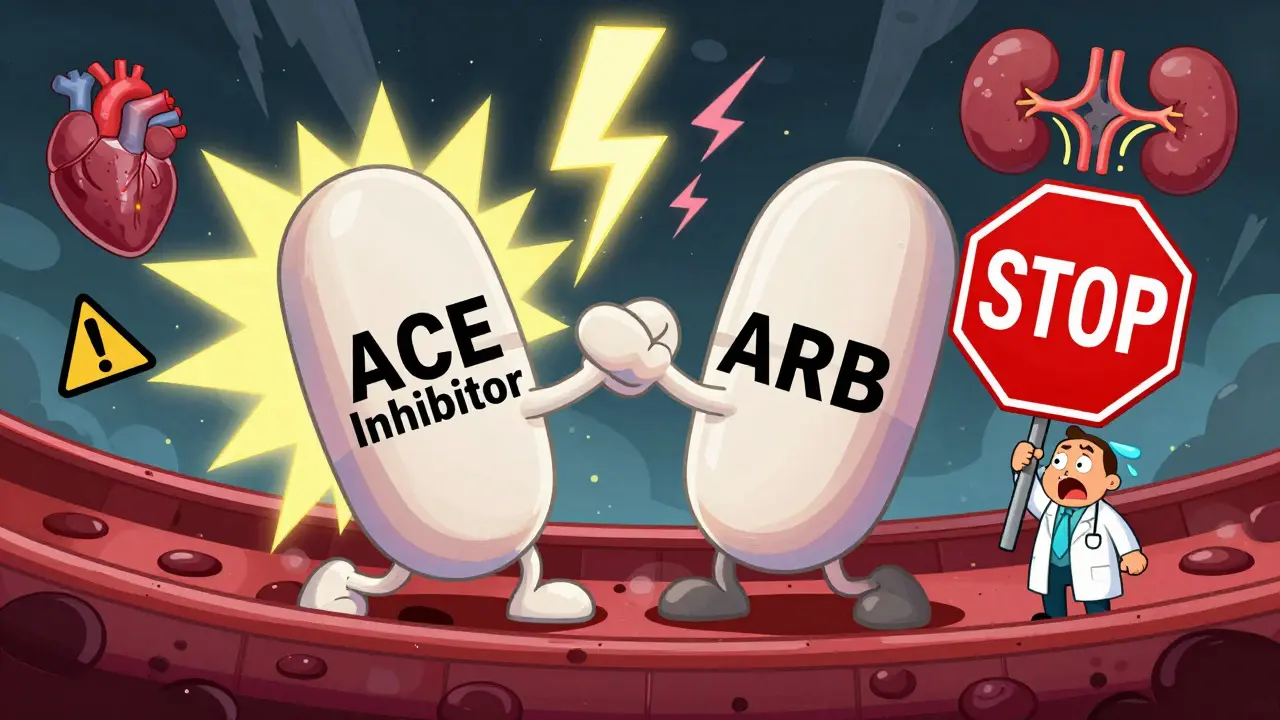
When you’re taking medication for high blood pressure, heart failure, or kidney disease, you expect it to help - not hurt. But when it comes to ACE inhibitors and ARBs, mixing them can be dangerous. Even though both drugs target the same system in your body, combining them doesn’t make them work better. It just makes side effects worse.
How ACE Inhibitors and ARBs Work
ACE inhibitors and ARBs both calm down the renin-angiotensin system (RAS), a hormone pathway that tightens blood vessels and raises blood pressure. But they do it in different ways.
ACE inhibitors - like lisinopril, enalapril, and ramipril - block the enzyme that turns angiotensin I into angiotensin II. Less angiotensin II means relaxed blood vessels and less fluid retention. That’s why they lower blood pressure and protect the kidneys in people with diabetes.
ARBs - such as losartan, valsartan, and irbesartan - work downstream. Instead of stopping angiotensin II from forming, they block its receptors. Think of it like shutting the door so angiotensin II can’t get in, even if it’s still floating around.
This difference matters. ACE inhibitors cause bradykinin to build up, which leads to a dry cough in 10-15% of users. ARBs don’t do that, so only 3-5% of people on ARBs get coughing. That’s why ARBs are often used when someone can’t tolerate ACE inhibitors.
The Real Risk: Combining Them
You might think, “If one is good, two must be better.” But that’s not true here. Studies show combining an ACE inhibitor with an ARB doesn’t improve survival, reduce heart attacks, or prevent kidney failure any more than using one alone.
What it does do is double the risk of dangerous side effects.
The ONTARGET trial in 2008 followed over 25,000 high-risk patients. Those on both drugs had a 2.3% chance of needing dialysis - more than double the 1% risk in those taking just ramipril (an ACE inhibitor). Hyperkalemia - dangerously high potassium - jumped from 2.5% to 5.5%. Acute kidney injury rose by 80%.
The VA NEPHRON-D trial in 2018 confirmed this. In diabetic patients with kidney disease, adding an ARB to an ACE inhibitor increased serious side effects by 27% - without helping kidney function at all.
Because of this, the American Heart Association, the American College of Cardiology, and the European Society of Cardiology all say: don’t combine them. Not for hypertension. Not for heart failure. Not even for proteinuria - unless you’re in a research study.
When Is It Ever Okay?
There’s one tiny gray area. A small group of nephrologists, like Dr. Srinivasan Beddhu, say that in rare cases - like non-diabetic patients with proteinuria over 1 gram per day - adding an ARB to a maximum-dose ACE inhibitor might help reduce protein loss in the urine. But even then, it’s not standard. It requires weekly blood tests, close monitoring, and only after all other options are exhausted.
Most doctors won’t do it. Dr. Lisa Chen, a nephrologist at Massachusetts General, says she stopped combination therapy in 87% of her 215 diabetic kidney patients because of high potassium or sudden drops in kidney function. On Reddit, 78% of medical residents reported seeing someone hospitalized from this combo during their rotations.
Bottom line: if your doctor suggests combining them, ask why. And ask for the evidence. The odds are they’re going against current guidelines.
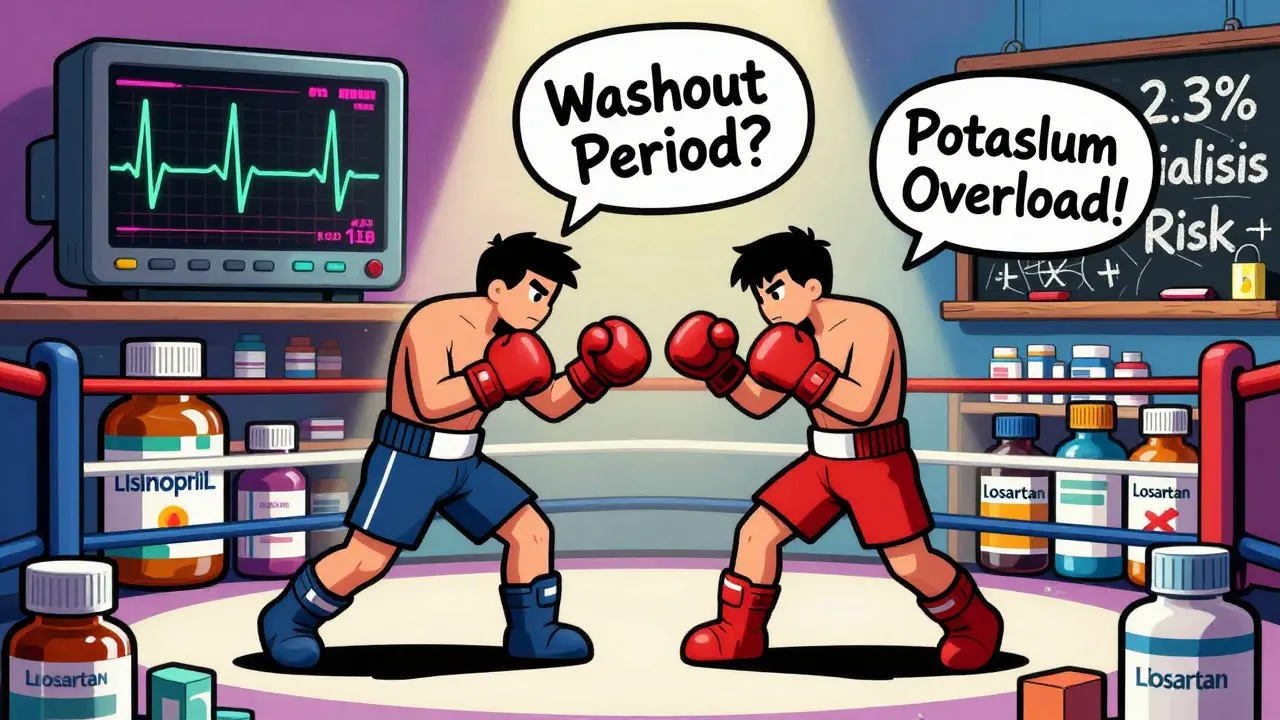
Switching Between ACE Inhibitors and ARBs
Some people switch from one to the other because of side effects - usually a cough from an ACE inhibitor. But you can’t just swap them like light bulbs.
There’s a risk of additive effects. Your blood pressure could drop too low. Your kidneys might react badly. That’s why guidelines recommend a 4-week washout period before switching. But here’s the problem: only 42% of doctors actually follow this.
If you’re switching, make sure your doctor checks your potassium and kidney function before and after. Don’t assume it’s safe just because both drugs are “blood pressure meds.”
Other Drug Interactions to Watch For
Even if you’re only on one of these drugs, other medications can make things worse.
- Potassium supplements or salt substitutes with potassium can push your levels into the danger zone. Both ACE inhibitors and ARBs raise potassium by 0.3-0.5 mmol/L on average.
- NSAIDs like ibuprofen or naproxen reduce kidney blood flow. When taken with RAS blockers, they increase the risk of sudden kidney injury by up to 40%.
- Diuretics like hydrochlorothiazide are often paired with these drugs - but they need careful dosing. Too much can cause low blood pressure, especially when you first start.
- Spironolactone, a potassium-sparing diuretic, should be used with extreme caution. Combining it with an ACE inhibitor or ARB can lead to life-threatening hyperkalemia.
Always tell your doctor about every supplement, OTC pill, or herb you take. Even something as simple as licorice root can interfere with potassium levels.

Monitoring: What You Need to Check
If you’re on an ACE inhibitor or ARB, regular blood tests aren’t optional - they’re essential.
- Check serum potassium and creatinine 1-2 weeks after starting or changing the dose.
- Then every 3 months during stable therapy.
- More often if you’re older, have kidney disease, or are taking other risk-increasing drugs.
Normal potassium is 3.5-5.0 mmol/L. Anything above 5.5 is dangerous. Creatinine tells you how well your kidneys are filtering. A sudden rise of 30% or more could mean acute kidney injury.
Don’t wait for symptoms. High potassium doesn’t always cause weakness or palpitations - it can sneak up silently until it causes a heart rhythm problem.
Why Do Doctors Still Prescribe Them?
Despite the risks, these drugs are still widely used - and for good reason.
ACE inhibitors are first-line for hypertension and heart failure. They’ve been shown to reduce death by 23% in heart failure patients with reduced ejection fraction. ARBs aren’t quite as strong on mortality, but they’re better tolerated.
In 2023, lisinopril was the 6th most prescribed drug in the U.S., with over 22 million prescriptions. Losartan wasn’t far behind at 14.8 million. The market for both classes is still growing - not because people are combining them, but because they’re being used correctly.
And now, newer drugs like ARNIs (angiotensin receptor-neprilysin inhibitors) are replacing the need for combinations. Sacubitril/valsartan (Entresto) has proven better than ACE inhibitors alone in heart failure, with fewer side effects.
What’s Next?
Research is still ongoing. The FINE-REWIND trial (NCT05192641), running from 2024 to 2028, is testing whether very low doses of both drugs - half the usual amount - might offer kidney protection without the same risks. Results won’t come until 2026.
But for now, the message is clear: don’t mix ACE inhibitors and ARBs. The small drop in blood pressure or proteinuria isn’t worth the risk of kidney failure, dialysis, or cardiac arrest from high potassium.
If you’re on one of these drugs and feel fine, keep taking it. But if your doctor suggests adding the other, ask: “What’s the evidence? What are the risks? Are there safer alternatives?”
There are better ways to control blood pressure and protect your kidneys - without putting your life on the line.
Can I take an ACE inhibitor and ARB together for better blood pressure control?
No. Combining an ACE inhibitor with an ARB does not provide meaningful benefits for blood pressure or long-term outcomes. Instead, it doubles the risk of dangerous side effects like hyperkalemia (high potassium) and acute kidney injury. Major guidelines from the American Heart Association and the American College of Cardiology strongly advise against this combination outside of clinical trials.
Why do ACE inhibitors cause a cough but ARBs don’t?
ACE inhibitors block the enzyme that breaks down bradykinin, a substance that causes inflammation in the airways. This buildup leads to a dry, persistent cough in 10-15% of users. ARBs don’t affect bradykinin - they block angiotensin II receptors directly. That’s why only 3-5% of people on ARBs experience coughing, making them a better choice for those who can’t tolerate ACE inhibitors.
Is it safe to switch from an ACE inhibitor to an ARB?
Yes, but not immediately. A 4-week washout period is recommended to avoid additive effects that could cause low blood pressure or kidney stress. Many doctors skip this step, but it’s important to check your potassium and kidney function before and after switching. Always do this under medical supervision.
What are the safest alternatives if I can’t take ACE inhibitors or ARBs?
If you can’t tolerate either drug, other options include calcium channel blockers (like amlodipine), thiazide diuretics (like hydrochlorothiazide), or newer agents like ARNIs (e.g., Entresto) for heart failure. For kidney protection, mineralocorticoid receptor antagonists like spironolactone (at low doses) may be added - but only with careful monitoring of potassium levels.
How often should I get blood tests if I’m on an ACE inhibitor or ARB?
Get your potassium and creatinine checked 1-2 weeks after starting or changing the dose. Once stable, check every 3 months. If you’re over 65, have diabetes, kidney disease, or take NSAIDs or diuretics, you may need more frequent testing - sometimes monthly - especially in the first few months.
Do ARBs have the same kidney protection as ACE inhibitors?
They’re very similar for slowing kidney damage in diabetic nephropathy. But ACE inhibitors have stronger evidence for reducing death in heart failure. ARBs are preferred when side effects like cough or angioedema occur. Neither is superior for kidney protection - but combining them offers no extra benefit and increases risk.
Are there any recalls or safety issues with ARBs or ACE inhibitors?
Yes. Between 2018 and 2020, several ARBs - including valsartan, losartan, and irbesartan - were recalled due to contamination with nitrosamine impurities, which may increase cancer risk. These issues have been largely resolved with improved manufacturing. No major recalls have affected ACE inhibitors. Always check the lot number on your prescription if you’re concerned.
Comments
Nancy Kou
December 19, 2025 AT 17:49Just had my doctor try to add losartan to my lisinopril last month. I pushed back hard after reading this. They were surprised I knew the risks. Glad I did my homework.
Tim Goodfellow
December 21, 2025 AT 07:00It’s wild how medicine still clings to the ‘more is better’ myth even when the data screams otherwise. ACE inhibitors and ARBs are like two chefs trying to cook the same dish with different knives - one sharpens the flavor, the other just dulls the knife. Combining them doesn’t make the meal tastier, it just makes the kitchen a disaster zone. The ONTARGET trial wasn’t just a study, it was a warning shot across the bow. And yet, some docs still treat it like a suggestion, not a rulebook.
Elaine Douglass
December 21, 2025 AT 18:40i just switched from lisinopril to valsartan last year because of the cough and honestly my life is better now no more midnight coughing fits and my bp is stable
but i did wait 5 weeks like my doc said and got bloodwork before and after
just don’t rush it
Hussien SLeiman
December 21, 2025 AT 19:14Let’s be real - this whole ‘don’t combine them’ thing is just corporate medicine’s way of keeping costs down. The pharmaceutical companies don’t make more money off two pills than one, so they push the guidelines to avoid liability. But what about the patients who are still proteinuric despite maxed-out ACE inhibitors? Are we just supposed to let their kidneys fail because some committee in Atlanta says no? The VA NEPHRON-D trial excluded non-diabetics - that’s not a universal truth, that’s a sampling bias. I’ve seen patients on dual therapy with weekly labs who are doing better than those on monotherapy. If you’re not monitoring, that’s your failure, not the combination’s.
And don’t get me started on the ‘newer drugs are better’ narrative. Entresto costs $1,500 a month. Most people can’t afford it. So we’re supposed to just say ‘tough luck’ to the 65-year-old diabetic on Medicare who’s on lisinopril and needs a little extra help? That’s not medicine - that’s rationing dressed up as evidence.
Doctors who refuse to consider combination therapy are just as dogmatic as the ones who prescribed Vioxx. Science isn’t a checklist. It’s a conversation - and sometimes the conversation needs to be louder than the guidelines.
Lynsey Tyson
December 23, 2025 AT 11:46my grandpa was on both for a few months and ended up in the hospital with high potassium
he didn’t even know he was taking two different bp meds
the pharmacy didn’t flag it
so now i check all his meds myself
don’t trust the system
Chris porto
December 24, 2025 AT 13:52It’s interesting how we treat these drugs like they’re interchangeable tools, when really they’re part of a complex biological system. The body doesn’t care if we call it an ACE inhibitor or an ARB - it just reacts to the chemical changes. So when we stack them, we’re not adding benefits, we’re amplifying noise. It’s like turning up both the bass and the treble on a speaker until it distorts. The signal gets lost. The system breaks. Maybe the real question isn’t whether to combine them, but why we keep thinking we can outsmart biology with more pills.
jessica .
December 24, 2025 AT 16:59theyre lying to you about this. why do you think the big pharma companies push the ‘no combo’ rule? because they want you on one drug so they can raise the price later. they know if you take both, you might get better faster and stop needing their stuff. and what about those recalls? they knew about the nitrosamines for years. they just waited until they could make a new batch and call it ‘safe’. trust no one. check your lot numbers. always.
shivam seo
December 24, 2025 AT 23:16Look, I’m Australian. We don’t do half-measures here. If you’re gonna take a BP med, take the right one and stop being lazy. Why are we still debating this in 2025? The trials are in. The guidelines are clear. If your doc is pushing combo therapy, they’re either outdated, underpaid, or just don’t read. I’ve seen too many patients crash their kidneys because someone thought ‘more is more’. It’s not medicine. It’s medical negligence with a prescription pad.
Takeysha Turnquest
December 25, 2025 AT 07:39we are all just molecules dancing in a body trying to survive a system that wants us to be patients not people
they give us pills to fix the symptom not the soul
and we take them because we are tired
but the truth is we were never meant to live with two drugs fighting the same war inside us
the body knows
the body remembers
the body wants peace
Emily P
December 26, 2025 AT 17:45what about people with resistant hypertension who’ve tried everything else? is there any data on low-dose combo in that group? just curious
Vicki Belcher
December 26, 2025 AT 19:18thank you for this post!! 🙏
my mom is on lisinopril and i was so worried about her potassium levels
now i know exactly what to ask her doctor about
and i’ll make sure she gets her bloodwork done every 3 months
you saved us so much stress 💙